I keep forgetting to add my Midwest Traveler stories for the Minneapolis Star Tribune! Here’s one on Omaha’s Blackstone District!
Midwest Traveler: Omaha’s Blackstone is reserved for dining out
Revived neighborhood is the place for eating and drinking in the Big O.
By Betsy Rubiner Special to the Star Tribune
DECEMBER 6, 2018 — 6:12PM
We were not hungry when we arrived on a Saturday afternoon in Omaha’s recently revitalized Blackstone District — about 2½ miles west of the long-gentrified Old Market area, where we used to begin our occasional visits to big-city Nebraska.
But because eating is the thing to do in the district’s commercial stretch — along Farnam Street, roughly between 36th and 42nd streets — my husband and I gladly began our weekend getaway at the Blackstone Meatball, an Italian restaurant specializing in mix-and-match homemade meatballs and sauces (theblackstonemeatball.com).
The delicious meatballs, casual ambience and lively crowd provided a good introduction to an up-and-coming neighborhood, full of fledgling restaurants and bars, that I had not heard of until an Airbnb search produced an intriguingly titled option: “Cozy, centrally located art-nest in Blackstone.”
“What’s Blackstone?” I asked Iowa friends who grew up in Omaha. I learned that Blackstone is now the hot spot, but not long ago it was a not-spot, well past its midcentury heyday when the former Blackstone Hotel hosted dignitaries from Eleanor Roosevelt to Richard Nixon.
Commercial and residential development, begun about six years ago, continues to transform the area, luring new residents and tourists. My friends’ upbeat report was bolstered by glowing press from the likes of Food & Wine magazine, which this year dubbed Blackstone “just about” Omaha’s “coolest place,” “changing the way we think about Omaha.”
I don’t know about that. But Blackstone did prove to be my kind of place — a morphing urban neighborhood at that bittersweet stage between begun and done, still a little rough around the edges but with enough street life, eclectic dining, people-watching and independent businesses to feel worth exploring.
It is also a great jumping-off point for nearby Omaha attractions, thanks to its location near downtown, between the University of Nebraska Medical Center and the Mutual of Omaha headquarters. Beyond Blackstone, we enjoyed scenic Missouri River views while walking across the Bob Kerrey Pedestrian Bridge, aka the Bob Bridge, honoring the former governor and senator.
Near the Old Market, we happened by an open house with international artists-in-residence at the Bemis Center for Contemporary Arts, wandered through the deluge of vintage junk and sweets at Hollywood Candy and admired the art deco magnificence of the Durham Museum, in Omaha’s former Union Station.
Dining was reserved for the Blackstone District, which was hopping on a Saturday night, with people eating Mexican fare at Mularestaurant/tequileria (mulaomaha.com); sipping cocktails with names like Whiskey Smashed at the open-air front window at Blackstone Social(blackstonesocial.com); and standing in line at Coneflower Creamery, a “small batch” ice cream shop.
We strolled past low-rise renovated brick buildings and new modern complexes, some under construction. A still elegant brick-and-stone mansion was a clue that Blackstone is part of the Gold Coast Historic District, a 30-block midtown area with several mansions built by affluent city folk.
I later learned that the mansion we admired was built in 1906 by Gottlieb Storz, a brewery owner. It once hosted a movie premiere party attended by Jimmy Stewart, and has remained a single-family residence.
Slated for reconversion is the 1916 Blackstone Hotel, which became an office building in 1984. Last July, developers announced a $75 million project to revive and reopen the Blackstone in 2020 as a hotel, complete with restored ballroom and marble staircase.
Dining recommendations
Although we did not come close to exhausting Blackstone’s new dining options, we enjoyed our picks, several recommended by our thoughtful Airbnb hosts at the “cozy, centrally located art-nest.”
At the Blackstone Meatball, opened in 2016, we skipped the “meatball flight” — featuring the restaurant’s five varieties of meatballs and sauces — but did enjoy a design-your-own slider. We picked the Romesco Pork meatball made with roasted red pepper, garlic and cheese (Parmesan, Romano, ricotta) and topped with Pomodoro sauce, which was refreshingly light and moist.
We were glad we booked a table at Stirnella, a casual gastropub with lots of exposed brick and burnished wood. It was packed with diners sitting at communal and private tables. We shared a burger made with fancy wagyu beef, a seasonal heirloom tomato salad (with burrata and caper salsa verde) and a refreshing tuna poke with melon, avocado and red onion (stirnella.com).
On Sunday morning, we arrived too late at the Early Bird, which opened in 2017, serving brunch daily. Finding a crowd already waiting for tables, we went instead to Bob’s Donuts, which serves morning coffee, “artisan” doughnuts, fried chicken concoctions and tater tots. We drank strong coffee and shared a decadently large and doughy glazed doughnut, watching attractive tattooed parents with young kids come and go (eatbobsdonuts.com).
Before driving home on Sunday, we made a final foray to Coneflower Creamery, where we found a shorter line of about 30 people. A self-described maker of “farm-to-cone ice cream,” the tiny place touts its fresh ingredients from Nebraska dairy and produce farms. The butterbrickle, with bits of toffee, pays homage to the Blackstone Hotel, which reportedly originated the flavor. I can confirm that the “garden mint chip” tasted like mint leaves plucked from a garden. We’ll be back (coneflowercreamery.com).
Getting there
Omaha’s Blackstone District is about a 370-mile drive southwest of the Twin Cities.
More places to eat and drink
Crescent Moon Ale House (beercornerusa.com/crescentmoon) has over 60 beers on tap plus pub grub including the Blackstone Reuben sandwich, reportedly invented in the 1920s across the street at the former Blackstone Hotel. Pizza options include Noli’s Pizzeria (thin-crust New York style) and Dante Pizzeria Napoletana (wood-fired Southern Italian style).
For local craft brew, try Scriptown Brewery and Farnam House Brewing Co.; for cocktails, Nite Owl and the Red Lion Lounge; for vino, Corkscrew Wine & Cheese; and for java, Archetype Coffee.
More information
Visit Omaha: 1-866-937-6624; visitomaha.com; blackstonedistrict.com.
Betsy Rubiner, a Des Moines-based travel writer, writes the travel blog Take Betsy With You.

 I got a chance to do what I love to do most in NYC (besides seeing old friends and family): Wandering around interesting pockets of the city.
 The second day, I started at the Spring Street station and wandered south into Little Italy and Chinatown, then a little west to Soho (western section is still charming, along Thompson and Sullivan/Spring and Prince Streets) and then up to Greenwich Village/NYC, stopping for a nutritious lunch (not) of a chocolate chip cookie and coffee at the wonderful old Vesuvio bakery storefront on Prince Street (now technically the Birdbath Bakery despite the iconic storefront from the 1920s) and admiring a gated mews lined with pretty old carriage houses, MacDougal Alley, just north of Washington Square Park. Reminded me, fondly, of London. I lingered in front of 1 Fifth Avenue, an elegant old building where my parents got married (when it was a hotel, I believe). Then I ended up at The Strand bookstore and at Union Square where I caught the #6 subway back to the Upper East Side.
 Thanks to the Krause Corporation (owner of the Kum & Go convenience store chain) for opening its fantastic new headquarters downtown for a day of public tours. So many people wanted to walk around the five-story Krause Gateway Center, designed by Italian architect
 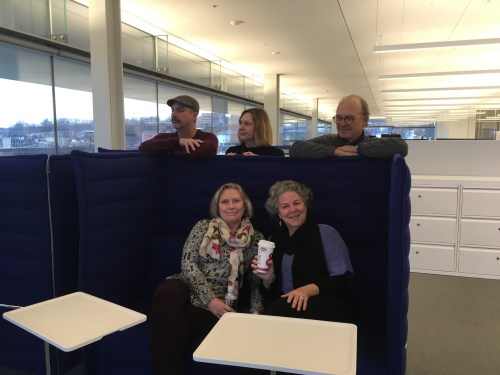 The building is unlike any other in Des Moines — or elsewhere that I’ve visited–with its massive scale and sculptural look including high glass walls separated by four overhanging white horizontal planes. The glass walls on the main floor are 29 feet high — higher than any other such walls in North America except for an Apple store in New York City. The space is very light (naturally) and the building almost translucent. From the building’s south side, you have a fantastic view of the sculpture park below and if you look north, down a long hall, you can gaze through another window at a street leading up to the Sherman Hill neighborhood.
 The interior design is sparse and clean with immaculate desks – in various configurations and groupings. There are high top tables, lower top desks, sitting spaces in an upholstered nook that felt a bit like a padded cell (except one side is open.) Most people don’t have assigned desks. Employees do get their own locker, to store their stuff, which they remove and place wherever they plant themselves during a given day. I gather this is au currant office design (and supposedly spurs more collaboration) but also takes some getting used to for employees accustomed to the creature comforts of their very own cubicle, slathered with family photos, gag bobble-heads and stacks of yellowing paper, yes, paper.
 None of that to be found at the Krause Gateway Center, where the furniture is clean and contemporary, popping with color including orange and red Swan chairs, the famous chairs designed in 1958 by Arne Jacobsen for a Copenhagen hotel (I grew up with white Swan chairs in our ancestral home) as well as deep blue, orange and green high-backed chairs and couches. Big dramatic pieces of contemporary art also pop off the white walls and blond wood paneling –and there’s even a second floor art gallery, open to employees only.
 The roof has vegetation that apparently will grow — and features stupendous views of the city, although I worry that the fencing at the edges isn’t high enough.
 On the Saturday after Thanksgiving in Water Mill, we made our annual visit to the amazing book sale at the Southampton Public Library where often newly released books can be found for a fraction of their original cost.
 Then for something new, seven of us crammed into a wooden booth at Sip n’Soda, the local soda fountain (since 1958) for some no frills food that was pretty good including crisp onion rings, good malts and shakes and a decent BLT and burger. We liked the old fashioned no frills vibe, the long counter, the booths.

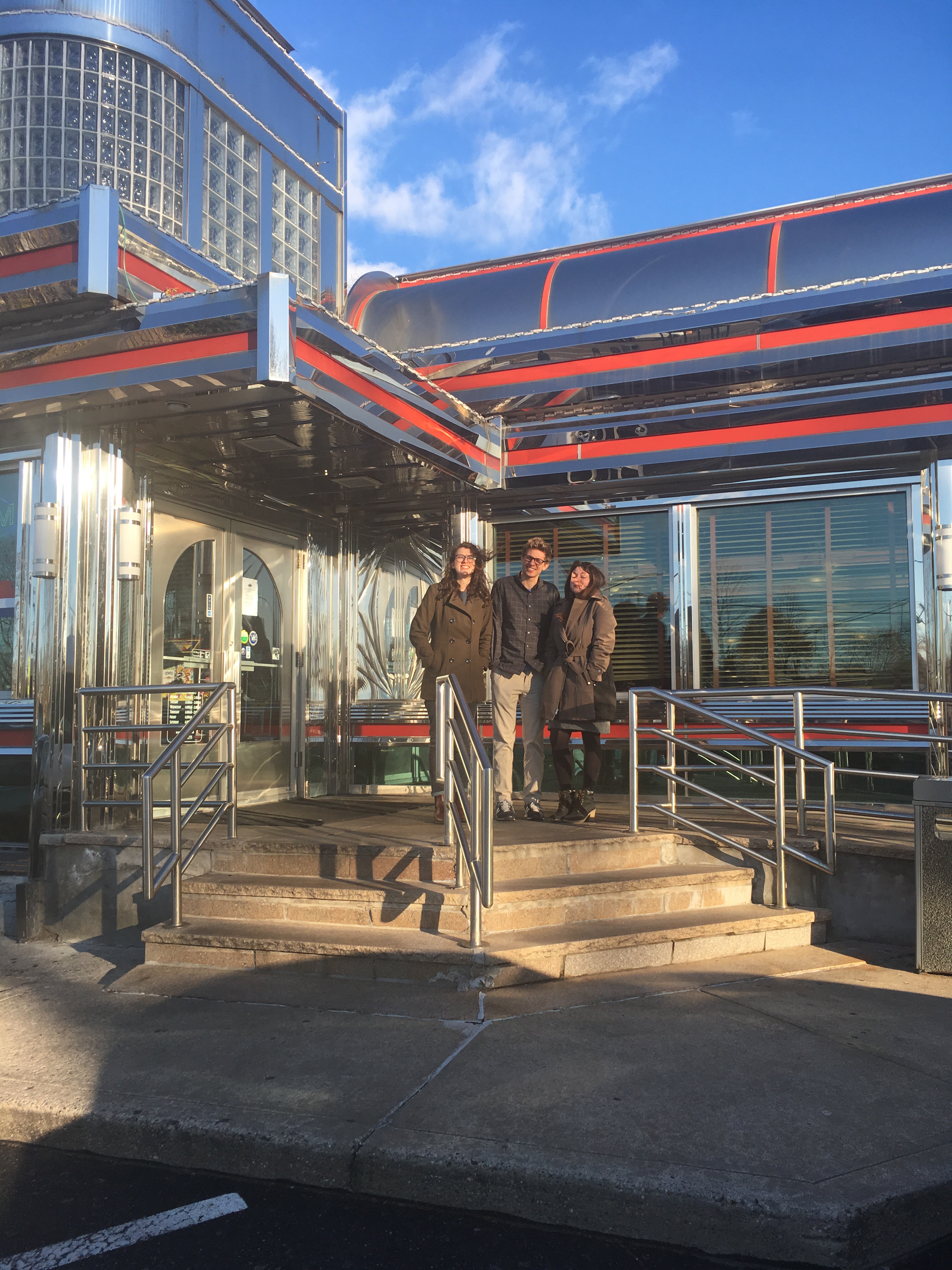
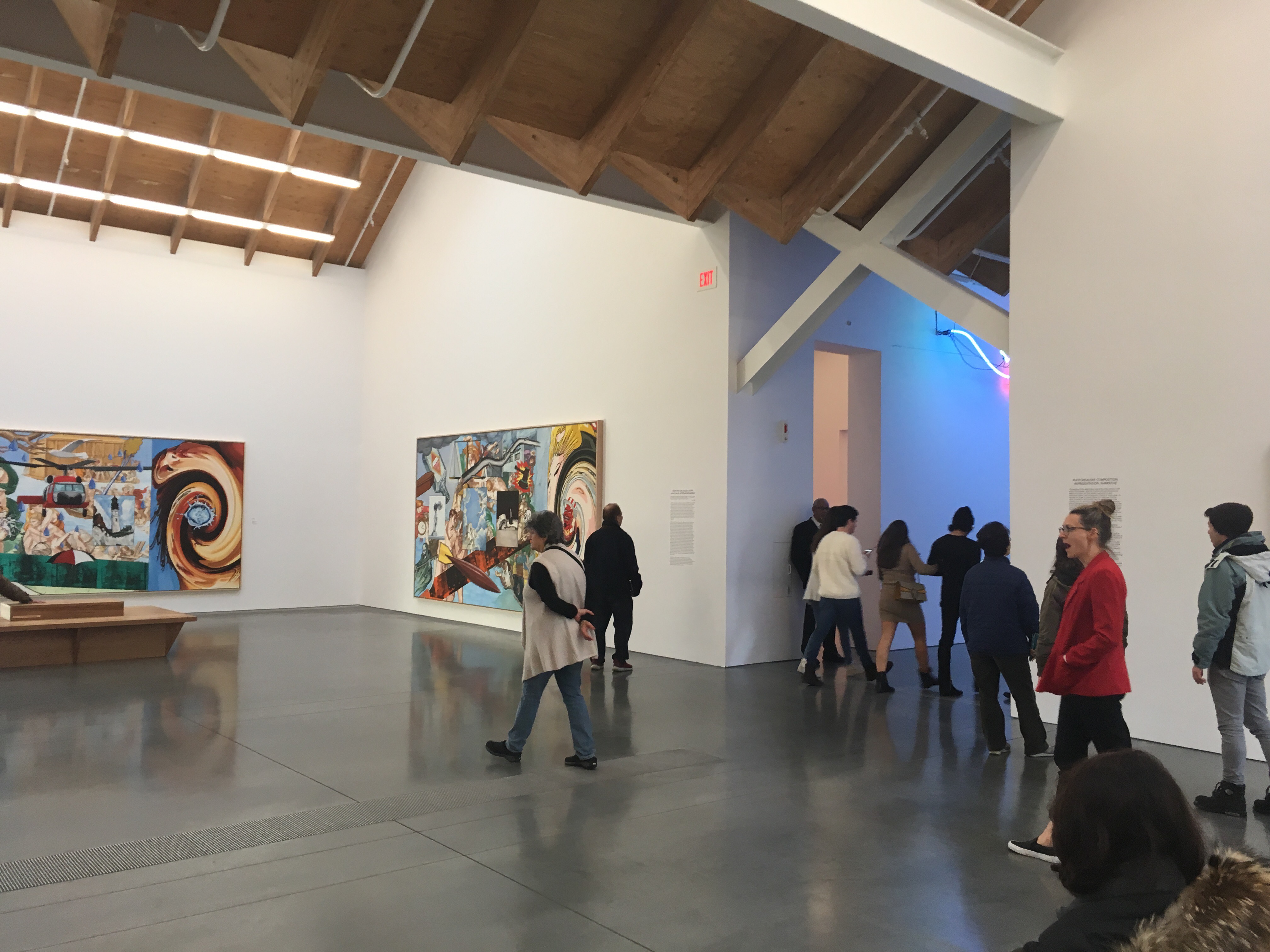
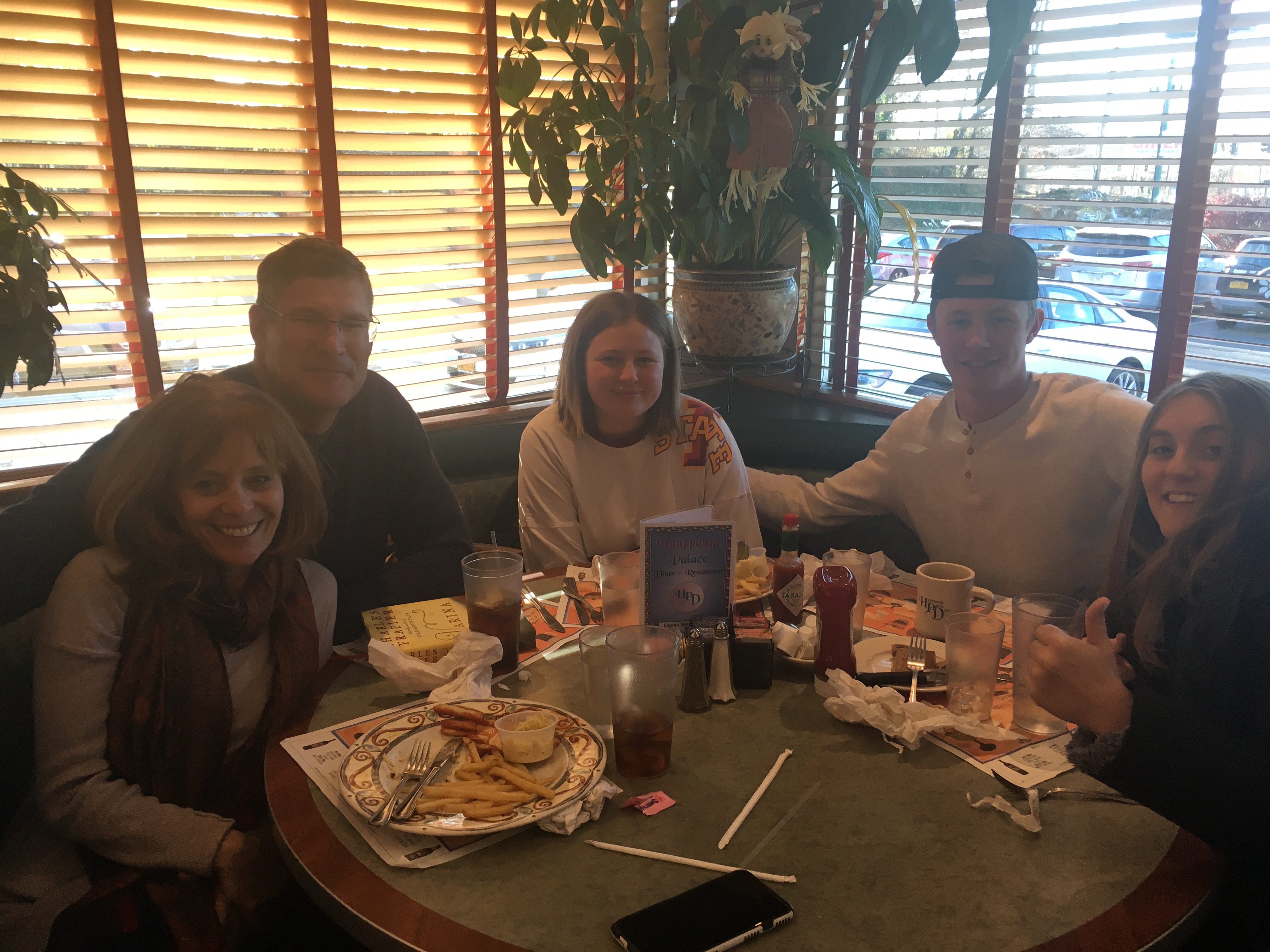
 A high school classmate I haven’t seen since high school (i.e. 41 years ago) who lives in Iowa City introduced me to a restaurant there – Crepes DeLuxe. It’s a charming little hole in the wall just east of the PedMall (and the public library). I recommend the salmon crepe. I also did a little shopping, finding a very warm hat/scarf at White Rabbit and some great clothes (Simpli brand!) on sale (albeit still pricey) at Textiles.


