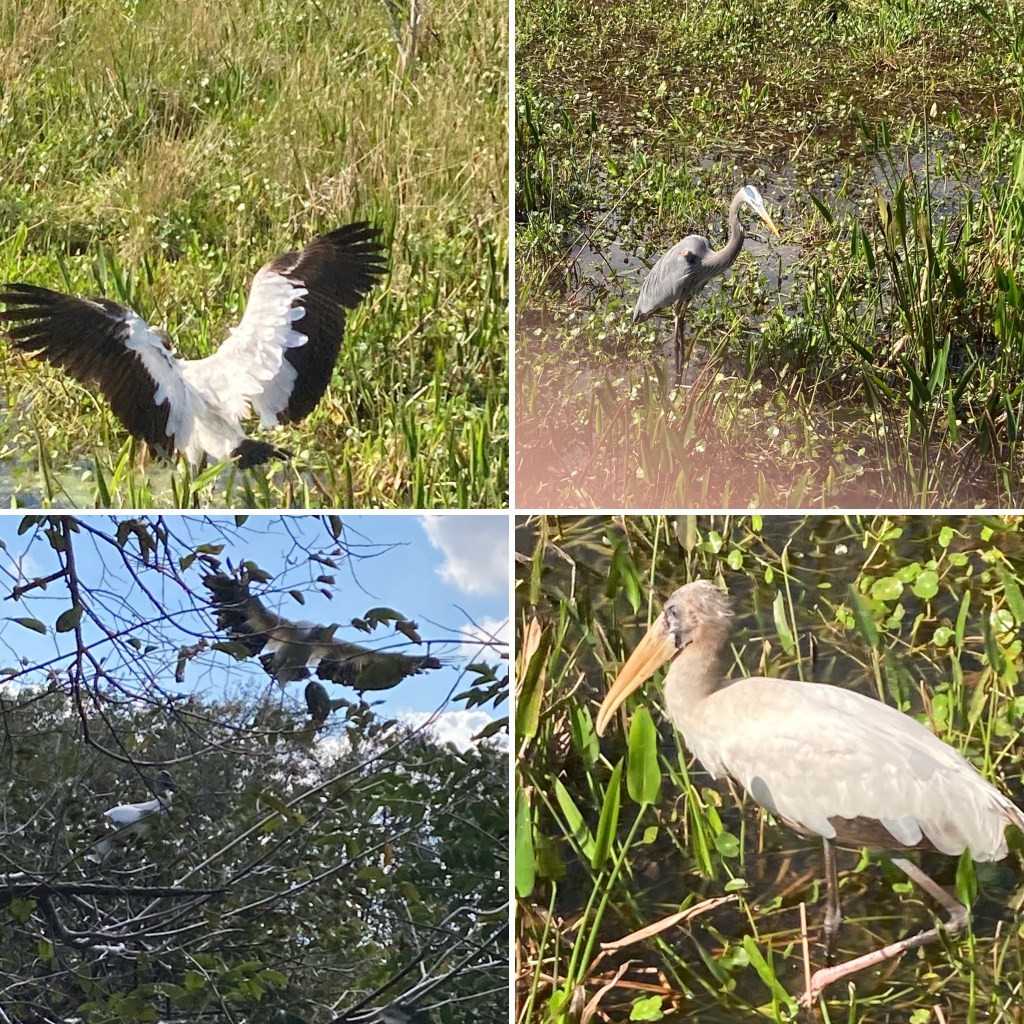
On a lovely Saturday morning, with bright blue sky, sunshine, temperatures in the low 70s, we visited Wakodahatchee Wetlands, a natural oasis hidden among huge condo developments. We walked along a boardwalk that looped around wetlands with amazing wildlife, lots of birds – storks,egrets, herons ducks – and spooky looking orange iguanas and green iguanas. Saw a few turtles but no alligators. Although we were told they’re around.
In downtown Delray Beach we ate at LuLu’s, a lively spot with a great streetside outdoor patio and good breakfast and lunch fare, browsed at a farmers market and a few galleries, shared some excellent frozen custard at Whits, and now here we are at the Fort Lauderdale airport, which is very quiet on a Saturday night. Heading back to Chicago and winter after a welcome respite. Thanks Aunt Shelb! 😘
Many traffic jams to, across, and from Miami which did not surprise us. First stop, a little hip oasis with shops and restaurants surrounding a huge decorated banyan tree, with a few thatched roof huts to boot, in an otherwise inner city neighborhood. It’s called Upper Buena vista. Good coffee place and Turkish restaurant.
Upper buena vista
On to Wynwood walls, a large urban art installation that seems to have spread out in every direction since we last visited seven years ago. More buildings covered in graffiti, more shops and restaurants, more South American touches. I don’t remember having to pay to see the original murals/walls, which we skipped. But so many old warehouse looking buildings and new sleek modern buildings have graffiti murals.
Smoke & DoughWynnwood walls
We drove way west for over an hour in traffic to Smoke & Dough, a bbq place that was one of only three Florida restaurants on a list in the nytimes 53 “exciting” restaurants for 2023. It turned out to be in a nondescript strip mall, which was affordable for the young entrepreneurial couple that opened the place. We tried a little of everything. Excellent – ribs, brisket, pulled pork, sausage made with a cheese, corned bread, fries, coleslaw. No weak item and the flan, with a slightly smoky taste was deliciously rich and creamy. We got a few empanadas from the “dough” part of the little restaurant to take back to aunt Shelby’s. The mushroom one was particularly good. They were also making some sort of Venezuelan (I think) bread pudding that looked interesting. I love the South American vibe in Miami!
Upper buena vista
Our last stop was the Miami beach north of south beach called Surfside. (Yes, it’s the place where there was a tragic collapse of a high rise last year that killed many people.) The beach was gorgeous. And it had a Hasidic crowd, as it turned out.
As winter weary Chicagoans, we are getting a welcome dose of sunshine, Palm trees, manicured green lawns and golf courses, blue sky, and mild temps (low 70s) here in southern Florida visiting my wonderful self-chosen aunt! Dinner was pleasant at J. Alexander’s, which was packed on Tuesday night at 6:30 p.m. Good grilled artichoke, cheeseburger, salad with crispy chicken, and key lime pie.
Dune patio
Today, we had a lovely lunch on the back patio overlooking the beach and ocean at DUNE in Fort Lauderdale – good poke salad and flat breads and sushi. Good service. I saw another side of the spring break crazy Fort Lauderdale, quiet and classy.
Atlantic Dunes State Park, Delray Beach
This evening we drove along the Oceanside highway A1A past astonishingly nouveau Spanish and Italianate mansions, chockablock, blocking the waterfront view, that looked like knockoffs of the Versace mansion in South Beach but we managed to find a Atlantic dunes state park that offered the rest of us access. We could park on the west side of the highway and then cross the highway and walk through a woods along a boardwalk to a gorgeous stretch of sandy white beach that was largely empty at dusk. The water was surprisingly warm and the waves tame, certainly compared to our last Atlantic visit in Rehoboth Beach, Delaware.
Dinner was fun, sitting at a high top table at Kapow! a design-heavy noodle bar with a fun, funky vibe, lots of colorful graffiti/anime graphics. The food was good inventive and traditional Asian – pad Thai, waygu beef potstickers, charred edamame in a tamari-based sauce. kapow! Its among several restaurants in Mizner Plaza, a high end outdoor shopping mall in downtown Boca Raton. A later dinner at a cozy Italian place called Dorsia was also good.
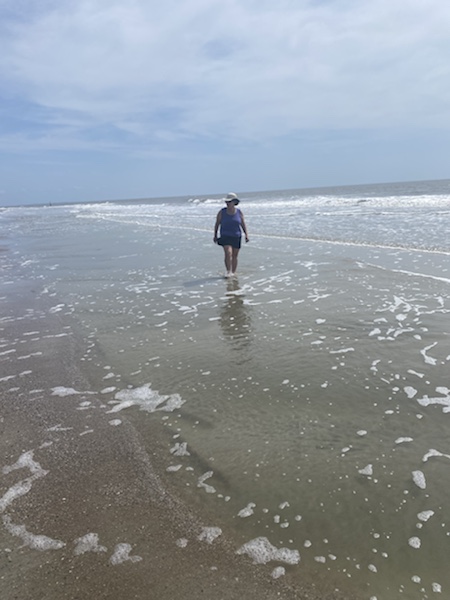
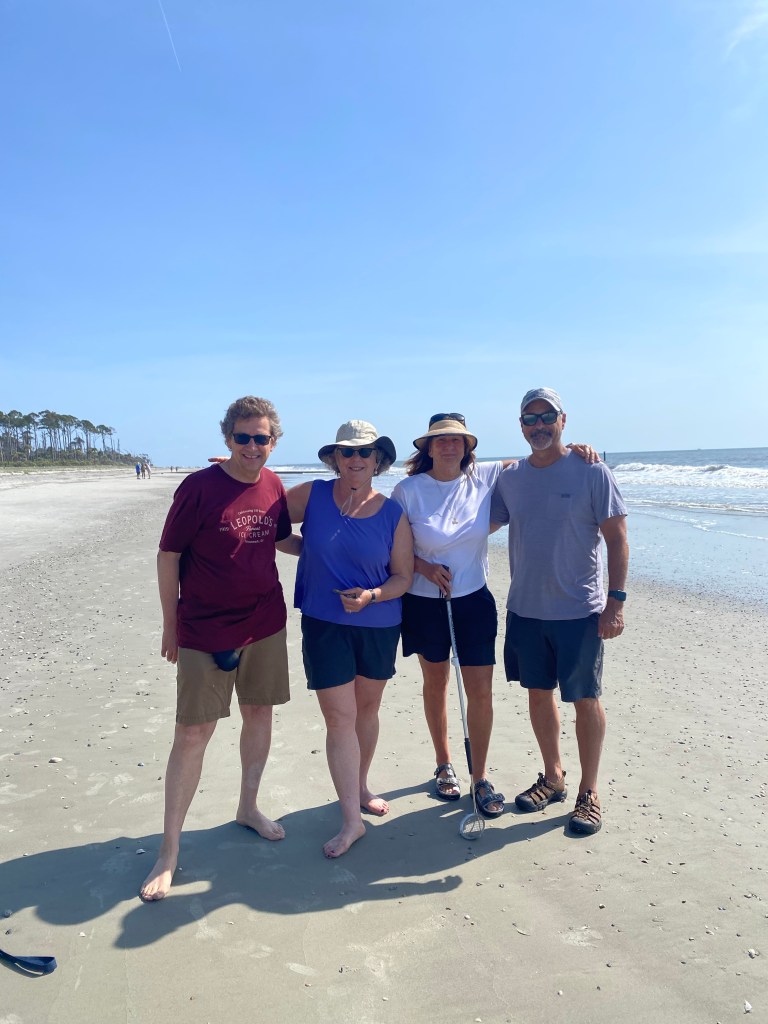
Amazing weather again! Perfect for walking along the pristine beach at Hunting island State Park, looking for shells in the surf, watching the fishermen with their poles stuck into the sand and the pelicans dive bombing into the water. Dirck found a perfect sand dollar! Behind the long expanse of soft tan sand, there’s a dense forest of sea pines.
Lunch was on the back deck of the Foolish Frog overlooking a marsh — shrimp poboy, fried oysters, seafood bisque, bottomless lemonade. The country road to the beach is dotted with farm stands and seafood markets. We stopped at one to buy shrimp for dinner.
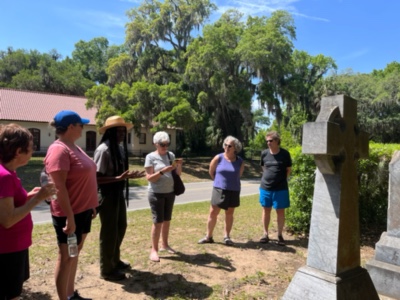
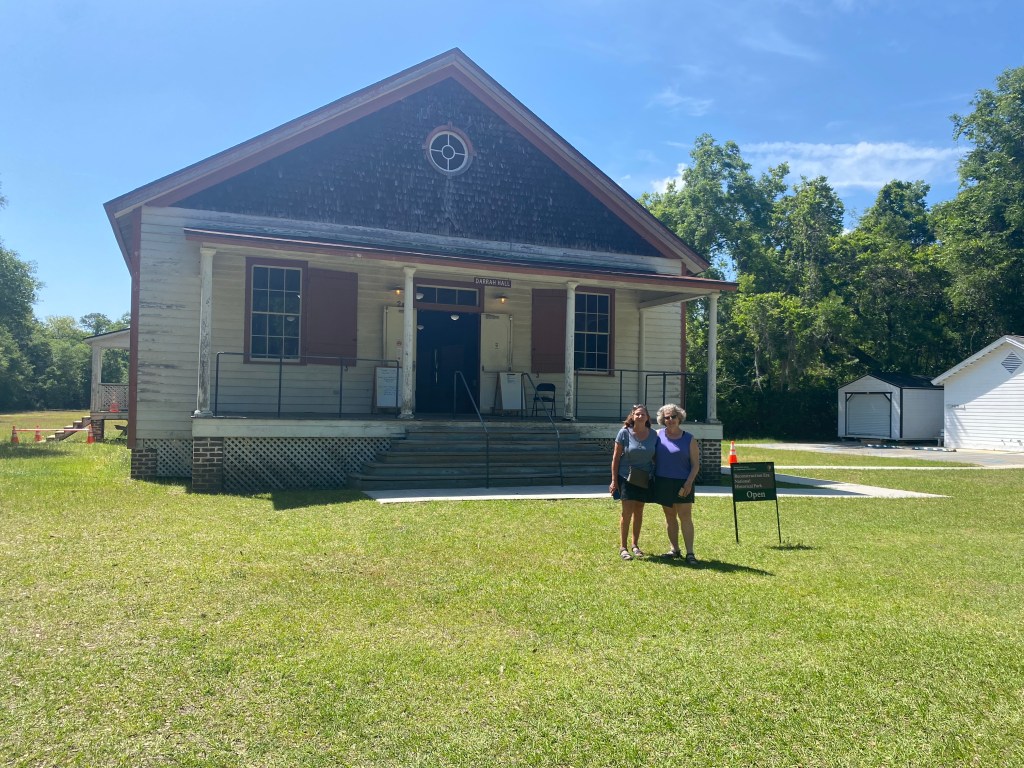
We went to Penn Center, part of the Reconstruction Era National Historical Park, in Saint Helena Island’s Corners Community where we learned about the struggles of former slaves after the Civil War and the work of two white women from Pennsylvania (hence the name) who came to the Sea Islands in 1862 to provide education to the children of “formerly enslaved people” (the correct terminology these days) at what was called the Penn School. The school survived the Jim Crow-years, when the advances of the reconstruction stalled, and became an organizing spot during the civil rights movement during the 1950s and 60s. Today, it’s a quiet place, with huge live oaks scattered on a long lawn on either side of a country road and old white buildings in various states of repair/disrepair. Martin Luther King Jr. liked to visit and reportedly wrote several of his most stirring speeches here and hoped to retire in this peaceful place.
A young tour guide showed us around the property and talked about life during reconstruction and the Gullah-Geechee community, who are descendants of African people who were enslaved, with a distinct language, culture, cuisine and folk art, which we saw at a nearby gallery with colorful flat folk art paintings. The community remains along the coast from Wilmington, N.C. To St. Augustine, Fla.
In Beaufort, we went to another history center that shared the story of Robert Smalls, a local civil war hero for the Union side. In 1862 Smalls, a black man, piloted a ship out to Charleston harbor and delivered it to the US military. He used his cash reward to buy a house in Beaufort (the first to hold a secession meeting). He later became a 5-term US Congressman.
At Penn Center
In the late afternoon, our host Laurie zipped me over to the gorgeous pool in her golf cart (dirck rode in the car with our other host Brian) for a brief swim and soak in the sun. in the evening we rode the golf cart to a perfect spot to watch the sun set and watch dolphins frolicking in the distance.
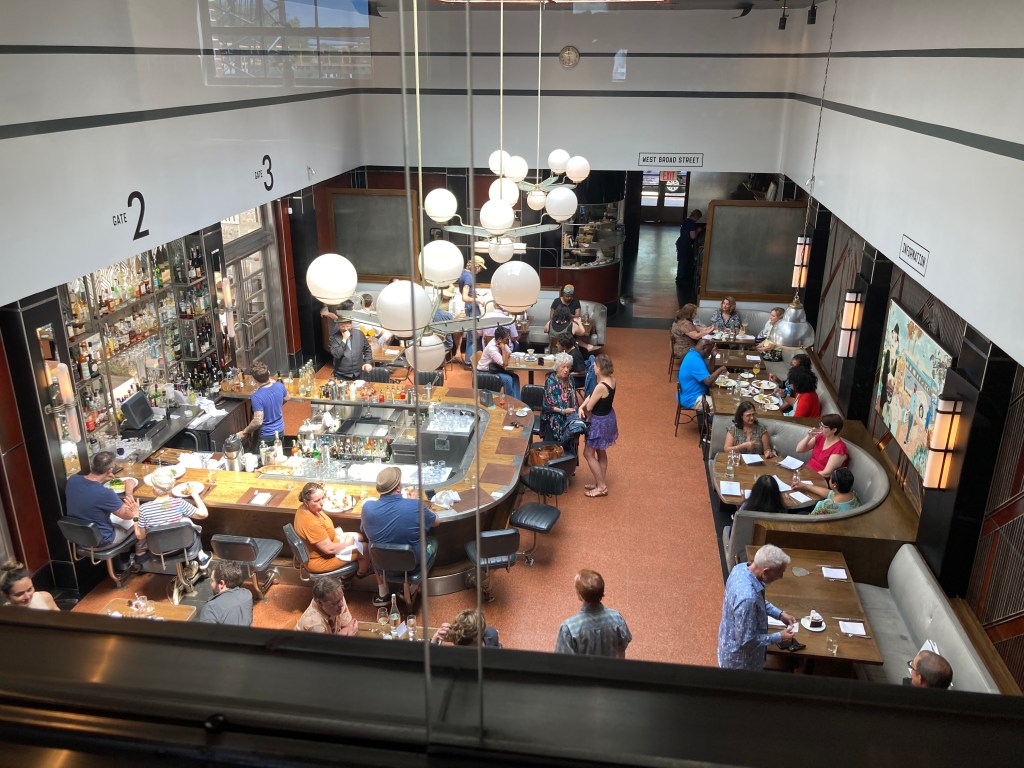
We took our hosts out to brunch The Grey, a fantastic restaurant in a brilliantly restored 1938 Art Deco former greyhound station (the new one is around the block). It’s a very fun space, with oval banquettes, a counter, remnants of the original pale green wall tiles, including original graffiti (a young server pointed out to me.) A three piece band with a terrific female singer performed while we ate delicious, sophisticated takes on southern fare including crab beignets, fried chicken with half dollar size corn meal hotcakes, “pigs head” (pork cheek). The chef Mashama Bailey is a James Beard award winner. I’m glad I booked (five weeks in advance).
The Grey is walking distance to the western part of historic Savannah so we gladly sauntered through some other lovely squares including one fronted by the cool looking Jepson Center for the Arts, in a glassy cube of a contemporary building designed by Moshe Safdie, which is the youngster of the Telfair Museums, the south’s oldest art museum. (Safdie also designed Arkansas’s fabulous Crystal Bridges museum.) The museums include the elegant 1819 mansion housing the Telfair academy — the first American art museum founded by a woman (Mary Telfair, in 1886!) Other highlights we passed: Asher + Rye, an upscale bakery, drinks, clothing and home goods place, the Perry Lanehotel (a high design luxury hotel full of antiques and contemporary artwork including by artists with ties to SCAD, aka the Savannah College of Art and Design), Zunzi’s, a “South African-inspired” (whatever that means) sandwich shop next door to the hotel and the surprisingly gorgeous interior of Basilica Cathedral St. John’s the Baptist, a French Gothic wonder (originally built in 1876, rebuilt after a fire in 1900)with its high pale green marble columns.
View from on high of The GreyPrivate dining room in the old women’s freshening up area upstairs at The Grey
We decided that Savannah is livelier and more interesting than Charleston, although we loved Charleston. The presence of SCAD is overt (with buildings scattered all over town) and more subtle (with well-curated and designed shops every which way). Then there’s the sheer loveliness of the squares and boulevards and Forsyth Park.
Hunting Island State Park beach with our great hosts Laurie and Bryan
Finally, I got to see Savannah properly, in all its glory on a perfect day, with lots of sun, shade and breeze. We easily found a free parking spot south of Gaston Street, the northern boundary of glorious Forsyth Park, where wedding couples posing in front of its huge ornate white marble fountain with sculptures of birds and fish.
Forsyth Park
It was easy to see many of the outdoor sights in a day, with the lovely squares located close by each other, one after another, as we walked south to north toward the river and as we walked east to west. One lovely square after another, shaded by live oaks with Spanish moss and dotted with park benches to linger and the occasional mammoth sculpture in the center, surrounded by all manner of elegant homes. There are also long tree lined boulevards, also breezy and beautiful. It feels more open than the tight cluster of homes and narrow alleyways and cobblestones streets in Charleston’s historic district.
We wandered around shopSCAD, which showcases the output of students and alumni of the Savannah College of Art and design which owns buildings scattered across the city, including a coffee shop called Art’s (get it?) across from shopSCAD. (One merchant told me that SCAD is prohibited from buying any additional property but they seem a good creative force in the city, keeping the city from becoming a fusty relic or overrun by tourist schlock.) The city market and the redeveloped riverfront have cool old buildings but were too touristy for our taste, with bars, restaurants and shops for the party crowd. We preferred the one-of-a-kind shops and restaurants in town near the squares – including Satchel, which has lovely handmade leather purses (I bought a small one), and shopSCAD. We wasted a little time looking for two shops touted in a NYT Travel story from 2015, both out of business.
Madison Square (I think)
Lunch was at the bustling Collins Quarter, an Australian enterprise where the specialty is smashed lemony avocado on toast, topped by a poached egg. We joined the long line outside Leopold’s for ice cream, striking up a conversation with a Detroit Tigers fan from Illinois. The scoops were enormous – my favorite was Savannah Socialite, dark and milk chocolate with bourbon-infused pecans (the thin mint ice cream, an homage to locate heroine Juliette Low, the founder of the Girl Scouts, was good too.) Dirck’s favorite was a very coffee coffee with chocolate chips. (We later found an outpost of both Leopold’s and Satchel at the Savannah airport!). On our way out of town, we picked up pulled pork and chicken from Sandfly BBQ, Memphis-style although with mustard bbq sauce that is popular in these parts. We wanted ribs and brisket but they’d run out by the time we called to order food at 5:30.
Our friends gave us a tour of their new island home, a gated community on the lowcountry sea island of Dataw that has 800 homes, two golf courses, a marina, restaurant, pub, health club, indoor and outdoor pools, croquet lawns, tennis courts and residents zipping along on golf carts. Alligators glide through the ponds. A copper head Snake slithered across the road. Herons and egrets slink through the marshes. Dolphins rise up in the river water.
Beaufort
The island also includes the ruins of the old Sams plantation, with walls made of tabby (a mixture of cement and shell) plus a small history center and old cemetery and a wooded nature preserve that leads to a bridge to the marsh called Oak Island.
Nearby, in the pretty old town of Beaufort, we walked down quiet residential streets lined with old white mansions with long porches and live oaks dripping with Spanish moss. The writer Pat Conroy lived and wrote here. He left behind a literary center, which Serves as a shrine him but also supports other local writers, which we learned during a short tour. We also passed the lovely mansion where the movie The Big Chill was filmed. We stopped for drinks at Hemingways Bistro near the waterfront and had dinner at the Old Bull Tavern.
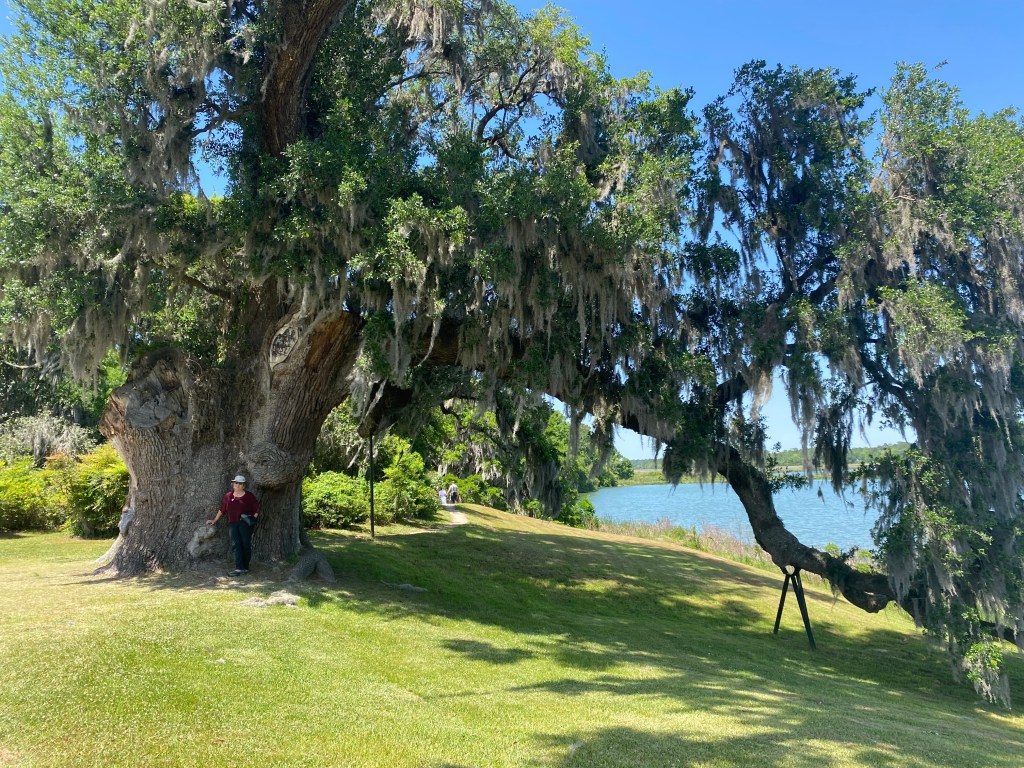
The word plantation no longer remains in the name of this spectacular estate north of Charleston, home of the first landscaped garden in the US or some such. But slavery is much mentioned during the tour and discussed in apologetic terms. We easily spent 3 hours roaming around the meticulously landscaped grounds, with some of the thickest longest horizontal-limbed live oaks ever! The garden was the main event, with huge expanses of manicured lawns and carefully symmetrical landscaping, overlooking flooded rice fields and the winding Ashley River. We didn’t see as many flowers as there are during other months.
Dwarfed by a live oakSunset on James Island
We also took a tour of the house where to my surprise we encountered the famous Ashley’s sack, a poignant artifact from slavery, that I happen to be reading a book about. An enslaved woman gave the humble sack to her 9-year-old daughter when the daughter was sold to another plantation, to carry what few belongings she had. Mother and daughter never saw each other again. The sack was handed down to subsequent generations, one of whom embroidered a brief description of the sack’s origins onto the cloth. It inspired the award-winning 2021 nonfiction history book “All that she carried.” Apparently the sack was recently returned to the Middleton after being on loan to the African American museum in DC and eventually will go in Charleston’s new slavery museum. I had no idea of its connection to this particular plantation and was stunned to see it – no photos allowed.
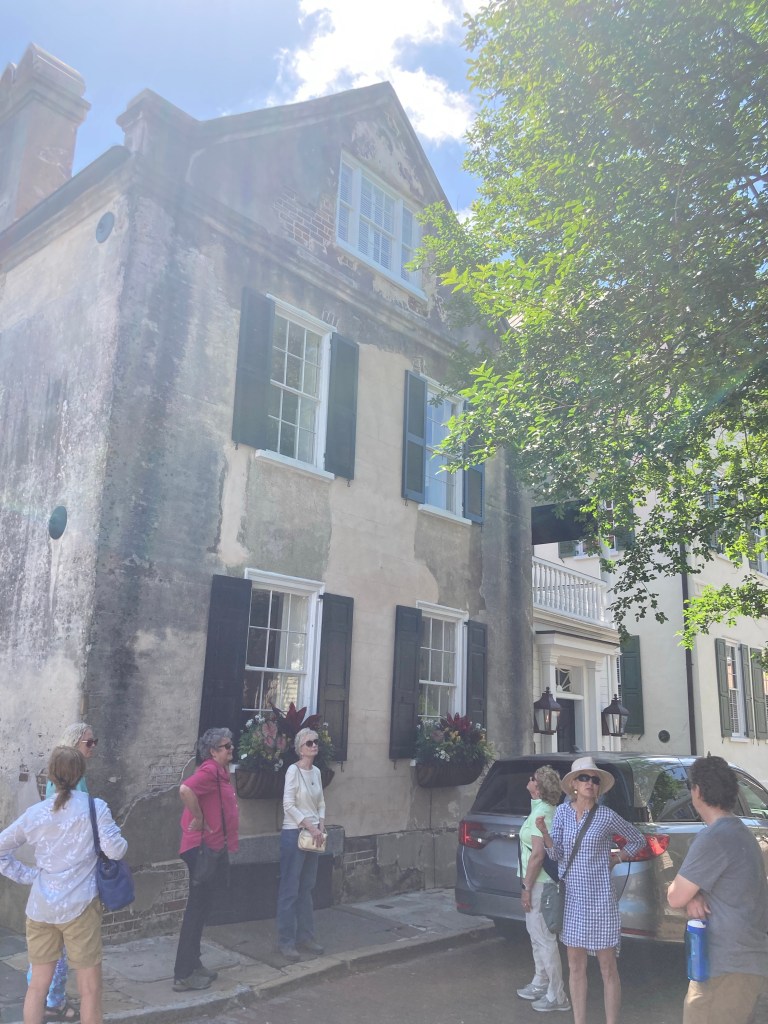
Dirck reports that we walked almost 20,000 steps today, up from my perhaps 5,000 usual steps. I believe it! Being in this part of the world makes you wish you could walk a lot longer, comfortably. We met up with a vivacious woman who runs a walking tour outfit (two sisters tours) for a 2 1/4 hour ramble around the most charming and historic bits of the peninsula that is old Charleston. Wandering by ourselves the day earlier was fine but this time we had a curated view, with bits of history, gossip and intrigue provided by a local who seemed to know everyone in town, chatting with policeman and residents. At one house, she chatted with a friend who insisted the tour (about 20 of us) come through the gate to take a peak at her private garden.
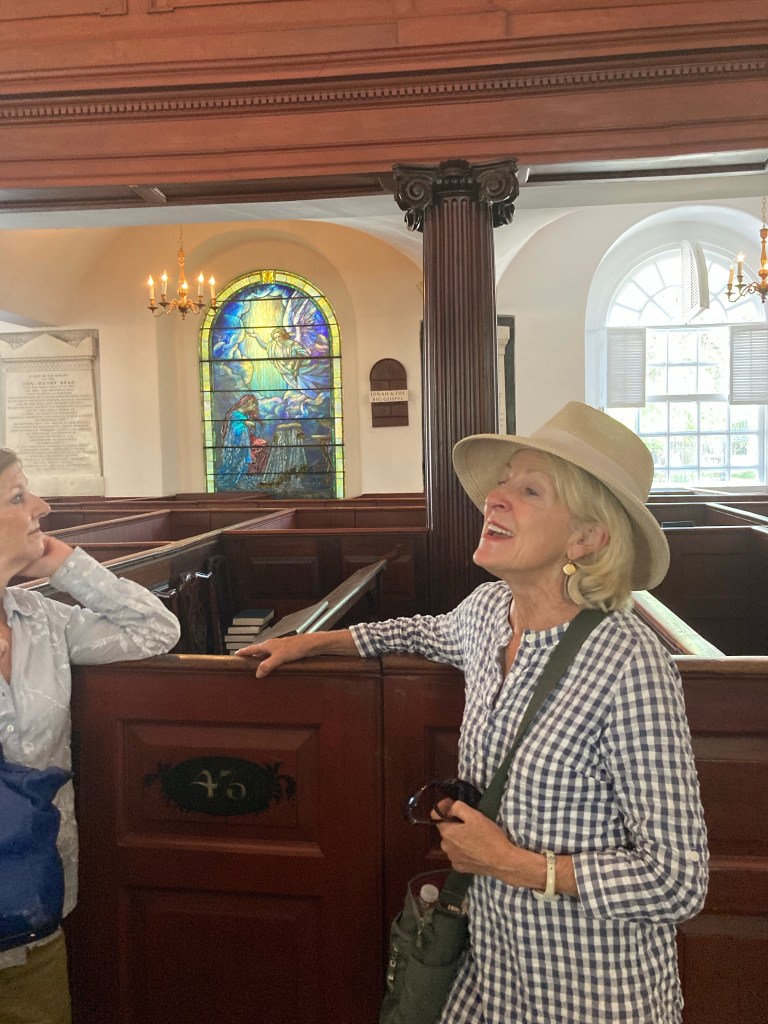
Two sisters tours, Tiffany window
“Those look like Tiffany windows!” I said as we walked into the imposing 1750’s-era Saint Michael’s Church, with its massive white steeple which George Washington visited in the 1760s. “They are!” I was told. On the corner of Meeting and Broad streets, she pointed to massive buildings on all four corners that locals joke refers to four different types of law: federal law (post office), city law (city hall), state law (court house) and god’s law (the aforementioned church). (The sister guides are former lawyers.)
She also offered some invaluable tourist info (sparkling clean public bathrooms on the ground floor of city hall), the best historic homes to visit (and the ones to skip), the good local artist. She spoke frequently and frankly about Charleston’s history of slavery, addressed the confederate monument issue (Charleston opted not to remove most of its statues because they weren’t installed during Jim Crow, when the statues glorified the southern cause) and noted the relatively new plaques dotting the city that highlight slavery-related history. (Reminded me of signs dotting Berlin about the Holocaust. I called them mea culpa signs.) anyway a far cry from our tour here 33 years ago when the guy driving us around in a horse and buggy referred to “ the war of northern aggression.” (“The recent unpleasantness” is another local euphemism.)
“Olde slave mart”
We got an excellent roast beef and cheese baguette sandwich from a little gourmet food shop called Goat.sheep.cow and picnicked in Lovely Washington Park, the on to King street to visit the international textile shop IBu but I actually scored at Charleston shoes where I found some great looking and comfortable sandals. We had key lime pie at Carmella’s, a little dessert bar my sister Jill recommended,. Next stop Folly Beach which was a rowdier beach town than expected. But the weather was surprisingly warm and there were good shells. Dinner was at Fig, the much coveted reservation, which I think was worth the hassle. Excellent corn dusted grouper with creamed spinach, salad with chicken confit and a poached egg, chicken liver pate and lime/blue sorbet. My entree needed more salt but then was good, a buttery fish stew with butter beans, shrimp and mussels.
We are staying on a tropical-feeling island about 15 minutes drive from downtown Charleston called James Island, in an Airbnb above a garage of a spotless contemporary house on a road lined with huge live oaks dripping with Spanish Moss. Across the road are old mansions barely seen amidst all the dense greenery and a little clearing overlooking a tidal pool and river, great place to sit at sunset and in the morning when we drink our morning coffee. Lovely.
On day one, we drove into the northern part of town for delicious shrimp and crab rice at Hannibal’s Soul Kitchen, complete with photos of the owner with celebrities from Pharrell Williams to Hillary Clinton..
Our street on James Island
Then we found a six hour parking spot (word to the wise!!) along the sea wall fronting beautiful White point Park. (Most parking spots in the old town are 1 to 2 hours and residential permits required otherwise. The parking lots cost $18 a day.) . We walked up and down narrow streets, some brick, some with huge cobblestones, past lovely painstakingly preserved wood and brick homes, many known as “a single house” that fit sideways into the lot so the front door is on the side along with a long two story porch, all to catch the breeze. Another word to the wise, there are sparkling clean and modern public toilets in the City hall building (ground floor) on Broad and Meeting streets!
Sweetgrass basket vendor at city market
Dinner was at Butcher and Bee, a hip happening restaurant in North Charleston with Middle eastern inspired fare. We sat at a counter in front of the open kitchen, watching and occasionally chatting with the guy who made our excellent chicken and lamb kebabs, served with potatoes, grilled and marinated yellow pepper and huge pieces of fluffy homemade pita. Another standout was the whipped feta dip sprinkled with some sort of orange honey concoction. and for some unknown reason, they gave us dessert on the house.









 TakeBetsywithyou