
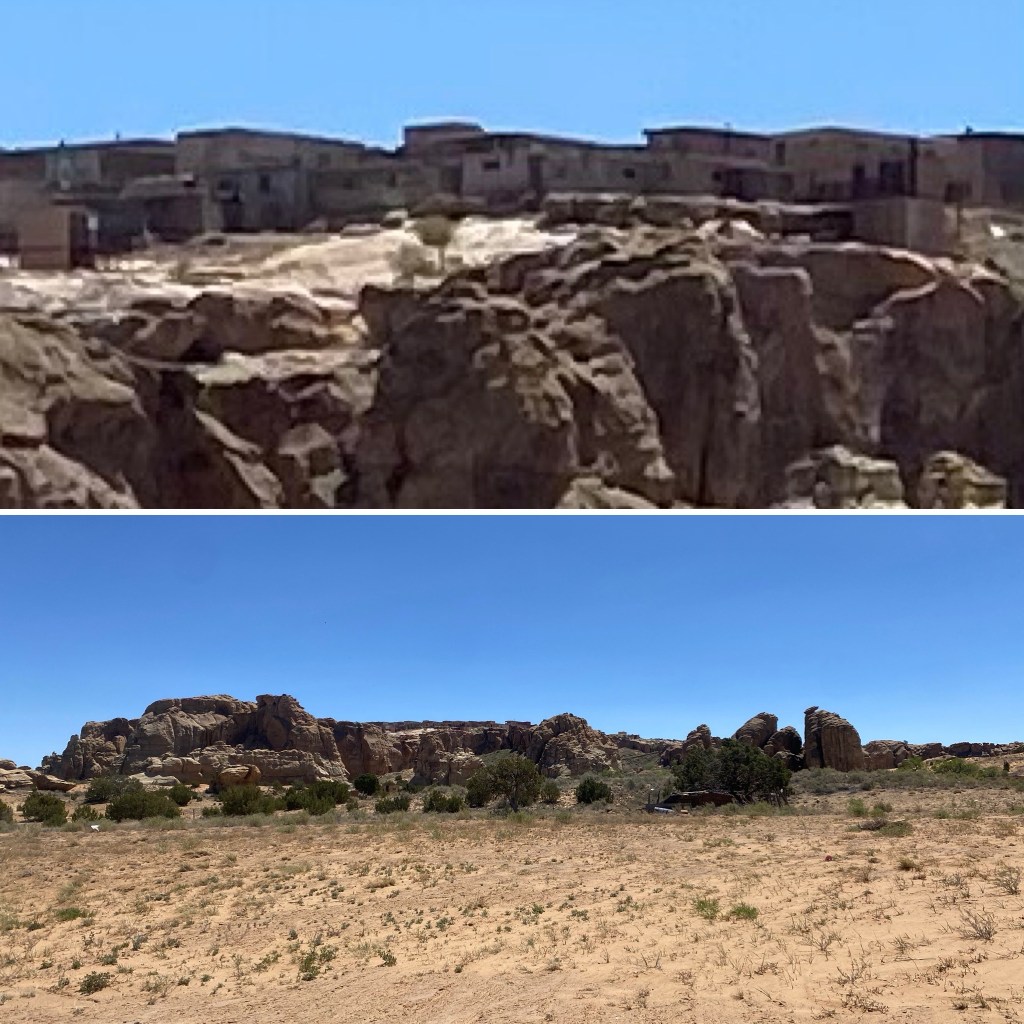
The stars finally aligned for us to tour Acoma, an ancient pueblo built on the top of a mesa, about an hour’s drive west of Albuquerque. The last time we tried to go in February 2022, it wasn’t open. From a photograph taken from the road, it’s had to make out the pueblo on the top of the mesa from a distance. Blends into the rugged southwest landscape like a camouflaged desert animal.
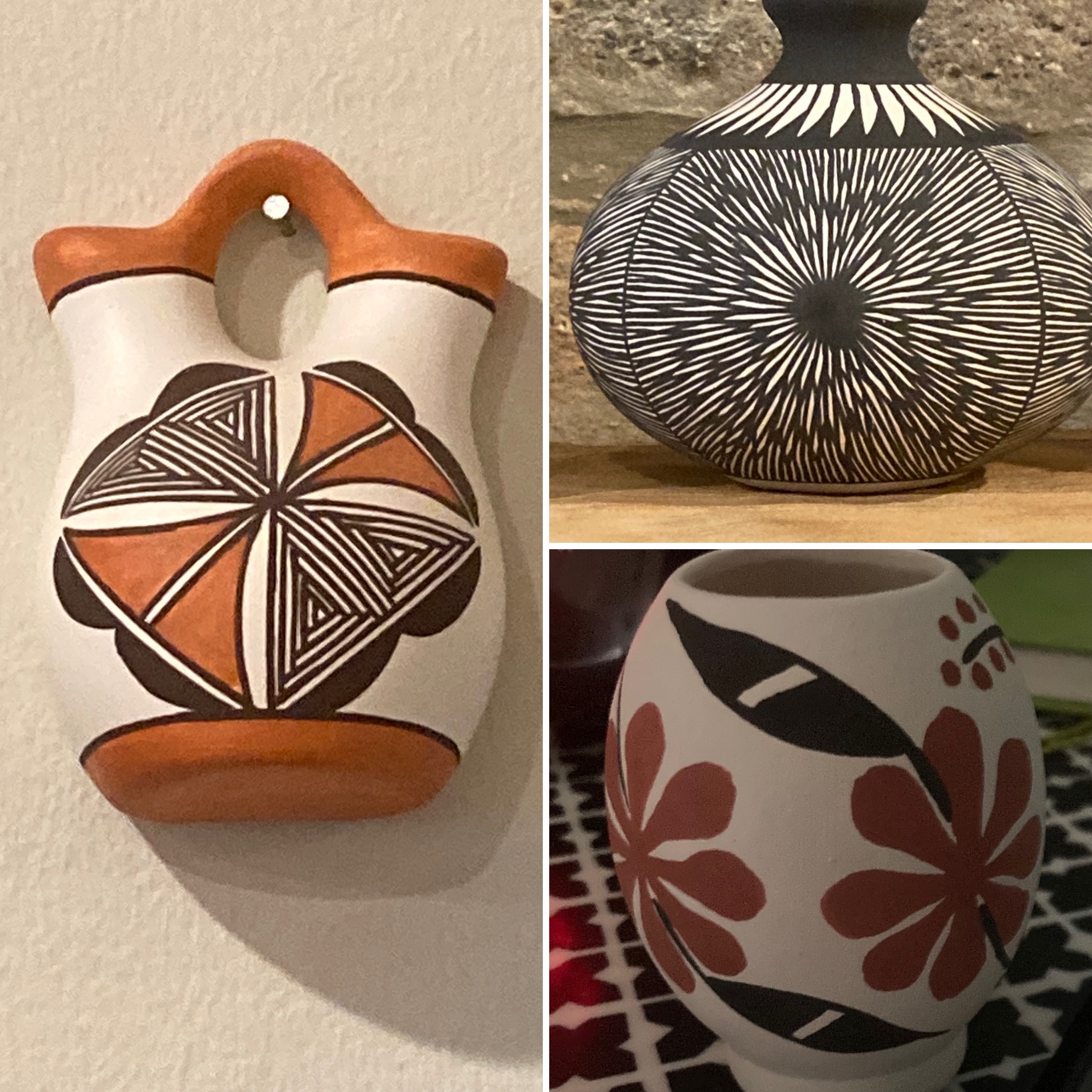
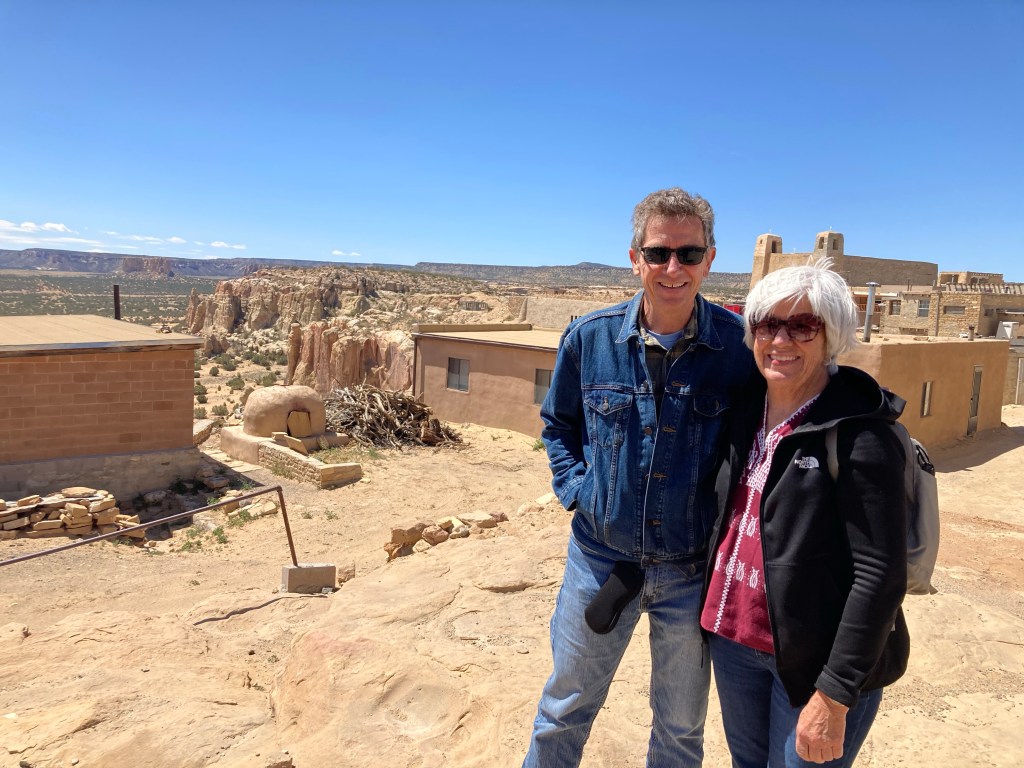
We were among about 20 tourists who piled into a shuttle bus on a crisp spring day at the attractive contemporary Sky City Cultural Center (which has a museum and cafe) to drive up the one road winding to the mesa. Then a guide showed us around the small village of simple rough-hewn adobe house. A smattering of people live part-time so it has an eerie, abandoned, ghost town feel. (There’s no water or electricity). Otherwise they live primarily in three small towns nearby. The most impressive building is a massive adobe church with high ceilings, colorful painted designs of white walls. (Photos not allowed pf the church or cemetery, where we spotted the grave marker of someone named Betsy.)
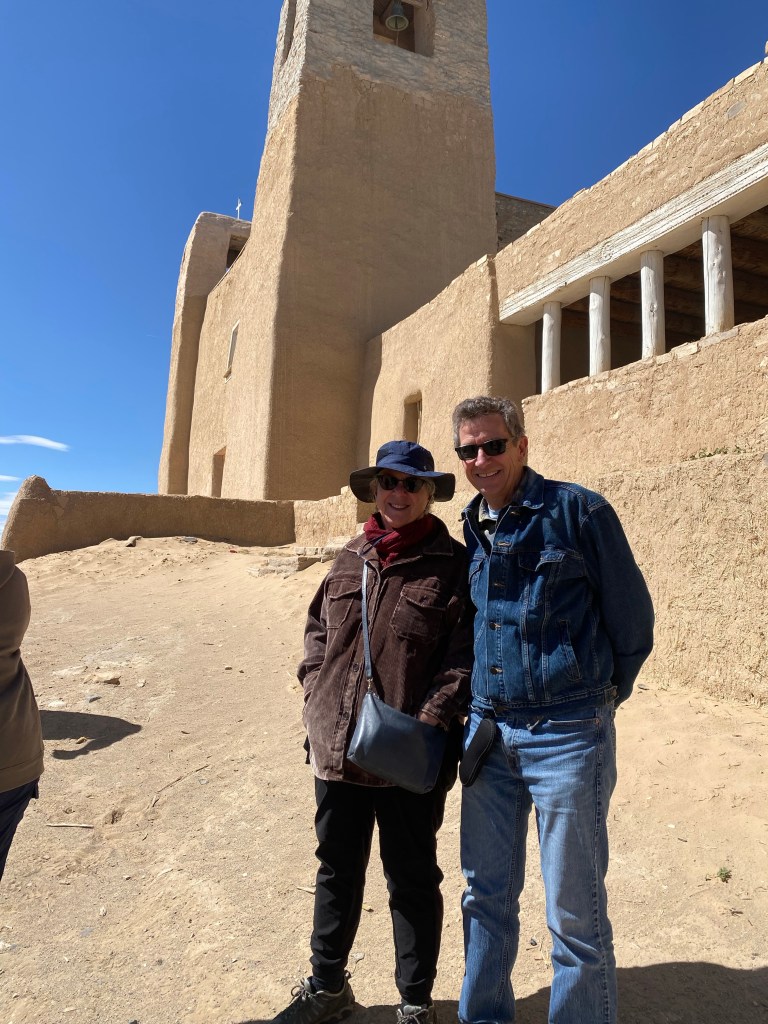
A few women sold famous Acoma thin-walled pottery hand-made from slate-like clay in the surrounding hills. I should have bought one of the two-spouted wedding vases (symbolizing the union of two people in one shared life). But we didn’t have much time (we were trying to listen to the tour) and it was tricky to figure out which were hand-made and the best quality or price (varying from $360 to $120 to $60). I did buy two delicate non-wedding pieces with intricate black, white, and red geometric designs that were much nicer than anything I looked at later in Albuquerque shops.
Acoma’s traditional wedding vase is thin-walled and hand-painted with natural pigments made with plants and minerals by artisans using slender brushes made from yucca fibers. The clay is sometimes strengthened by adding shards of older pottery. Instead of using a wheel, artists use a “hand-coil” method that starts with a method I remember as a kid: rolling long “snakes” of clay. These are stacked to form the vessel. Then comes the non-kid part: gourd scrapers and river stones are used to scrape and polish the surface until smooth. But today, some are made in a more pre-fab way, using pre-cast or molded (clay poured into a mold) pottery (maybe like the kind found in paint-your-own-pottery places?) The molded pottery is heavier, more uniform looking; the hand-made coiled pottery has tell-tale signs inside (coarser, uneven, some tooling marks).I couldn’t tell with the two pieces I bought – they’re lighter than a tiny wedding vase I bought years ago near Acoma and also signed on the bottom with someone’s name.
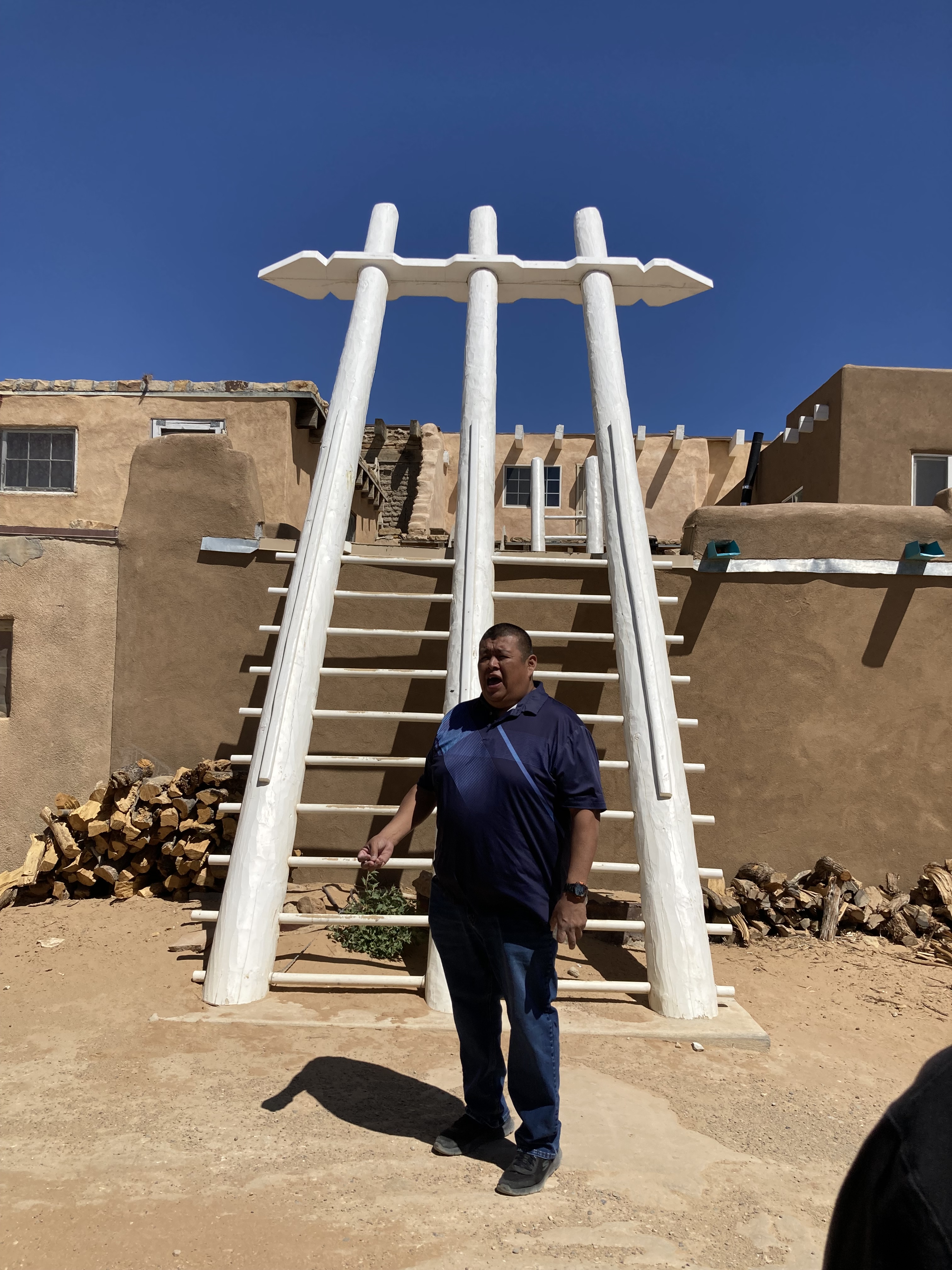
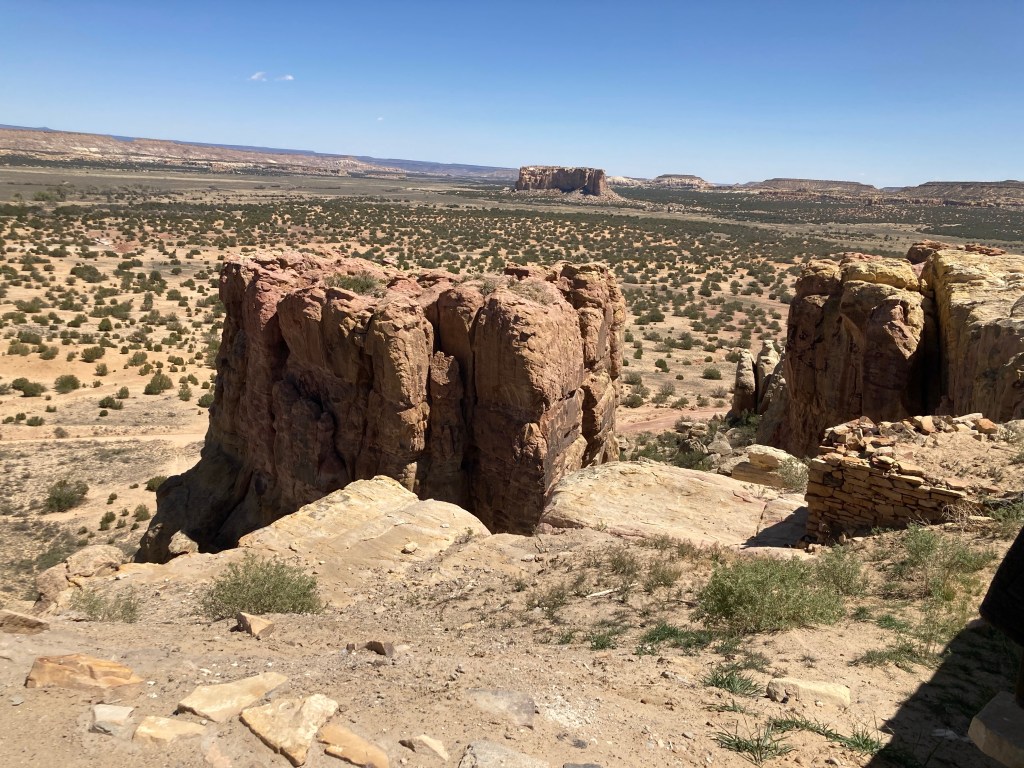
I was struck by the many influences on this community – Spanish, Franciscans from Italy, Moorish ovens brought by the Spanish. The view from on high were breathtaking – a vast valley with mountains in the distance and rocky buttes and mesas dotting the plains.

 TakeBetsywithyou