Tag Archives: New Mexico

Acoma Pueblo – New Mexico

Zeroing in on the Pueblo buildings atop a mesa

The stars finally aligned for us to tour Acoma, an ancient pueblo built on the top of a mesa, about an hour’s drive west of Albuquerque. The last time we tried to go in February 2022, it wasn’t open. From a photograph taken from the road, it’s had to make out the pueblo on the top of the mesa from a distance. Blends into the rugged southwest landscape like a camouflaged desert animal.

We were among about 20 tourists who piled into a shuttle bus on a crisp spring day at the attractive contemporary Sky City Cultural Center (which has a museum and cafe) to drive up the one road winding to the mesa. Then a guide showed us around the small village of simple rough-hewn adobe house. A smattering of people live part-time so it has an eerie, abandoned, ghost town feel. (There’s no water or electricity). Otherwise they live primarily in three small towns nearby. The most impressive building is a massive adobe church with high ceilings, colorful painted designs of white walls. (Photos not allowed pf the church or cemetery, where we spotted the grave marker of someone named Betsy.)

A few women sold famous Acoma thin-walled pottery hand-made from slate-like clay in the surrounding hills. I should have bought one of the two-spouted wedding vases (symbolizing the union of two people in one shared life). But we didn’t have much time (we were trying to listen to the tour) and it was tricky to figure out which were hand-made and the best quality or price (varying from $360 to $120 to $60). I did buy two delicate non-wedding pieces with intricate black, white, and red geometric designs that were much nicer than anything I looked at later in Albuquerque shops.

Acoma’s traditional wedding vase is thin-walled and hand-painted with natural pigments made with plants and minerals by artisans using slender brushes made from yucca fibers. The clay is sometimes strengthened by adding shards of older pottery. Instead of using a wheel, artists use a “hand-coil” method that starts with a method I remember as a kid: rolling long “snakes” of clay. These are stacked to form the vessel. Then comes the non-kid part: gourd scrapers and river stones are used to scrape and polish the surface until smooth. But today, some are made in a more pre-fab way, using pre-cast or molded (clay poured into a mold) pottery (maybe like the kind found in paint-your-own-pottery places?) The molded pottery is heavier, more uniform looking; the hand-made coiled pottery has tell-tale signs inside (coarser, uneven, some tooling marks).I couldn’t tell with the two pieces I bought – they’re lighter than a tiny wedding vase I bought years ago near Acoma and also signed on the bottom with someone’s name.

I was struck by the many influences on this community – Spanish, Franciscans from Italy, Moorish ovens brought by the Spanish. The view from on high were breathtaking – a vast valley with mountains in the distance and rocky buttes and mesas dotting the plains.

Acoma village view

Leave a comment

Filed under New Mexico

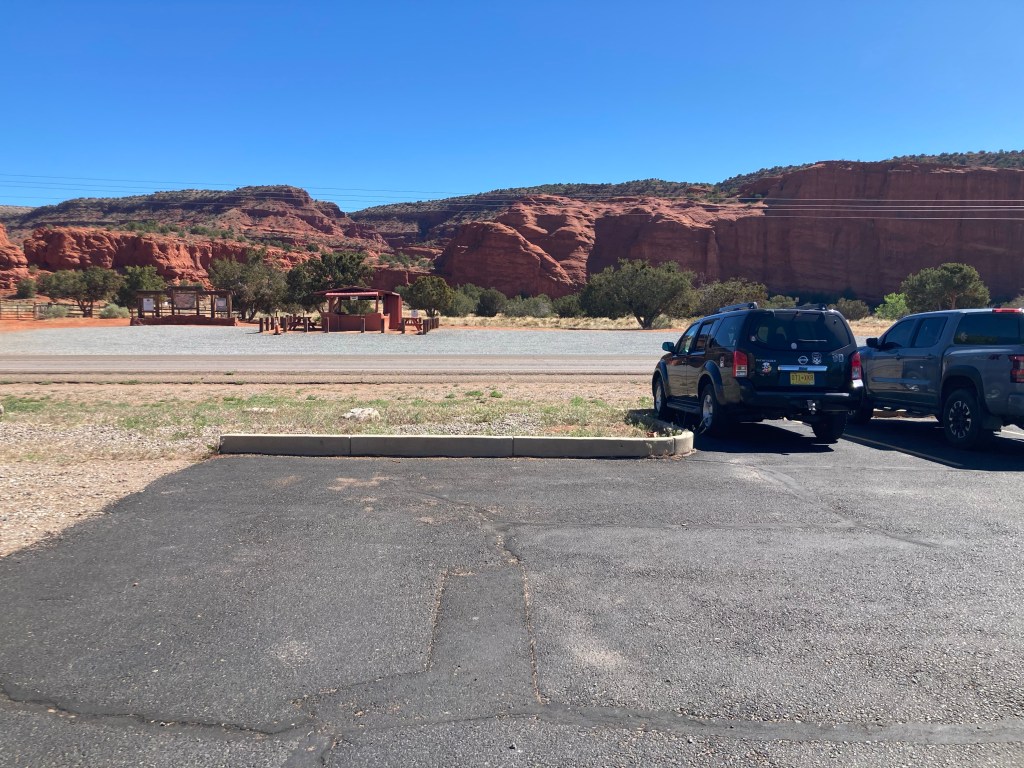
red rocks and historic site @ Jemez Springs, Valles caldera, Los Alamos, cafe Pasqual’s & Santa Fe

Not Los Alamos
Not Los Alamos

I’d never been to a city that requires drivers to pass through a security check and show their driver’s license but now I have….outside Los Alamos. Not surprising given its the home of the atomic bomb and today, a national research lab focused on national security and “nuclear stockpile stewardship.” The guy at the security check post told not to turn right as we drove into town because that could be a possible security breach. Okey doke. Los Alamos seemed utterly ordinary after that, at least on the surface, as we drove through.
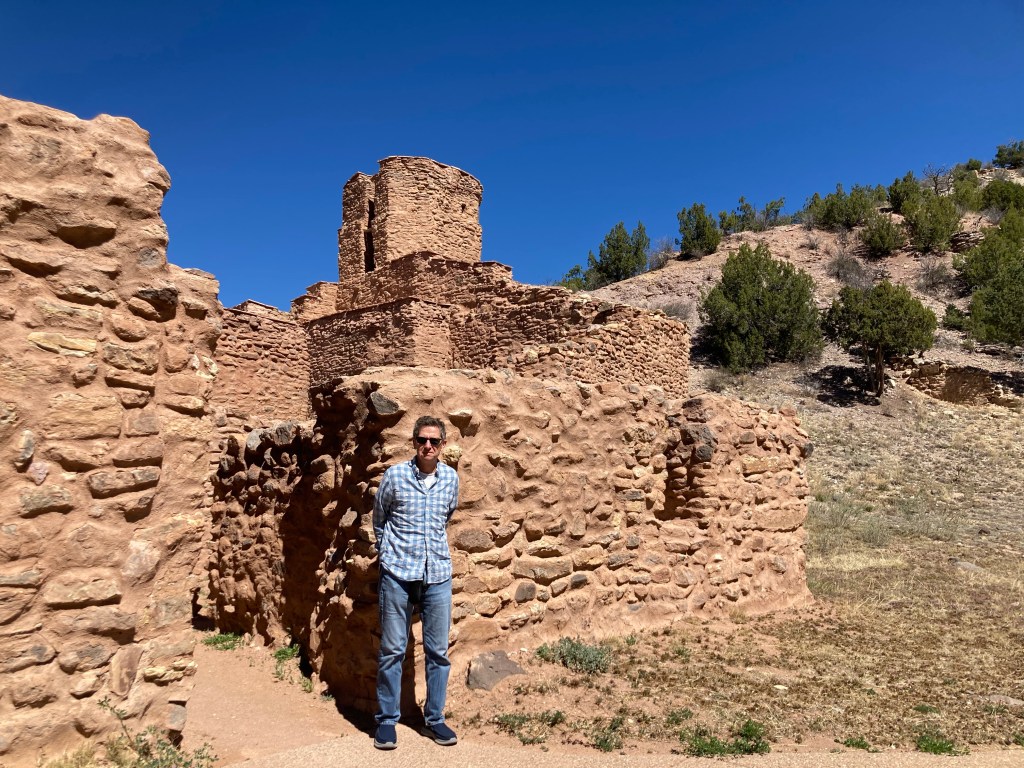
Not Los Alamos (again)

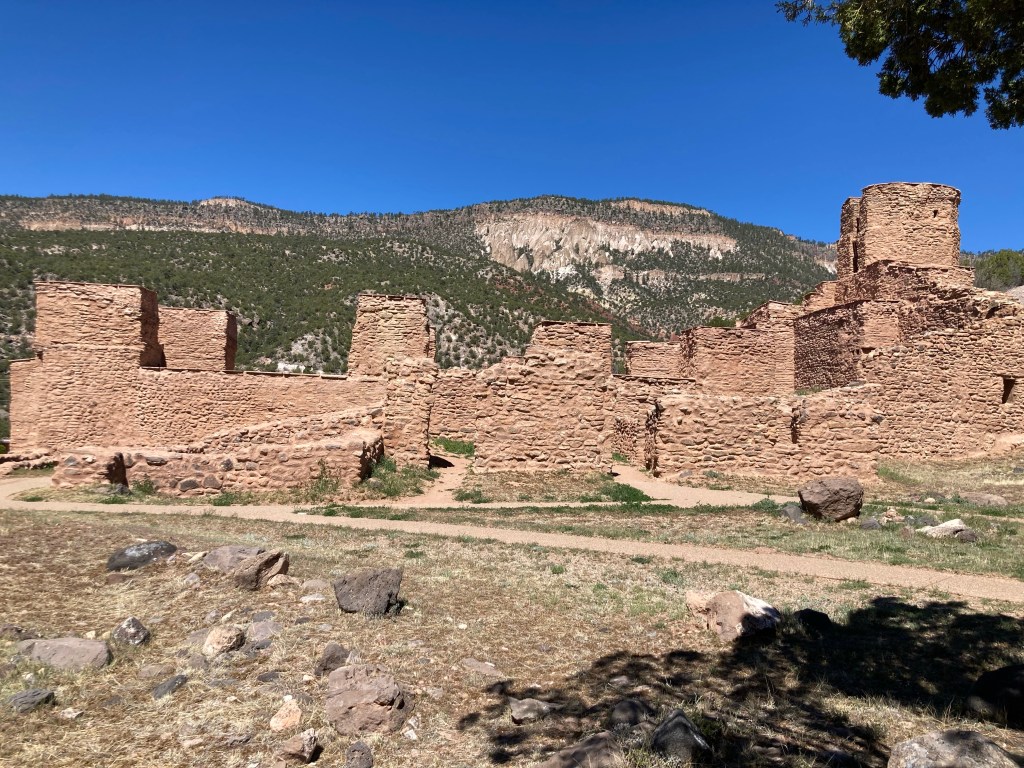
We preferred to spend our time elsewhere, taking a very scenic drive to Los Alamos from ABQ, stopping several times. In Jemez Springs, we visited the local historic site: the ruins of a Spanish mission church dating to 1621-22 adorning a rugged canyon. Beyond the thick stone walls of the San José de los Jémez church are rudimentary benches underneath a wide open sky, the roof presumably long gone. We followed a short interpretive trail though the ruins of a 700-year-old village established by ancestors of today’s nearby pueblo, at around the same time as Plymouth Rock. We also admired the area’s red rock formations. Next trip to do: self-guided tours of Gisewa Pueblo and San Jose Mission; visit natural hot springs.
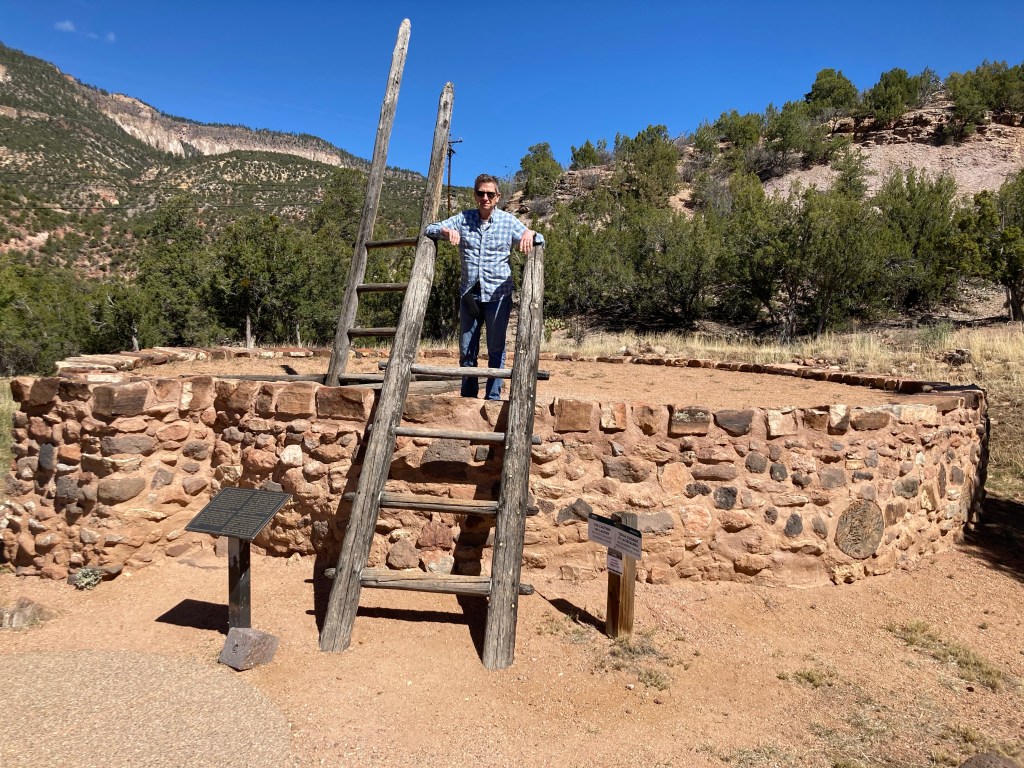
The village includes a cluster of shops that might be fun to explore and hiking trails.

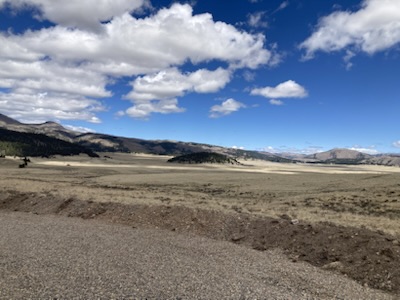
We also drove though the Valles Caldera National Preserves, a flat 14-mile wide prairie-like expanse with dramatic patches of dark and light as clouds moved slowly in a bright blue sky. It was created by a volcanic eruption 1.2 million years ago. Hiking, biking, wildlife-gazing, fishing and cross-country skiing are available to those who venture out of their cars. We couldn’t tell if our borrowed car was being photographed to charge us $25 to drive into the preserves or if our national park pass would work! But guessing we (or the person we borrowed the car from) was charged.
In Santa Fe, we wandered around the historic plaza and the railyard district, visiting pricey shops and eating excellent New Mexican food at the famous Cafe Pasquale’s. (Huevos, tacos, lemon meringue tart). Much as I appreciate the beauty and sophistication of Santa Fe, I find it more one-note and less interesting to explore than Albuquerque, one of those underdog cities I’m drawn to maybe because I grew up outside Detroit andlearned to appreciate unlikely places where I’ve lived (Wichita, Des Moines…)
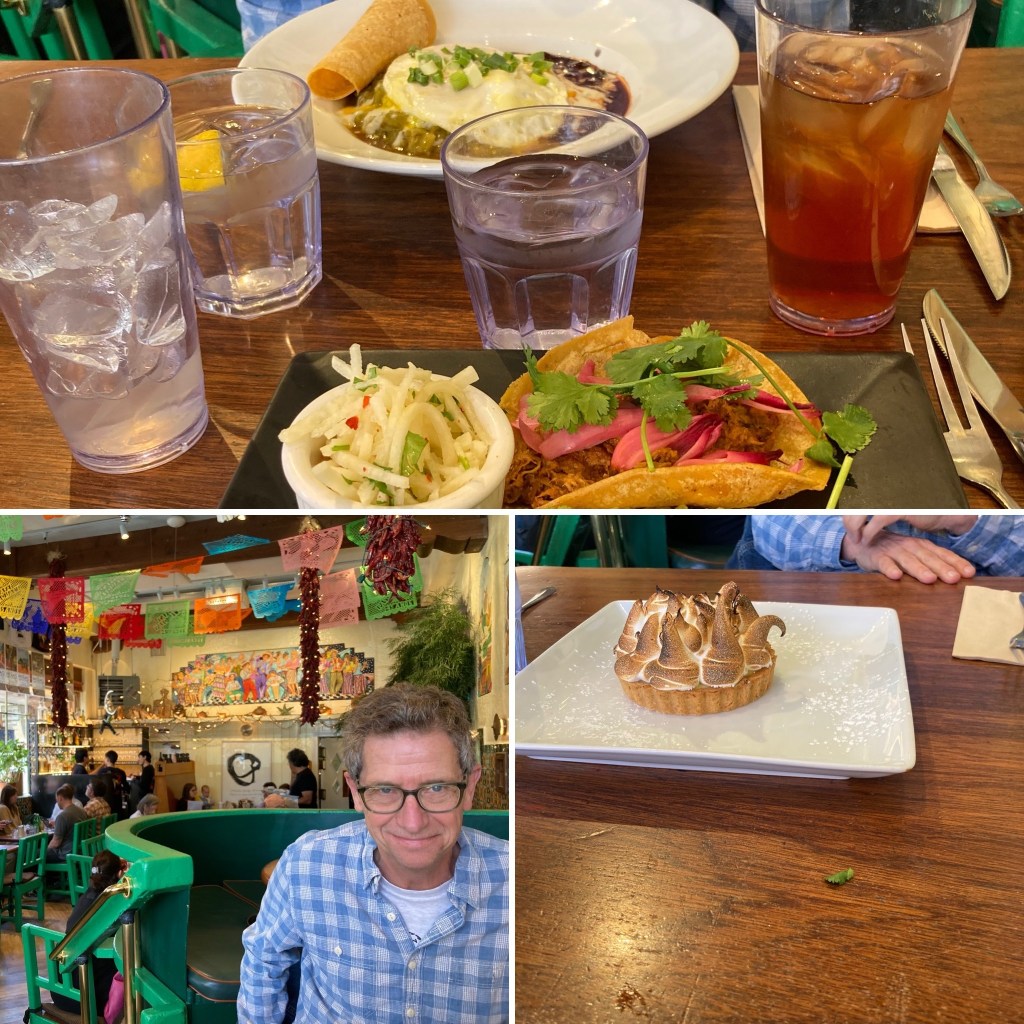
Cafe Pasqual’s

Leave a comment

Filed under New Mexico, Uncategorized

El Rey Court, The Pantry, farmers Market- return to Santa Fe

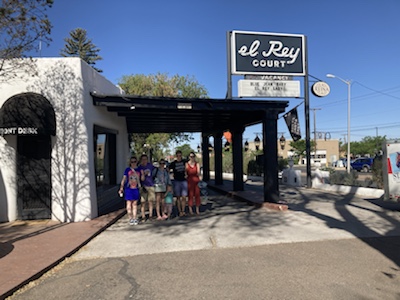
My first trip to what was then called the El Rey Inn was in the late 1980s. It was an inexpensive lodging option in pricey Santa Fe, a humble but packed-with-character, hacienda-themed motor court motel on the outskirts of town, with low, whitewashed rows of rooms with rough hewn wood beams on the ceiling and old Mexican tiles, pretty green plazas with flowers and a funky old pool. We stayed here maybe three more times into the 2010s, when it started to feel a wee bit faded and run down.

Santa fe

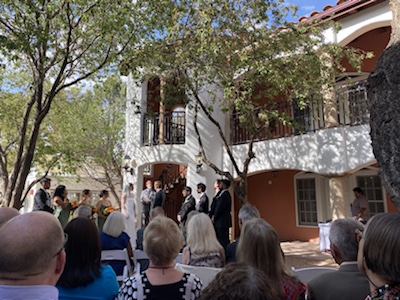
Now it has been transformed by motor court aficionados from Austin into the hipster El Rey Court, a boutique motel with trendy toiletries, contemporary art and, yes, higher prices. But it’s a fun place to stay still, and we had a good excuse. We are here for the wedding of our lovely niece Amelia and longtime beau Nick.

Farmers market

Breakfast was next door on Cerrillos Road at The Pantry, a terrific unpretentious diner with a long counter, two rooms of tables (perfect for our big group) and New Mexican landscapes. Breakfast was enjoyed by all, with entrees including huevos rancheros, burritos and a scrambled egg concoction with vegetable and avocado.
Wedding

Next stop, the farmers market at the Rail Depot, which was a fun scene, with a few early vegetables but also lots of makers of juniper bitters, baked goods and hanging clusters of red chilies. Fun to return after our month in these parts in February and see flowers in bloom.

El Rey

Leave a comment

Filed under New Mexico, Uncategorized

Las Vegas — the older, Coen Brothers’ film set one in New Mexico and The Raton Pass/pronghorns in Colorado

On our long drive home from Albuquerque to Iowa (16 hours), we stopped early on (after two hours) in rough-around-the edges but coolin-pockets Las Vegas, NM home to almost 1,000 historic buildings, most 19th century. Several overlook the city’s plaza and, next to the railroad tracks, the fantastic recently restored and reopened Castaneda Hotel, formerly one of the famous Harvey Houses that served passengers on the Atchison, Topeka & Santa Fe Railroad. Opened in 1899, the Castañeda is a Mission Revival building designed by a prominent Pasadena architect. Here’s a good 2019 story on its rebirth in the Los Angeles Times https://www.latimes.com/travel/story/2019-08-30/new-mexico-hotels-las-vegas-castaneda

Las Vegas Plaza

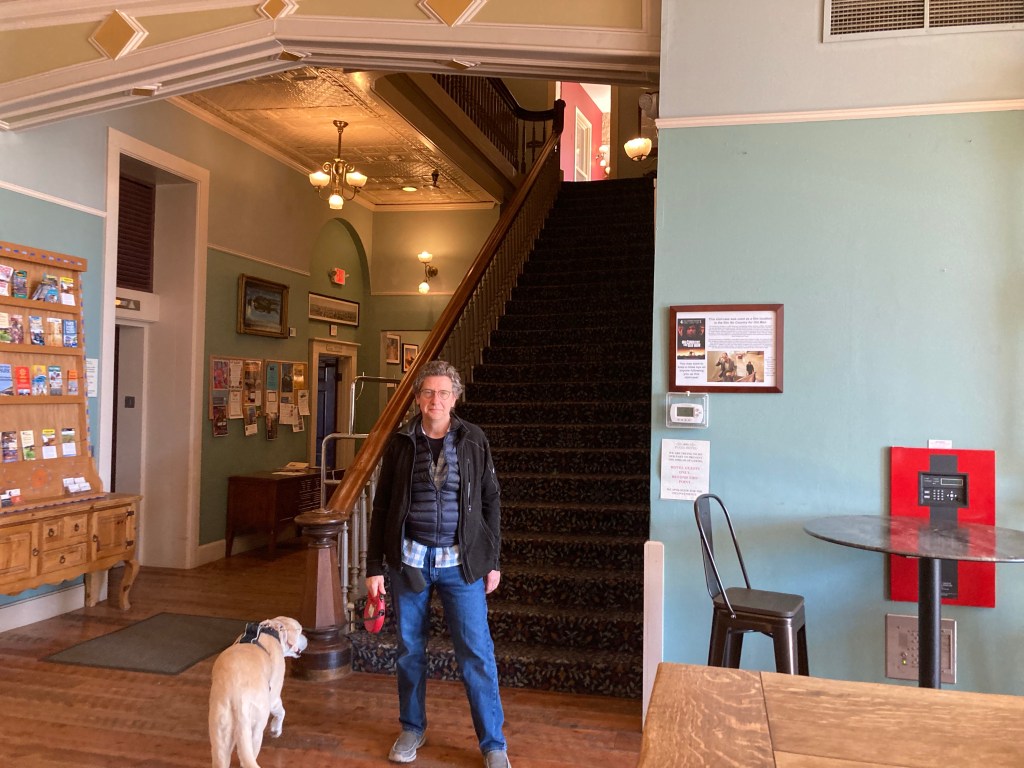
In the plaza, we stopped briefly at the dog-friendly (thank you!) also recently restored (by the same brave souls) 1882 Victorian Plaza Hotel, where we got excellent baked goods at a little cafe in the lobby and posed in front of the staircase where the character played by Woody Harrelson was killed in the film “No Country for Old Men.” Other films and movies have been shot in town including the series Longmire.

At the Castaneda Hotel beside the railroad tracks, (also dog friendly) a nice woman who gladly showed us around, said actor Josh Brolin and other cast and crew from an upcoming Amazon series “Outer Range” rented out the hotel and The Plaza for seven months in 2021 while filming. Reopened in 2019 after it closed 70 years earlier, the hotel is a massive red brick structure with a cool courtyard facing the railroad tracks. The same folks who fixed up Las Vegas’s hotels also revived La Posada, another former Harvey House in Winslow, Arizona that has long been on my to-visit list.

The infamous staircase from “No country for old men”

We caught a quick view of the stunning snow-capped Rockies as we drove through the dramatic Raton Pass from northern New Mexico into Colorado but after that the land soon became wide open flat yellow ranch land. With the temps in the high 40s, we pulled off another (quick) picnic in the LaJunta town park. Amazed we could do this in February! A highlight: we spotted some strange unknown animals in the field that looked like a large tan and red dog with antlers. Google informed me they are pronghorns, not technically an antelope but comparable., resembling a cross between a goat and Antelope with 2-pronged antlers.

Leave a comment

Filed under New Mexico

hiking, dining and shopping in ABQ (Albuquerque)

Among our favorite trails at the Sandia Mountain foothills:

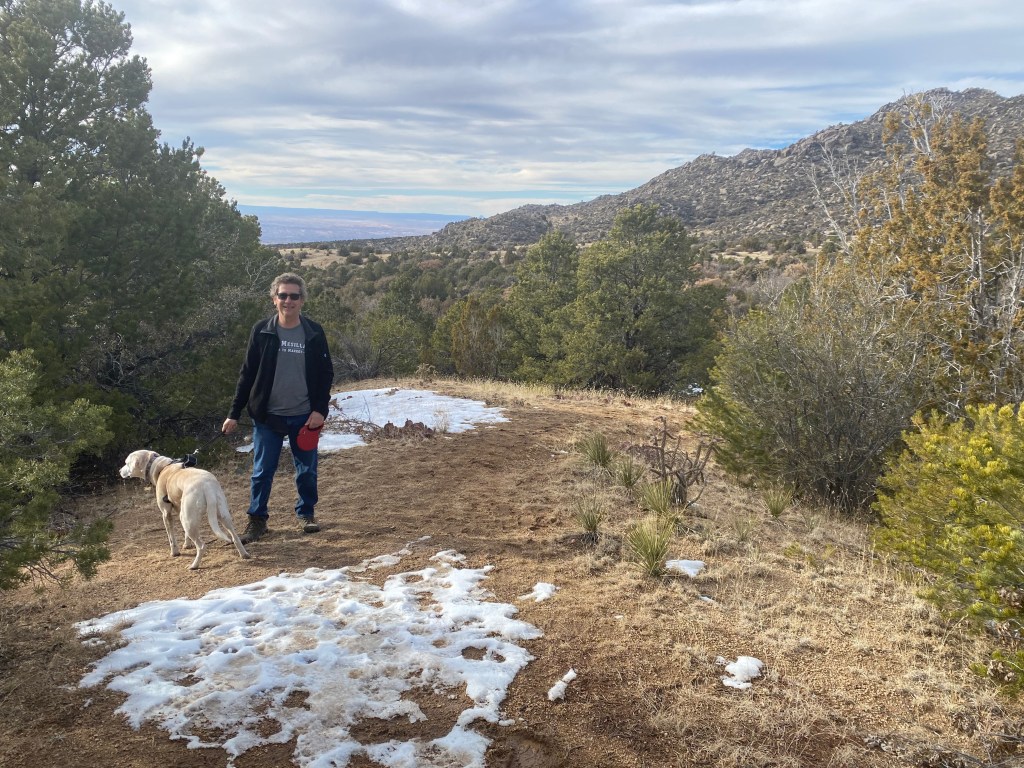
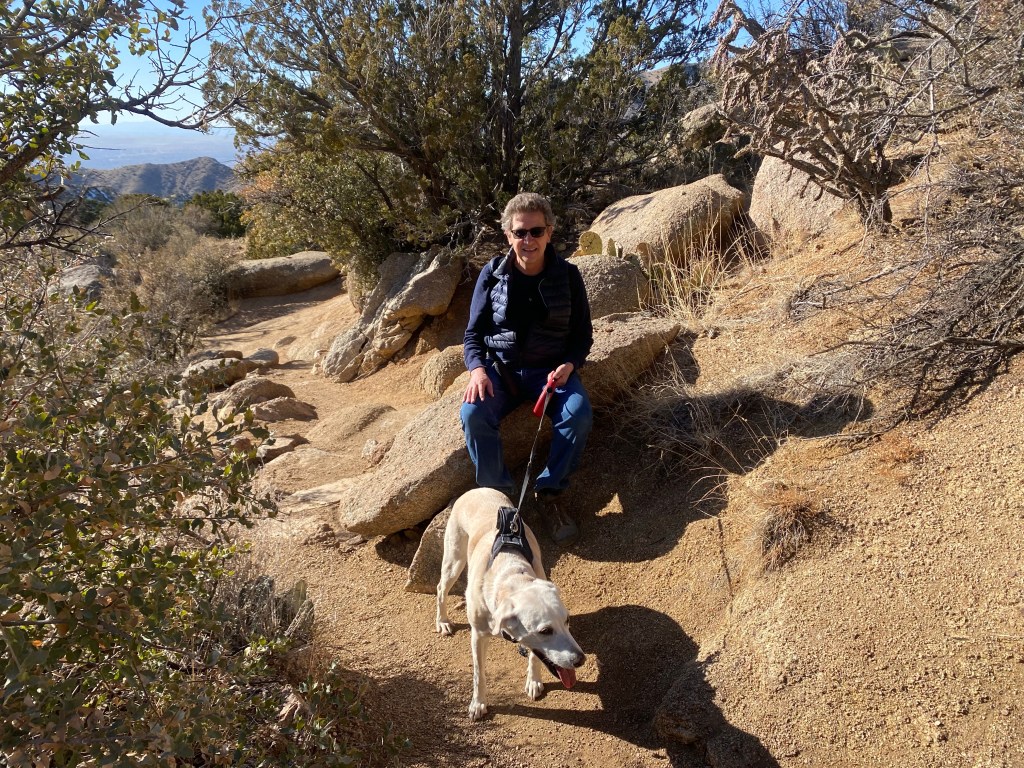
The Pino trail at Elena Gallegos “Open space” – wide dirt path and slight incline initially, then narrows and winding with more boulders, roots and rocks, plus mud, snow and ice (so we turned back after 50 minutes)

On the Pino Trail

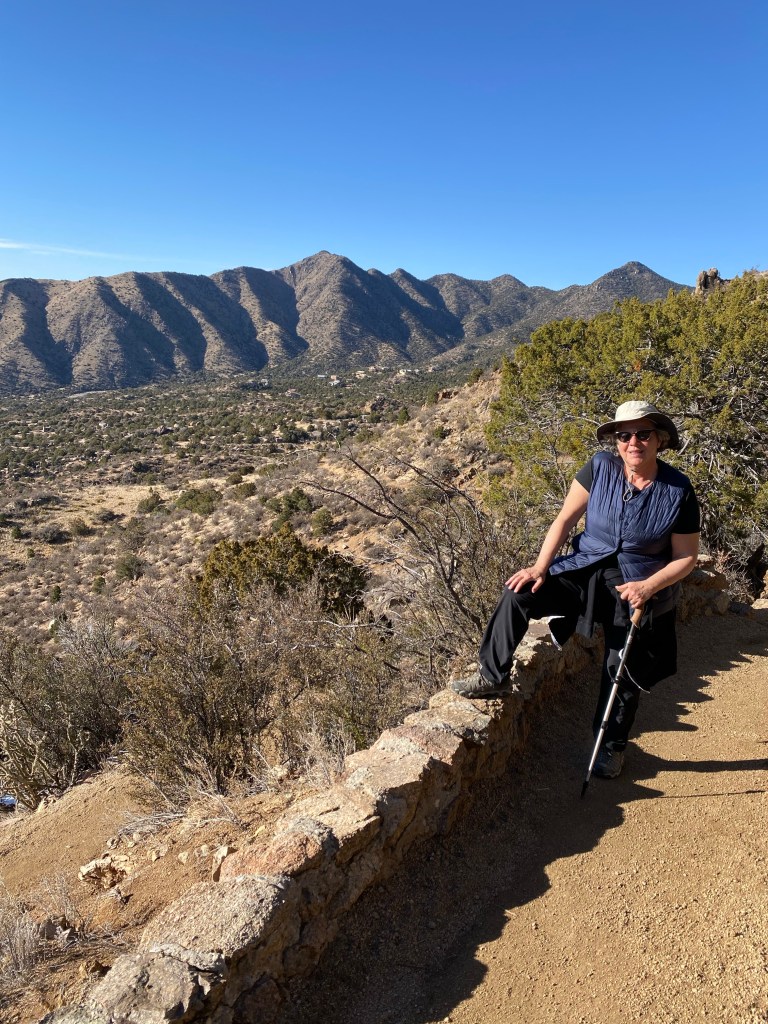
La Luz Trail, a little more strenuous, narrow switchbacks and uphill, very scenic.

at Petroglyph National Monument – we did two dog-friendly short hikes (Piedras Marcadas Canyon Trail 1.5 miles; Rinconada Canyon Trail 2.5 miles) with our lab Millie late in the afternoon when the light was particularly dramatic, walking on sandy flat paths on a trail hugging a canyon of dark volcanic rocks, some with ancient markings of hands, faces, animals, crosses and who knows what else made by the ancestors of Pueblo people and by Spanish visitors. The main trail doesn’t allow dogs.

Among the ABQ restaurants and shops we enjoyed: BUT First a shout out to the free local monthly foodie magazine The Bite, which I happened to pick up early in our visit (along with a bimonthly Edible magazine.) The Bite offered dining scuttlebutt and many suggestions of places to eat in ABQ and beyond and never steered us wrong! Thanks to The Bite, I found FARMessila in Las Cruces, Mille in Santa Fe and Mesa Provisions and Ihatov Bakery in ABQ.

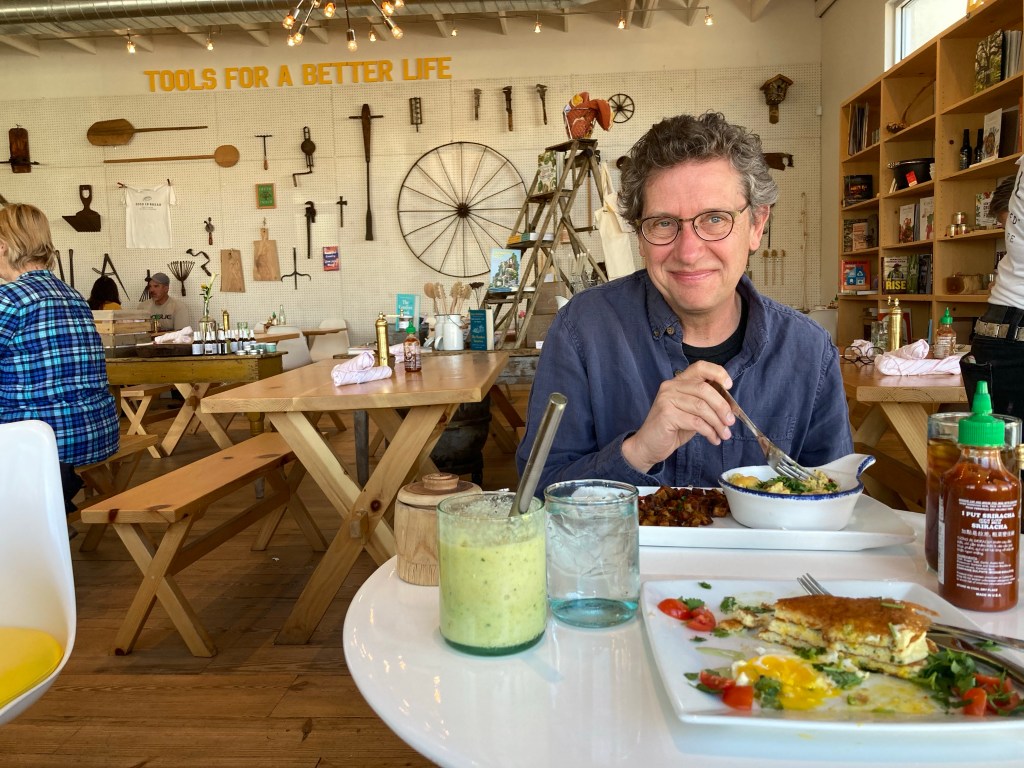
Modern General, which sounds a bit like a TV sitcom but is a southwest breakfast-themed “brunchery” with wonderfully inventive and delicious entrees and smoothies in a bright white space resembling a super tidy and curated “feed and seed” general store but with a handful of books, home goods and local lotions and potions, plus what look like very good cookies, brownies snd bread. We shared savory/sweet Green Chile Cilantro Corncakes, three little pancakes topped with a soft egg, with a squiggle of cilantro lime crema and Chile maple syrup; And The Albuquerque,flavor-packed scrambled eggs with green chiles, bacon, cumin, garlic, sharp cheddar with well-browned diced potatoes.And that drink (in the photo below) is a peach pollen smoothie (peaches, bee pollen, cucumber, banana, pineapple juice.) This is a sister restaurant of nearby Vinaigrette and both have Santa Fe locations.

Pueblo Cultural Center’s dining room – we went with the most traditional Pueblo entrees, according to our very knowledgeable server who was raised on the Taos Pueblo. A contemporary (and delicious) take on Blue corn chicken enchiladas and beef and poesole stew (less delicious). The blue corn onion rings were very good. We’d been through the museum part before. The place is an interesting cultural experience, in a well-designed contemporary building with Pueblo decor.

Mesa Provisions – a splurge to thank our relatives who have put us up for the past month in their newest house, this covid-era Nob Hill restaurant’s chef worked previously at ABQ’s Farm & Table, which gave us high hopes that were not dashed. The food and service were excellent, especially the creative take on a green Chile cheeseburger, the shrimp on toast, smoked chicken, I even liked the kale salad. The key lime sorbet was a perfect end to the meal.

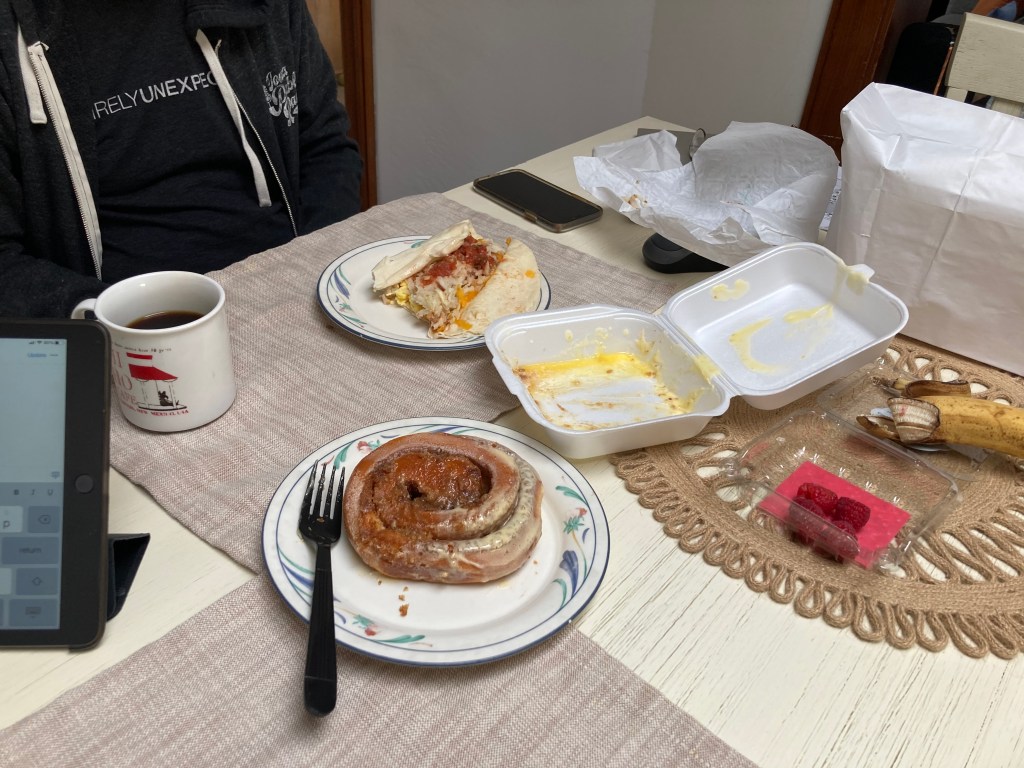
Golden Pride – a local treasure near the U of New Mexico campus and hospital, this restaurant advertises chicken and ribs but is most famous for its breakfast burritos (homemade tortillas,) and sweet rolls, which you can request hot or cold. Our relatives recommended hot, which came in a bath of butter, doused with cinnamon sugar. No wonder there’s often not one but two lines of cars for the two drive through windows every time we drive pass on Lomas Avenue. Word has it, few customers eat inside. Drive through is the way to go, easy in and out.

Heart unhealthy breakfast at Golden Pride

The Daily Grind – we liked this casual breakfast and lunch place, off the beaten path. good salads (turkey club) and sandwiches (Cuban).

ABQ’s Modern General (also in Santa Fe)

Kei and Molly textiles – The production facility and showroom for this well-known, do-good local maker of tea towels, aprons, sponges and napkins is right nearby Nob Hill, prompting some early holiday gift shopping.

Sara Bande Home – well-chosen home goods in a small ritzy strip center in NW Albuquerque on the stretch of Rio Grande that gets fancy, with huge mansions on dusty ranch land. It’s tethered to a good bookstore, paper goods store and outpost of the Flying Star Cafe. We found what we needed so didn’t go on to the fancy and pricey store at Los Poblanos resort up the road.

Leave a comment

Filed under Albuquerque, New Mexico, Uncategorized

Farmers & crafts Market, Maya hand woven textiles in Las Cruces, FARMesilla, plaza and art in Mesilla – southern New Mexico

What a totally fun and interesting day in Southern New Mexico. It warmed my midwestern heart to be able to stroll down a city street full of other strollers looking over farmers market goodies and crafts during Las Cruces twice-weekly market (Saturdays and Wednesdays.) This time of year there were more crafts than produce but we did spot some garlic and lettuce. Mostly we saw pecans (and pecan-infused lotions and potions), southwestern-themed woodwork and photography, turquoise jewelry.

The market is held on Main Street, which has some interesting old adobe and brick buildings, including a theater decorated with colorful terra cotta. On nearby streets, we found similar buildings in the Mesquite Historic District, home to small shops run by independent entrepreneurs. We began the day in the district with coffee at the welcoming Beck’s Roasting House and Creamery.

As fate would have it, it was the third Saturday of the month, which I learned from a flyer in the Beck’s bathroom, is when a local church group “Weaving for Justice” sells Maya textiles hand-woven by women in Chiapas, Mexico. At the church, a kind older woman with long white hair showed us around and explained the church’s project to provide work and money for impoverished Mexican families. We left with a bag full of hand-woven placemats and scarves, hand-embroidered pillowcases and two hand-made woolen animal dolls (an owl and llama).

A short drive away, Mesilla felt a bit more like Santa Fe, with a small concentration of adobe houses containing shops for tourists around a pretty central plaza dominated by a Catholic Churchthat is on the national historic register and is often used in film shoots. It’s pleasantly rougher around the edges and with much more reasonable prices for artwork. In one gallery that was having a reception, I bought a handmade silk poncho-like blouse for $30 and a one-of-a-kind ceramic plate for $35.

There seemed to be a battle of the local nuts going on, with two stores facing off across from each other on the plaza, one selling all things pecans, the other all things pistachios. (Unwilling to take sides, we bought both.)

We popped into the famous historic Double Eagle restaurant, circa 1849 and the Plaza’s oldest structure, according to a lengthy history provide as a handout by the restaurant, filled with Victorian armchairs and old oil portraits. We gawked at ornate “Imperial Bar,” which sports a 30 foot hand carved oak and walnut bar, light fixtures with Lalique Crystal rosette shades, an antique brass foot rail, two seven foot tall French Baccarat Crystal chandeliers, and a tin ceiling with bits of 18 karat gold. No wonder visiting movie folks reportedly hang out here.

Once the home of some of Mesilla’s fancy families, Double Eagle was named after the eagle-adorned 1880s era twenty dollar coin by a Roswell NM native who bought the building in 1970. (The Roswell guy became president of Atlantic Richfield Oil.)

The sunlit “”Billy the kid” patio (yes Billy was around here) has a seven- foot carved stone fountain surrounded by palms, an eccentric space that reminded me New Orleans. The restaurant is fancy but has a casual cousin called Pepper’s.

We ate instead at the wonderful local specialty market FARMesilla, which looked like something out of Magnolia mag, a bright airy space full of local meats, cheeses, eggs, sausages, spirits, jams, salsas, bread, oils, vinegars, soaps and lotions. At a counter, we ordered interesting entrees that we ate outside on a patio. Delicious and different and such small portions, which I found refreshing after days of eating huge heaping plates of beans, rice and melted cheese atop meat. Example: my Green Chile Cheddar Polenta, a small mound of creamy polenta topped with a soft-cooked egg, green Chile (of course), melted orange cheddar and a strip of crispy sweet Serrano bacon, served with a small container of what I later learned was “carrot habanero” hot sauce. Delicious and different. We brought home crunchy slight sweet blue corn bread muffins. On our way out of town we stopped at one of the outposts of the Las Cruces frozen custard maker Caliche but skipped the green Chile topping option, choosing heath bars instead.

The double Eagle

Leave a comment

Filed under New Mexico, Uncategorized

White Sands National Park – Las Cruces NM

I may never get rid of the sand between my toes but the other worldly White Sands National Park was worth a little discomfort. And where else in NM could we walk barefoot in February across great white dunes of fine white sand, made of billions of distinct dry tiny grains of gypsum? And behind these rounded sand formations, jagged snow dusted mountains that turned pink with the sky at sunset.

I found the park a strange and wondrous place, almost overwhelming my sense of sight and touch. I’ve never seen or felt sand like that, rare gypsum sand so unlike everyday moist granite beach sand, so white and bright, with dark shadows, so cool to the touch even in hot sun, so fine and granular like fancy salt. I loved walking barefoot through a sea of it, in the shadowy, wind-sculpted dunes. I loved the sifting it through my fingers, a cool silty sensation. If I had a stronger body, I would have loved sledding or snowboarding down it, as we saw a few kids and adults do.

We did trek the two mile backcountry trail, which was perfect and we had almost to ourselves, walking high on a ridge looking out at hundred of square miles of dunes that looked like snow drifts. Walking up and then down the dunes was surprisingly fun once I learned to enjoy the sinking sensation of my feet in the sand and often the sand was firm, a hard crust that was easy to walk on. There was no real trail but instead periodic orange markers jammed into the sand at helpful intervals (although some were blown over.)

At 5 pm we joined about 60 people for a ranger-led “sunset stroll” and glad we did. The whole place lit up, both the sky and the dunes in gradations of yellow, pink, blue, purple, as the sun set.

Next time, I’ll bring a picnic – there are tons of picnic tables, each with a sun shield, scattered across the dunes. We found slim pickings for food in honkytonk Alamogordo, the town closet to the dunes and ended up at the Hi-d-ho drive in, popular with locals. The burger was good and large. Dinner tonight in Las Cruces, 50 miles west of White Sands, was at Habeneros, a local Mexican place that friends who used to live here recommended. It fit the bill.

Leave a comment

Filed under New Mexico, Uncategorized

Signs of ABQ

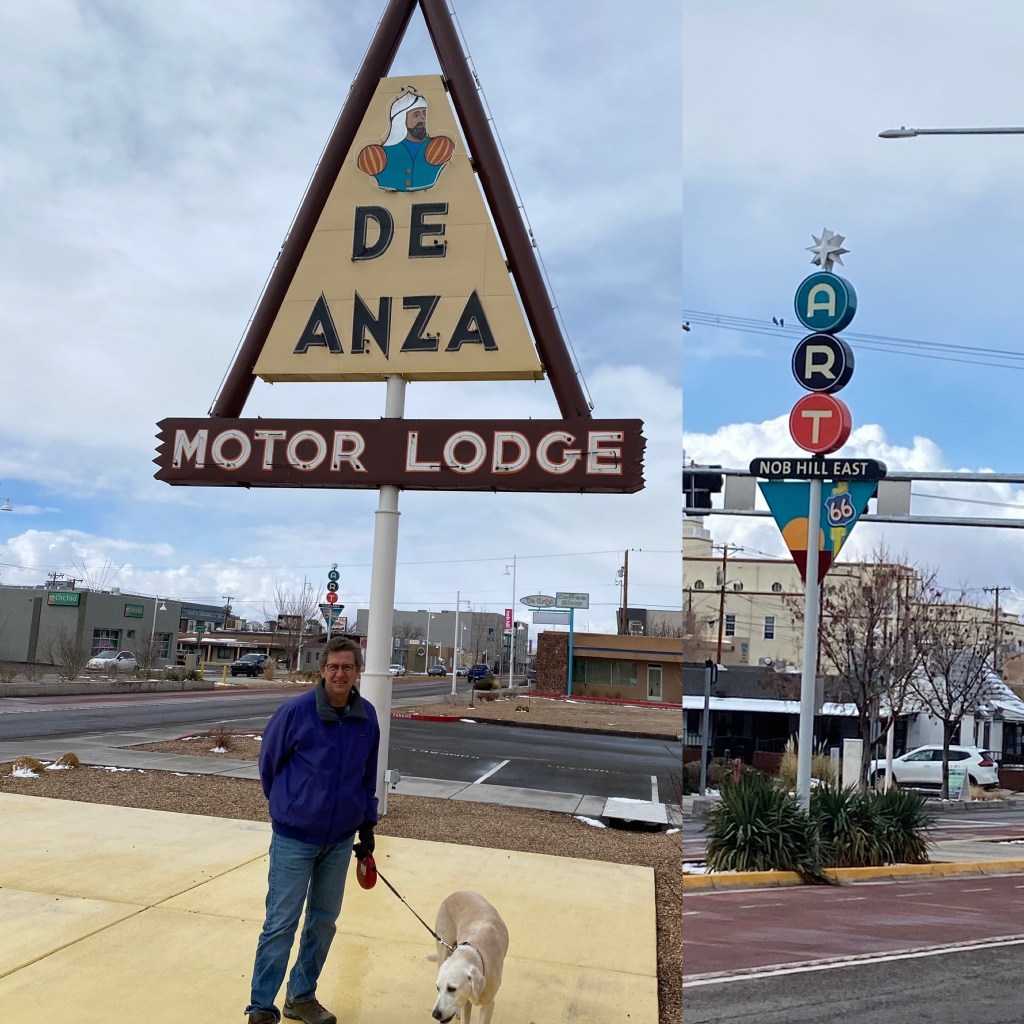
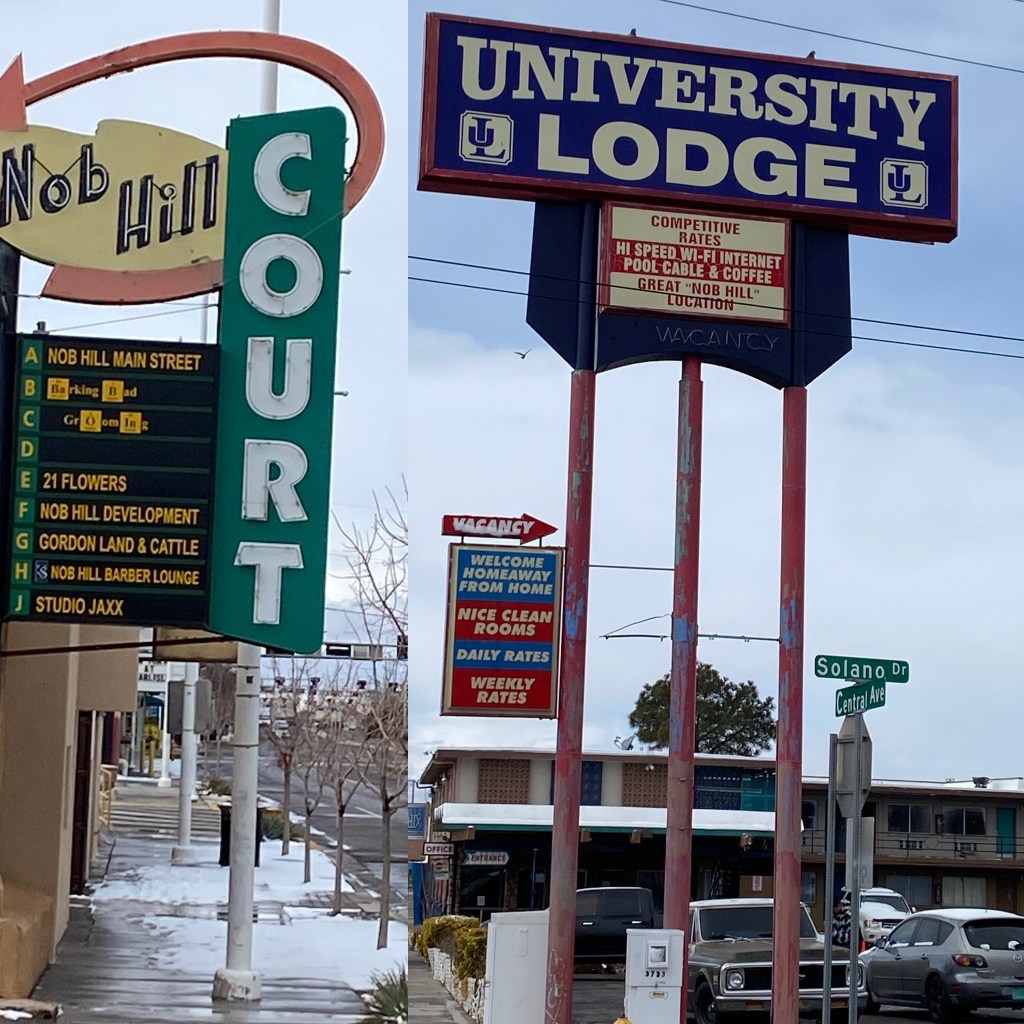
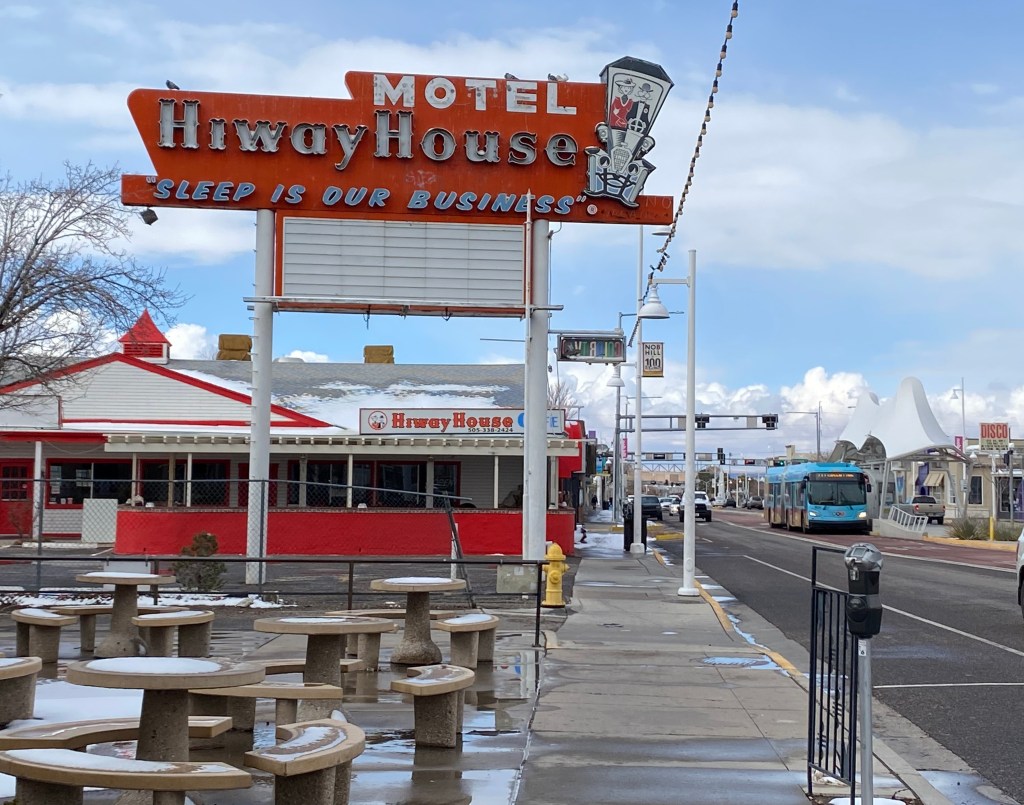
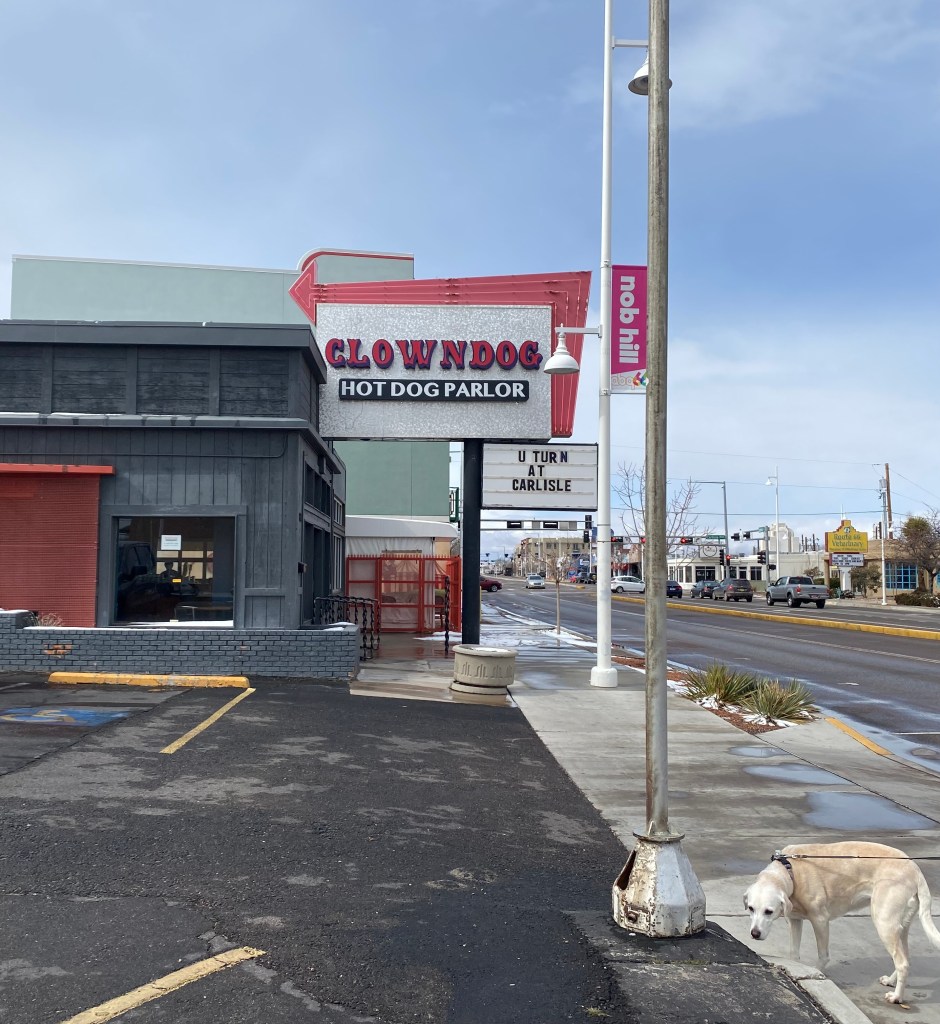
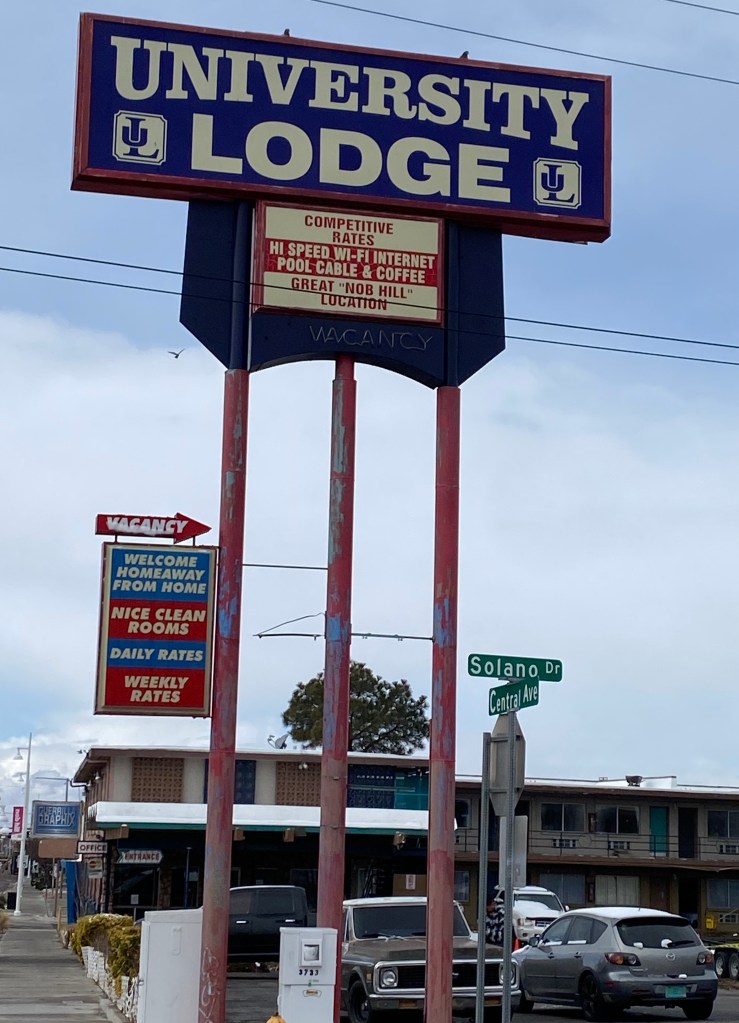
Vanishing neon road signs in ABQ appear to be a concern here, also sparking efforts to restore and save them, maybe even via a possible Sign Museum, controversial because signs would be removed from their original locations.

But plenty classics remain, including near us on Central Avenue aka Route 66. Here’s a choice few from the Nob Hill stretch of Central, our temporary stomping ground:

Night lights
Our dog clowning around (not)

Leave a comment

Filed under Albuquerque, New Mexico, Uncategorized

La Luz Trail, Los Poblanos, Petroglyphs, Snow (yes snow)- ABQ

The weather was glorious, in the mid 60s, so we finally got our Sandia Mountain hike in, starting at the bottom, where the snow has melted (for now) rather than the snowy ice trail up top. And the temperature dropped only a degree or two as we climbed upward.

We walked for about two hours on the La Luz trail, fairly easy at the bottom but we gather it gets more challenging higher up. It’s a narrow dirt path with large rocks here and there, gently rising, with switchbacks. This was Millie’s first mountainside hike and we had to make sure she didn’t go over the edge which she tried to do at first but she quickly got the hang of it.

We had a fancy dinner, thanks to a generous gift from my aunt marking D’s birthday and retirement, at Campo at los Poblanos, a reservations-only “field-to-fork” restaurant at a beautiful historic inn/spa located on an organic (of course) farm in the Rio Grande River Valley, on the outskirts of ABQ which you enter by driving on a narrow road through a tunnel of tall cottonwood trees bordered by lavender fields.

After we were finally seated (we had to wait 40 minutes past our 7:30 reservation. I protested, and soon after we got a table, and our margaritas comped.), we had a lovely meal, a big hunk of steak for D and saffron spaghetti with mussels for me, a shared piece of flourless chocolate almond torte. Next time, we need to check out the inn, on a former ranch, which includes a historic hacienda designed by prominent NM architect John Gaw Meam, with beautiful 1930s “Territorial Revival” rooms (tin light fixtures , hand carved beams, hardwood floors, ironwork, hand plastered walls, fireplaces, period NM artwork) and newer rooms nearby (average March cost appears to be $367 a night). We have visited the “farm shop” in the past, which sells high-end “farm food”/baked goods and artisan/local maker personal care and home goods (“lavender peppermint blue corn body scrub”), some now sold at places like the Des Moines art center gift shop.

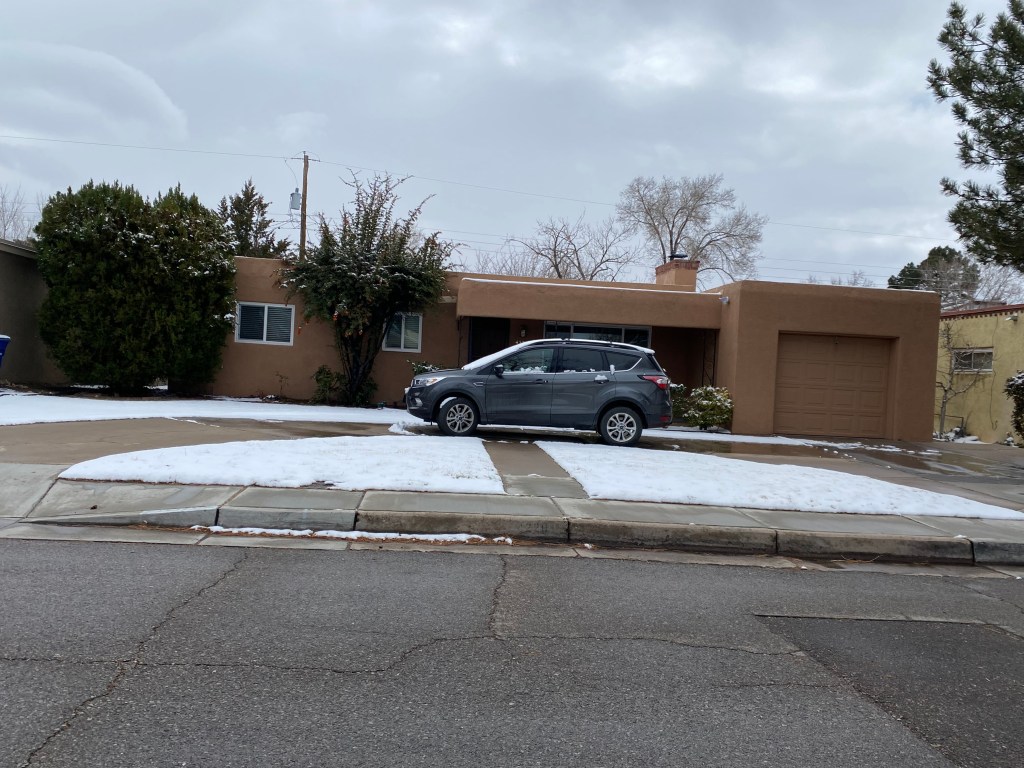
Two days after our balmy weather it snowed. Our second snow storm here in 3 weeks but it’s pretty. By early afternoon it was almost gone.

“Our” house, snow
Second snow in 3 weeks. Fleeting

We were pleasantly surprised that the ancient markings on stones by Pueblo dwellers and Spaniards were so cool at Petroglyph National Monument, in western ABQ. We hiked an easy 2 miles on the dog-friendly Rinconada Trail in the late afternoon when the light was particularly dramatic, especially with the clouds parting over the now-snowy Sandia Mountains way to the east. The hike took us on a sandy path lining an edge of a canyon with huge black volcanic boulders. At forest we strained to find the ancient markings on the boulders but by mid trail, we were on a roll, finding markings, some clearly birds or sheep, others maybe symbols of some sort, on the boulders. When we returned to our car at 4:45 (the parking area closes at 5) a park ranger was already shutting some gates.

Leave a comment

Filed under Albuquerque, New Mexico, Uncategorized

Sandia Peak Aerial Tramway and Ten-3 on Valentine’s Day in ABQ

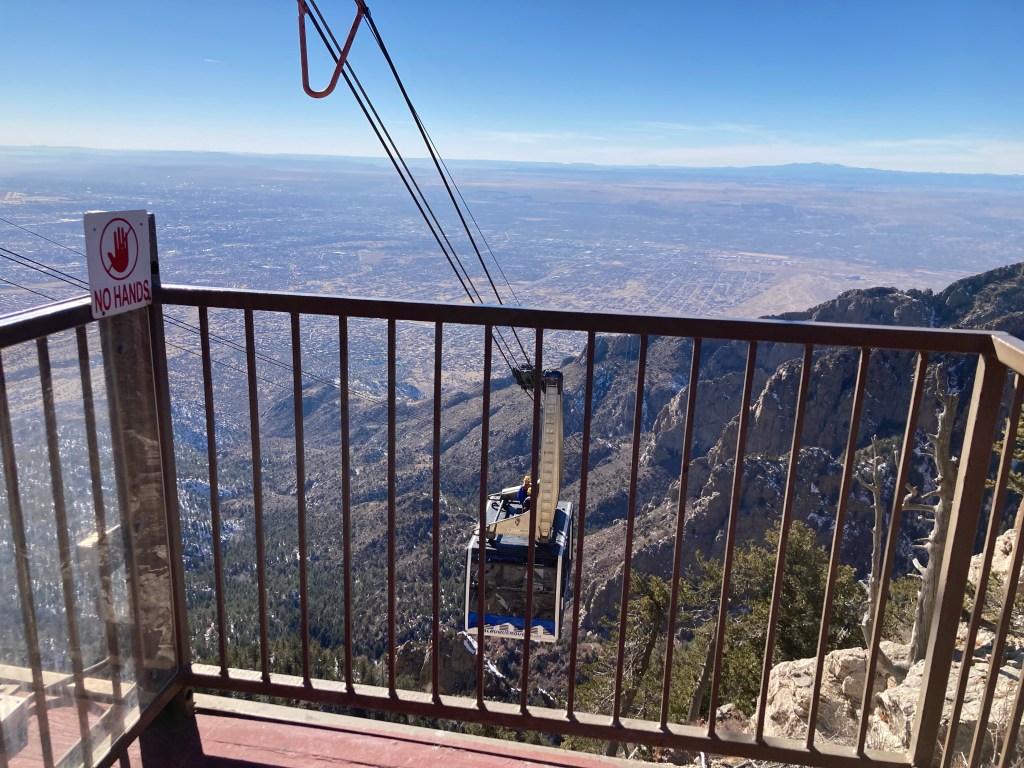
About 10 years ago, we marked Valentine’s Day by doing something nutty — we went zip-lining high above a ravine in Boquete, Panama. Never again. Today was much better. We also went high, this time into Albuquerque’s jagged Sandia Mountains, but we were inside a large glass tram that climbed 10,378 feet to the crest, where we ate lunch, tried unsuccessfully to hike (too icy) and glided back down into the valley in our glass cocoon.

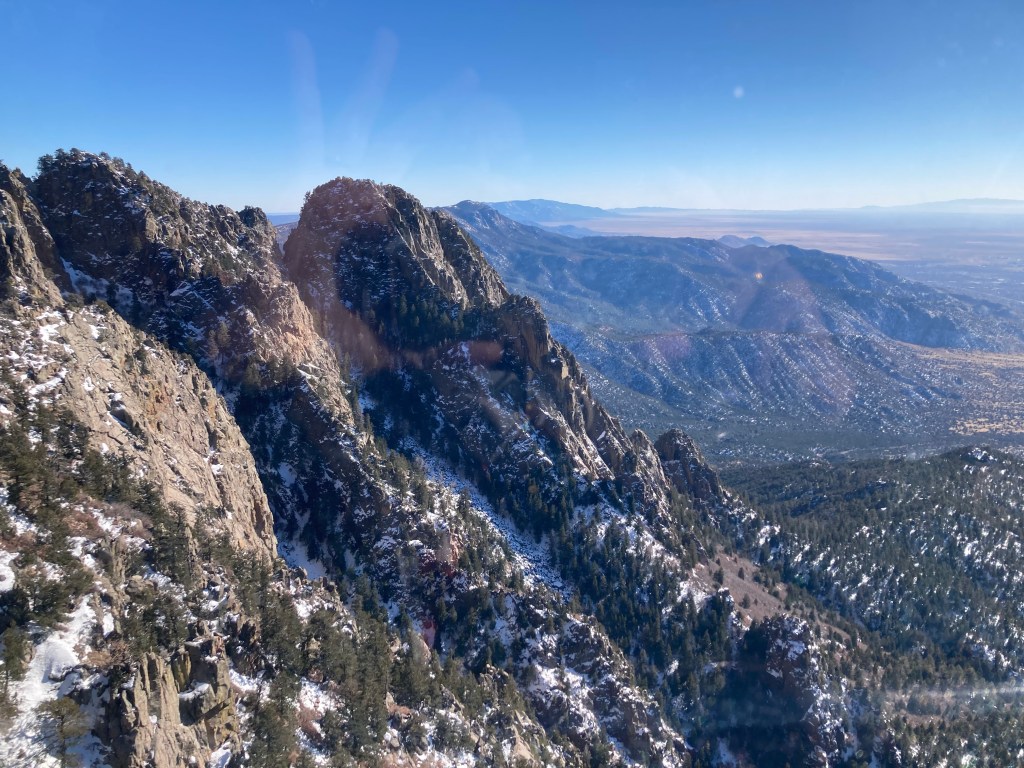
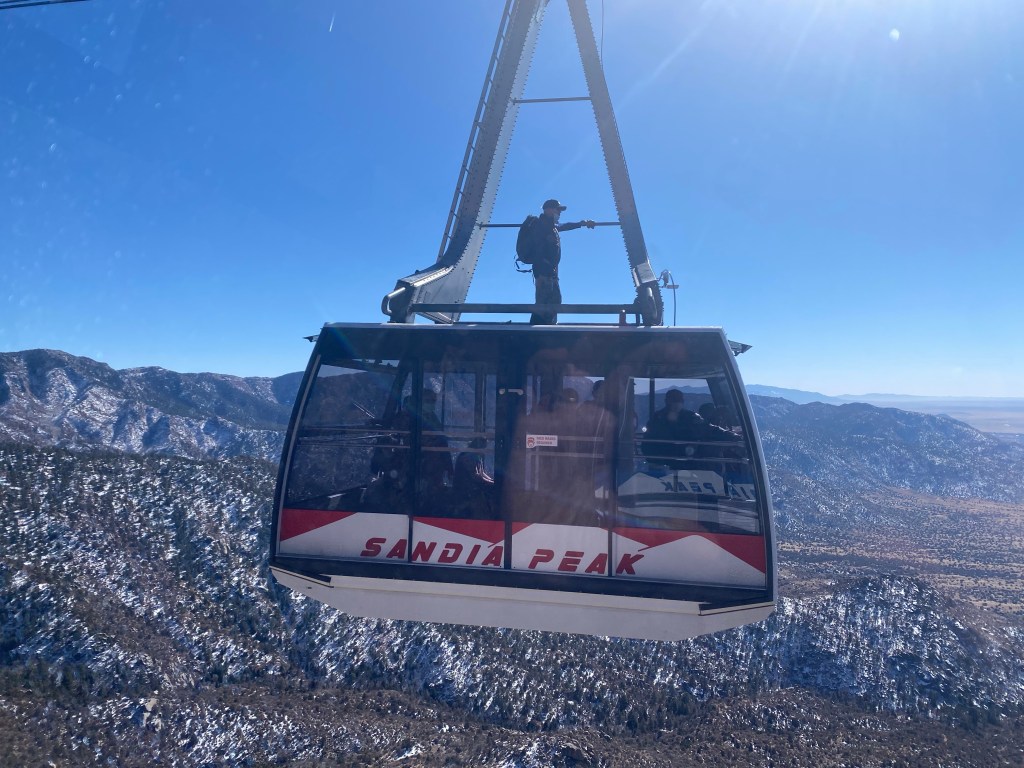
The weather was clear and not too windy, the temperature was the warmest it’s been during our stay here, low 60s, although as promised it was 20-30 degrees colder at the top of the mountain and icy snow kept us from a short hike to a CCC cabin on the ridge. At 2.7 miles in horizontal length, the Tramway is reportedly the world’s longest passenger tramway. The tram came very close to the mountain at times which took some getting used to and the guide pointed out the debris from a TWA plane crash long ago, but we could see only jagged granite and limestone peaks, dotted with ponderosa pine and oak trees, scrubby pinyon juniper, dusted with snow.

Tram view
Tram arriving up top

We had a good lunch in the restaurant Ten-3 (a reference to its elevation, at 10,300 feet above sea level) at the top, an attractive contemporary space with huge picture windows offering spectacular views from on high of the valley and mountains in the distance north of ABQ — part of the 11,000 square mile panoramic view.

The food was very good in the casual restaurant. The fancier restaurant was being readied for Valentine’s night diners. The contemporary artwork, including large thickly coated oil forest landscapes by Frank Balaam turned out to be from Ventana Fine Art, a gallery we visited earlier this week in Santa Fe. (Some prints of southwest ruins, in bold unnatural colors, by Mary Silverwood that we are still considering buying were hanging in the women’s restroom).

Sandia means watermelon in Spanish, a reference to the stunning pink of the mountains at sunset.

Yes, that is a tram employee riding outside atop the tram. We don’t know why.

Leave a comment

Filed under Albuquerque, New Mexico, Uncategorized