I’ve long been curious about Brooklyn’s Dumbo neighborhood but the few times I’ve walked under the Brooklyn Bridge to explore it, I wasn’t sure if I’d really found it. (DUMBO actually stands for down under the Manhattan Bridge overpass.” It’s the area between the two bridges and a few blocks east of the Manhattan Bridge.) So this recent walking tour of Dumbo offered by the NYTimes may some day come in handy. See below:
The Dumbo neighborhood of Brooklyn, once warehouses and longshoremen, is now hot and hip. On an itinerary inspired by The New York Times and conducted by Urban Adventures, discover one of the most fascinating neighborhoods in the city, including some spots off the tourist trail. Catch the ferry from Manhattan and have an experience that combines local sights with hands-on and exclusive access.
New York Times Exclusives:
- Tour the Smile to Go bakery with a staff member to watch pastries being made and taste them fresh out of the oven.
- Pour your own beer at Randolph Beer, where the beer is also made.
- Meet the staff at innovative places like Powerhouse Arena and the Brooklyn Roasting Company.
Trip Highlights:
- Travel like a local on the commuter ferry from Manhattan to Brooklyn.
- Visit Brooklyn Bridge Park, built partly on old shipping piers, and get breathtaking views of the Manhattan skyline.
- Learn the history of Brooklyn’s waterfront and how it has transformed from industrial to recreational.
- Try the offerings at some of the neighborhood’s favorite local food creators and businesses.
- Feel the vibe that has attracted artists, innovators and tech companies and revitalized the neighborhood.
Schedule Details
Duration: 3 hours
Meeting point: Entrance of Pier 11 just east of South Street and Gouverneur Lane, underneath the F.D.R. Drive in Manhattan
Starting time: 9:00 a.m.
Ending point: Randolph Beer
RESERVE
Duration
3 hours
Cost
$99 USD
Maximum Group Size
12 people
Activity Level
Easier
Questions?
Terms & Conditions
Terms & Conditions
Days of Departure
Tour operates daily
Give a City Tour
A City Tour gift certificate is the perfect present for any occasion. Select a specific tour and date, or choose the value and let the lucky recipient decide how to redeem it.
BUY A GIFT CERTIFICATE
Hour 1: Views of Manhattan and Brooklyn
Meet in Manhattan and hop the commuter ferry for a short ride across the East River to Brooklyn, with great views of the Brooklyn and Manhattan Bridges. Land in Dumbo, named not for the elephant, but because it is “down under the Manhattan Bridge overpass.” Long home to shipping piers and industrial warehouses, this charming and historic neighborhood is now one of the most desirable in Brooklyn because of its access to the waterfront, breathtaking views and historic architecture. Walk through Brooklyn Bridge Park, built largely on those old piers, to learn how the waterfront changed from a source of food to a thriving industrial area (where entrepreneurs did everything from process tobacco to create the first cardboard boxes) to an unsafe abandoned slum to what it is today: a beautiful park for recreation and home to modern businesses. Stop at Jane’s Carousel, from a 1920s amusement park. It was purchased by a local artist who restored it, and a glass-enclosed ride offers a view of modern Manhattan from a historic perch.
At the Empire Stores, you’ll see the latest transformation. This brick warehouse block is believed to be the first place coffee was commercially roasted and processed, but was abandoned for many years as shipping moved elsewhere. Now, it has been revived as a community space with shops, cafes and restaurants, rotating art exhibits and an outpost of the Brooklyn Historical Society. Take in the panorama of Manhattan from a secret viewpoint, then head to the Smile to Go, a spinoff of a popular downtown restaurant, the Smile. See where all the pastries are made, watching the bakers at work as you hear about the process. Then sample an array of creative, chef-driven pastries fresh from the oven.
Hour 2: Layers of History
Walk down the old cobblestone streets to see more of the old warehouses and factories that have been converted into lofts, restaurants and art galleries. Stop at Powerhouse Arena. It’s a bookstore specializing in books on art and photography, but is also a space for art exhibitions and literary events, including book readings, launch parties and panel discussions. Meet a manager to talk about the community activities that happen here, and about the literary and art communities that inspire and visit the space.
Pass under the Manhattan Bridge archway and into another part of the neighborhood to visit the Brooklyn Roasting Company. It is housed in an old building that was part of the historic Arbuckle’s Coffee company, whose roasted coffee was a favorite of cowboys for years. Brooklyn Roasting has brought the coffee tradition back to the waterfront. Learn about their history and how it ties into the neighborhood’s past. Of course, sample some of coffee, which is curated and blended from beans from all over the world.
Hour 3: The New Brooklyn
Head farther into Dumbo and learn about the growing start-up and tech world in the neighborhood. Stop for a quick bite at Untamed Sandwiches, which uses sustainable and local food for its braised meat and vegetables. You might stop instead at CUPER, an unassuming cafe inside the Made in NY Media Center, a co-working space and incubator where you can usually find artists discussing projects and business people making deals. Finally, stop at the hidden gem of Randolph Beer. Craft brewing is all the rage, but the Randolph goes it one better and serves its beer where it’s made. Learn about the growing craft beer scene in Brooklyn, and pull your own beer from the tap. (You can’t get much more local than that.) End the tour sipping your beer and reflecting on how far Brooklyn has come, yet how close it remains to its roots.
Tour Inclusions: Local English-speaking guide, pastry, coffee, gourmet sandwich, pour your own beer, ferry ticket.
Tour Exclusions: Additional food and drinks, souvenirs and personal shopping, gratuities for your guide.
Children: No age limit. This is a child-friendly tour. Children between the ages of 6 and 11 inclusively are permitted on this tour at the rate listed above. Please select ‘child’ when booking. Children under the age of 6 are permitted to join this tour free of charge. Please inform us at the time of booking if you’ll be bringing a child under the age of 6. You can do so in the special request box on the checkout page.



 On the way back to the lake, I stopped at the Ithaca Bakery outpost in the odd Triphammer mall for bread for dinner. Nice to have. And I drove through the hidden hamlet of Ludlowville to see if anything was going on and was pleased to see that nothing was.
 I am so thrilled to be back in my favorite place in the world, certainly my sentimental favorite. Ithaca is so full of memories that go back to my childhood when my parents– who met in Ithaca in college and loved this place — took my siblings and me here as kids to Cornell alumni university for a week each summer during the 1970s.

 Word has it over 900 people showed up last Saturday night (June 1) for the Des Moines Center’s first show to feature the artwork of LGBT&Q artists…The crowd included many members of the “queer” community, some drag queens, no shortage of presumably straight folks and me. It was a great celebration – with food, drink, music – and, of course, work by 15 artists that is well worth a visit to see! Oh and it also won a major prize from Sotheby’s:
 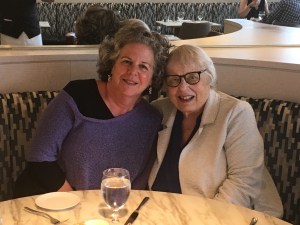 Today, for one last hurrah, my Aunt MAT took me for a delicious lunch at the classy restaurant in the Ritz Carlton. Not too shabby! And now, here at O’Hare, my carryon under-the-seat-only bag with the cheapest fare (aka basic) appears to have passed muster. What a memorable and action-packed trip to Chicago! Thx to my family there!!!
 Some of my favorite Manet paintings are not in the new show at the Art Institute of Chicago but that’s okay because 1) I look at them all the time (the poster versions of Olympia and The Balcony) 2) there was so much else to see. The show is small, much smaller than the Bonnard show at The Tate Modern in London that I went to in March. But the lovely colorful portraits of elegantly dressed women and still lives of flowers bounced off the walls. Being in rooms full of these paintings made me happy, although they were painted during a sad period in Manet’s life, when he was sick and nearing death.
 We also popped into a nearby room full of American painter’s work including Grant Wood’s American Gothic, a famous Edward Hopper and other great works by Georgia O’keefe, Diego Rivera and Thomas Hart Benton. A few user tips: I was glad we bought fast pass tickets online a few hours before we arrived. Saved us from standing in a long line. What I should have done was bought a membership for $70, rather than tix to the museum/special exhibit which cost $84 for two of us. (I need to do the math to see what it costs to bring a guest as a member.) Members also get discounts at the museum store which has some gear stuff, including jewelry by Chicago artists. And of course members can keep coming back without further payment.
 Yes, Bike the Drive was definitely worth getting up at 5:30 a.m.. The chance to ride a bike along Lake Shore Drive with nothing except other bikes, albeit thousands of them, was much-appreciated. The annual event was orderly and well-organized, with lots of helpful volunteers, very little red tape or lines, and plenty of free food (bananas, apples, cliff bars, even designer coffee.) I was riding a borrowed 6-speed Schwinn with a very comfortable wide seat. The only minor challenge was making it up several minor inclines. Otherwise the route was flat and very scenic. I spotted sights along “LSD” I’d never seen during decades of zipping along it in my car.
 We got lucky with the weather. The sky was overcast and dark at times but it never rained beyond some drizzle. At points, the sun almost came out and the lake looked beautiful, as did the dramatic skyline. What a treat to see some of the dramatic high-rise architecture along the river leading to the lake from new vantage points. And for a moment you had a feel for what might be if we were all less dependent on our gas-guzzling cars. I did recall, at times, the thrill of riding on some bike-only bridge in Copenhagen and, of course, the temporary bike-only rural roads in Iowa during RAGBRAI.
 I rode a few blocks from Emma and Rockets in Edgewater to the BRyn Mawr entrance onto the Drive and rode south 8 miles to Grant Park where I met up wi5 my sister Jill and two of her friends who took the El in from Oak Park. I wanted to keep riding south but we sort of ran out of time (there are some timing issues to keep track of – and I am glad I started at 6:30 am) so we rode back north. next time, I may being my bike and ride all the way down and back, the earlier the better.
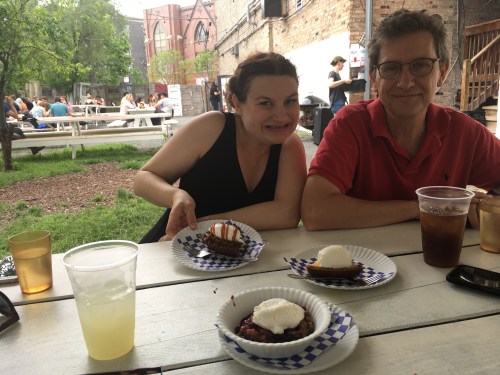
 This afternoon we went to the Sunday farmers market in Logan Square and to delicious Bang Bang Pie shop, which serves, yes, pie — sweet and savory. We had excellent chocolate caramel pie and key lime pie (they’d run out of strawberry rhubarb) and sampled the chicken pot pie. Also had great homemade lemonade with free refills. We also walked Millie around E & R’s lovely Edgewater neighborhood.
 We somehow managed to drive from Des Moines to Chicago last night without directly encountering any of the storms that were popping up all around us. Outside Iowa City on I-80, we saw scary looking white clouds (which may or may not have produced the tornado we learned touched down about 25 minutes before we passed through) and in Illinois, lightning lit up the dark night just south of us and north of us off and on. Needless to say, we were very happy when we got to Chicago around midnight.
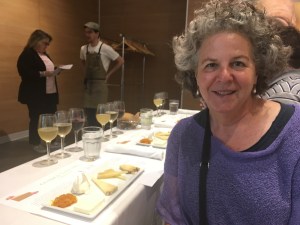 Today, the weather was much more pleasant than anticipated in Chicago, sunny and warm instead of rainy. We spent two hours at the scoula on the second floor of eataly, taking a very fun cheese and wine tasting class that emma and rocket got me for my birthday. Great gift idea and we sampled 6 cheeses, and 3 “natural” wines and learned everything we ever wanted to know about to cheese from the cheesemonger.