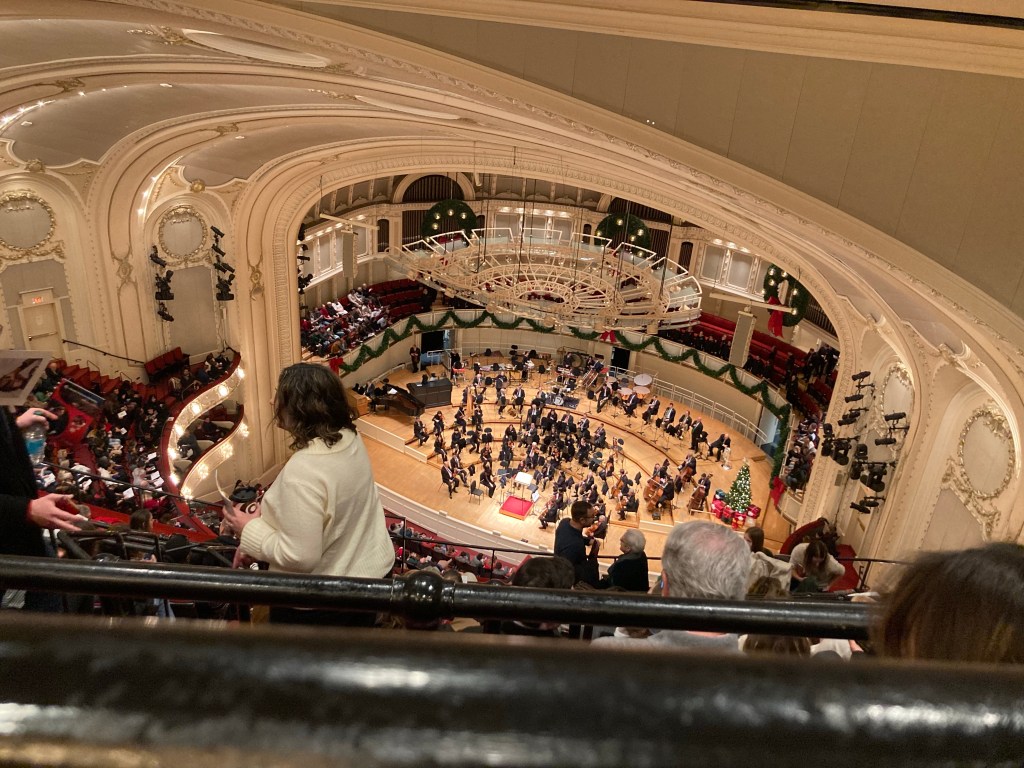
We got last minute seats to the Chicago Symphony Orchestra’s holiday concert which meant we were way up in the (top) sixth floor balcony, second to last row. I didn’t know symphony center went that high. Not ideal but we could at least see better from there than from the nosebleed seats at The Auditorium theatre, which is set back further from the stage so the members of The National (the band) were ant size (and the giant screen was mostly psychedelic art instead of the action on stage. Never again.)
Symphony Center
At least at symphony hall we could see all the musicians, including the tops of their heads. The seats were a little too shallow and upright and it was disconcerting to have a metal pipe railing in front of our seats, presumably to keep us from keeling over. Fortunately there were two upholstered chairs st the end of the aisle for disabled patrons. I sat in one which was much more comfortable. The music, plus the symphony choir and an appearance from Santa, was great.
Chicago has no shortage of charming and ornate old theaters including The Lyric, CIBC and the Chicago theater.
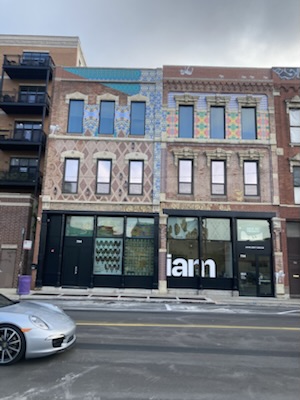
Two years ago, not long after we moved to Chicago, my brother and I visited Intuit in a blinding rainstorm that made it hard to see where we were. The art museum was charmingly scruffy, in a 19th-century brick building with worn wooden floors and battered walls that seemed well-suited for the museum’s collection of quirky and eclectic artwork by “self-taught” (and intuitive) artists. Soon after our visit the museum closed for renovation and expansion. It just reopened and I’m pleased to report that it’s even better – retaining its essential scruffiness but bigger and brighter, with white panels covering much of the still-worn walls and the original worn wood floor gently restored (or so it seemed.)
All the better to showcase its often eccentric artwork found in the permanent collection pieces and a special exhibit “Catalyst: Im/migration and Self-Taught Art in Chicago” featuring a diverse selection of artwork by 22 immigrant and migrant self-taught artists who came to Chicago from all over the world (Poland, Ukraine, Honduras, Mexico…). It’s fantastic and timely, given the unwarranted and obnoxious demonization of im/migrants by our current unbearable president. Among my favorites — elegant art deco-ish decorative objects made from unlikely prosaic material — a dental equipment company’s discarded metal. The artist, Stanley Szwarc, who immigrated to the US from Poland in 1977, worked at the company.
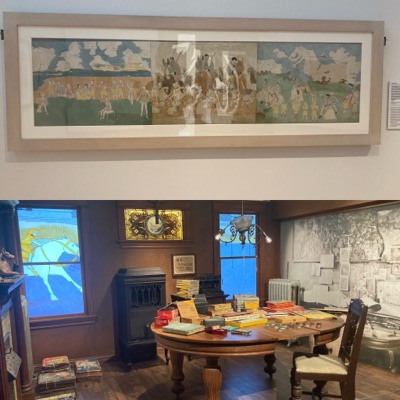
The museum’s permanent collection also includes the work of self-taught Chicago artist Henry Darger, (1892-1973) who lived near us in Lincoln Park in a one-room third-floor apartment and produced often cartoon-like work. Orphaned as a young boy, he landed in the awful-named Asylum for Feeble-Minded Children in Lincoln, Illinois. In Chicago, he worked by day as a hospital janitor, by night for forty years as an artist and writer, producing a massive illustrated novel set in an imaginary world with lots of clouds, storms, fire and seven heroines – the Vivian Girls – who led armies to defeat child-enslaving foes. He often traced figures from newspapers, magazines and kids coloring books, painting and collaging. Fortunately his landlords discovered and preserved his work, and his living room/studio contents (Pepto Bismol bottles, stacks of magazines, many shoes). The museum offers a reimaging of Darger’s studio with some of his original furniture and art materials.
Henry Darger’s work and reimagined digs
We met the museum’s enthusiastic president/ceo who showed us a bright new classroom space in the rear of the building where outreach programs are provided to teachers and students. The museum’s gift shop has also been spiffed up, but has the same interesting offerings. I’m a longtime fan of this art by ordinary (sometimes psychologically challenged) people, not academy/trained artists, variously (and awkwardly) known as outsider, naive, primitive, folk, or self-taught. Also don’t miss a visit to the bathrooms, yes, bathrooms – donated by Kohler (the bathroom fixture company) with fantastic arty light fixtures.
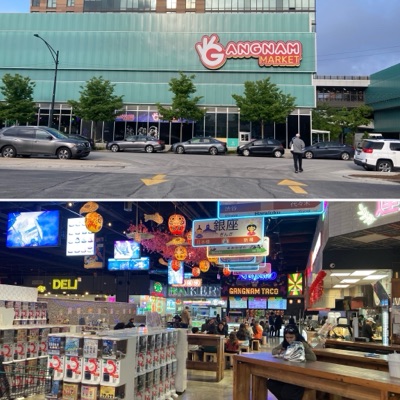
Looking out the windows of Intuit in Chicago, we could not miss a massive metal building across Milwaukee Avenue called Gangnam Market, which turned out to also be well worth a visit – part Korean food hall/arcade — Korean drinks here, Korean tacos there – and part upscale market. I also enjoyed browsing through the Asian candy, snacks and trinkets – exotic flavored Hi-Chews, KitKats (matcha tea, like we saw in Japan), chips (flavors: oyster, crawfish, cumin lamb skewer) Hello Kitty merch – and takeout Asian fare (seaweed, sushi, oniguri etc.) We’ll be back to try the Korean tacos, at a minimum.
Dinner was at Opart Thai House on Chicago Avenue — which lived up to its reputation. It’s a nothing-fancy interior with well-executed classics (pad thai, green curry with very fresh shrimp) and originals (to us) like a “peanut lovers” dish with chicken and vegetables coated in a thick peanutbutter-ish sauce. (It’s also BYOB, we learned.)
One of my earliest introductions to “outsider” was during the late 1980s in the amazing outsider art enclave of Lucas, Kansas – home to “The Garden of Eden” — a bizarre concrete log cabin with a yard full of giant sculptures with biblical and populist themes (Adam and Eve and the serpent; the farmer being crucified by the banker, lawyer, etc.). From this came a museum of outsider art that became affiliated with the Smithsonian and a public restroom/public art project resembling a giant toilet with intricate mosaics. All in a tiny windswept town in the middle of nowhere. In another Kansas small town, near Kansas City, I met another remarkable self-taught artists known as Grandma Layton, who started drawing in her older age when wishes had mental health issues and produced searing portraits of herself and husband. She gave me a signed poster of one of her paintings that I treasure, especially since her work was not sold, at least back in the 1980s. Baltimore also has a terrific outsider art museum that I visited, sneaking away from a work meeting to make sure I didn’t miss it!
I admit to having a somewhat irrational fear of government bureaucracy, especially now, during Trump 2.0, when people have been detained during seemingly routine bureaucratic visits and whisked away without due process. Granted I am a white, older, American-born, middle class woman so much less of a target in Trump’s America than an immigrant and/or person of color. I’ve also been wary of bureaucratic ineptitude, a perception stoked sadly by the Trump administration’s distain for government AND its decimation of government, with mass firings of federal workers.
So I was surprised that getting Global Entry – which will allow me to bypass long lines when re-entering the country after an international flight – was a piece of cake. Not that this is necessarily typical. I got lucky. My husband applied at the same time that I did and is still awaiting word that he’s jumped through the first hoop (“conditional approval.”) In my case, conditional approval arrived via email a day after I applied. I’m told this is the luck of the draw. Sometimes three members of a family will get conditional approval swiftly while a fourth member has to wait awhile.
Even the next step went well for me: a face-to-face appointment with immigration folks, either in downtown Chicago or at O’Hare. I picked O’Hare and today I made it to the airport and back in two hours, with a bonus: a surprise email received on the Blue Line train notifying me that my Global Entry was approved! It helped that everything went unexpectedly well with transportation – no horrific traffic jams on the drive to the Western stop of the Blue Line at 8:30 a.m.; the O’Hare El train came just as I arrived and took about 35 minutes; the 25 minute trek to the Global Entry office, a drab office tucked behind a baggage carousel (#12) in faraway Terminal 5 (international flights) was easy. I arrived 35 minutes before my 10:20 appointment and hunkered down in the sterile waiting room, but was called within five minutes.
Although I’d been warned that the immigration interviewer would be taciturn, mine couldn’t have been more pleasant. (Apparently my early arrival worked well for him.) He verified some application information and corrected one error that listed Chicago as my birthplace. (It’s Detroit). I piped up that I forgot to list one country (among others) that I visited during the past 5 years on my application. No problemo. He asked if I had a criminal record or immigration violations and then took my fingerprints (using a scanner to get images of my thumb and four fingers of each hand…my first experience fingerprinting). Then he patiently answered my questions (several about why my husband’s application process wasn’t as swift). And away I went after about 10 minutes. He told me I should hear back later today or on Sunday – after my fingerprints were screened by the FBI (or some such).
The Global Entry is good for five years and also includes TSA Precheck, so I can avoid the longer lines at security when arriving for a flight. I’ve rarely found the lines that awful but friends urged me to get global entry since we travel internationally a lot. But I probably won’t use mine until my husband’s goes through so hoping that happens soon! And now, if only, there was a way to avoid the sometimes long lines at customs/immigration when arriving at Heathrow and other international airports.
Here’s the official spiel: Global Entry is a U.S. Customs and Border Protection (CBP) Trusted Traveler Program that allows expedited clearance for pre-approved, low-risk travelers upon arrival in the United States. The application fee is $120, and membership lasts for five years. All applicants must undergo a background check.
If you’re going to spend $23 on a cheeseburger, it better be an exceptional cheeseburger – and indeed it was at John’s Food and Wine, a small upscale lunch and dinner spot with a cocktail bar on Halstead in Lincoln Park. We split the burger for lunch (served Friday-Sunday) – plus an order of beef fat fries with aioli and a delicious “Little Gem” salad with little gem lettuce (somewhere between butterhead and romaine), charred ramps, ample white shavings of ricotta salata (the dry version of ricotta) and a creamy greenish buttermilk dressing (think refined Green Goddess).
What made that burger so good? It was perfectly charred on the outside – which explained why John’s open kitchen was sending out smoke, although it never got too smokey (the burger is popular); the meat was house-ground fresh and a perfect medium rare; topped with melted clothbound cheddar cheese and aioli; the bun was a homemade yellowy, slightly sweet milk bun, perfectly toasted. My iced expresso was just right, not too heavy or too sweet. We’ll be back!
Springtime
Slightly closer to home is our neighborhood Middle Eastern/Mediterranean restaurant, Cedar Palace, on Armitage, that we forget to go to. I longed for a good Middle Eastern restaurant in Des Moines – and now there’s one two blocks away. First, the hummus is not too tangy or gritty, just the right creamy consistency and amount of garlic and lemon. Everything else I’ve tried is good including the chicken kafta dinner (which we shared; $22.99 including good yellow lentil soup). The back patio is lovely when the weather permits (and oddly, located next to one of Chicago’s most expensive mansions on Orchard Street) and in the winter the small dining room is cozy and welcoming.
I’m still trying to figure out the geography of Chicago’s West Town, which according to Choosechicago.com/neighborhoods, appears to be a catch-all for several neighborhoods, including Ukrainian Village, Wicker Park, Noble Square, East Village and River West but on another map I have (above) West Town is its own area, south of Ukrainian Village.
That said, we went to an excellent cheese and wine shop for lunch in the Ukrainian Village part of West Town, on Chicago Avenue, recommended to us by a suburban Detroit cheesemonger. All Together Now (think Beatles lyric to try to remember) is a cheerful place with a cool counter and a few tables. Their chicken liver mouse, served in a small jar topped with a layer of congealed oil/fat, was delicious, served with crispy baguette slices, a sweet jam, a country-style Poupon mustard, and tiny pickles (cornichons). The mouse sells for $8 in the shop. The smashed potatoes came with two sauces – one creamy white, another tangy red. And a simple sandwich with excellent ingredients – fresh baguette, Pleasant Ridge cheese (from Wisconsin), salami, and that Poupon-y mustard, was delicious. (We also visited the nearby shop Komodo, which has a cool selection of gifts – jewelry, cards, incense, plants etc.) Other recommended cheese and specialty food shops to visit in Logan Square – The Rind and Lardon.
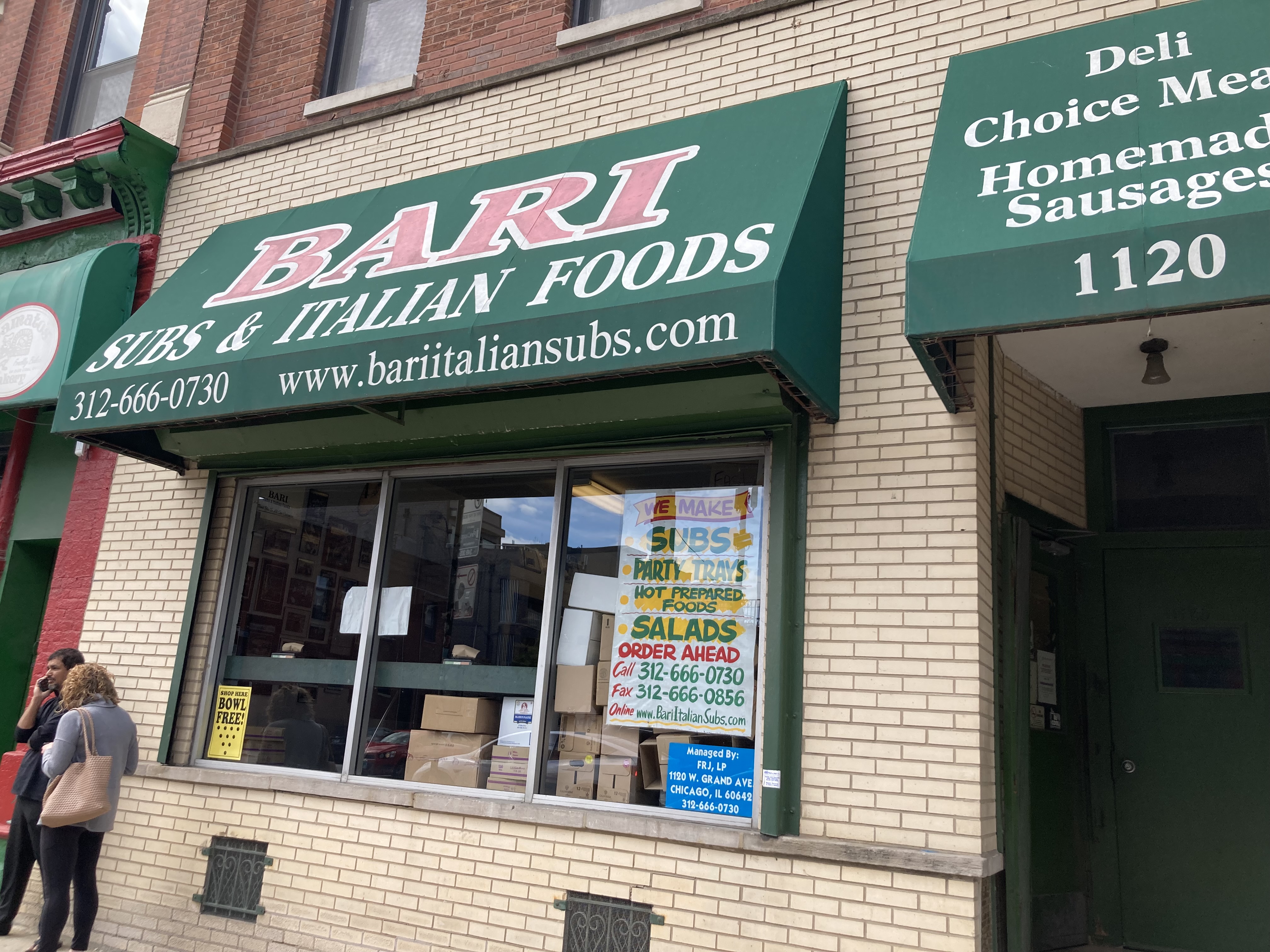
Since moving to Chicago, we’ve been searching for a conveniently located Italian import store that matches one we love in Des Moines (Graziano’s). Bari Foods on West Grand Street,fits the bill, with a deli counter offering fresh ricotta and mozzarella, homemade sausage, and cold cuts including prosciutto and genoa salami. Next door, we stood in line to buy bread at the Italian bakery and sub shop D’Amato (most people were buying sandwiches and thick slabs of pizza-like focaccia – or focaccia-like pizza.) These shops are not in Chicago’s Little Italy, which is a little further south. (Last month, we tried the huge Italian supermarket Angelo Caputo’s in the western suburb of Elmwood Park, which also has a great deli counter but is less convenient for us city dwellers. Next time I’m in that neck of the woods, I’d like to try Capri Italian Food, 7325 W. North Ave. in River Forest, which is less supermarket.)
The famous Publican Breads is just west of the Italian shops on Grand but, sadly, was closed by 3 p.m. (we arrived at 3:05 p.m.) Also closed by 3 p.m. but worth a future visit – a curiously named coffee and home goods store, The Center of Order and Experimentation at 1727 W. Grand Ave that is also home to Martha Mae (the uber-curated art supplies and “beautiful things” shop formerly of Andersonville).
When we moved to Chicago three years ago, I decided not to post about every wonderful (or not wonderful) discovery here because 1) I was writing a book and had little time for any other writing and 2) I didn’t want to write as a visitor to Chicago. I wanted to be a Chicagoan.
Lula Cafe – It has a hippie-hipster Logan Square vibe with an eclectic new American farm-to-table, fresh vegetable-forward, fare influenced by far-flung spots. We go most often for special dinner occasions (birthdays, out-of-town visitors) but lunch/brunch is good too. Highlights: Baked Feta, Pasta Yia Yia, Caesar Salad, Carrot Cake.
But now that I have more time – and I’m a sort-of Chicagoan – I hope to write more about the city, so readers can benefit from my discoveries and so I can remember my discoveries. With so many dining options in Chicago, it’s hard to keep visiting the same one. There’s always another beckoning. But here are 10 restaurants that we have returned to one or more times – so they qualify as favorites:
Riccardo Trattoria – This is our favorite local traditional Italian restaurant, near us in Lincoln Park. (There’s another one in Fulton market). It’s a small, warm, and cozy space with solid not too basic or complicated Italian classics like Fettucine Bolognese and feels like a real neighborhood spot.
Le Bouchon – Another warm and cozy spot, this time in Bucktown, serving French bistro classics: steak frites, mussels w/frites, French onion soup; Caesar Salad, delicious baguettes.
Small Cheval – This is a favorite fast-foody casual burger place, a spin-off of Au Cheval on Randolph. We used to go to the one on Wells in Old Town but now there’s one even closer, on Halstead in Lincoln Park.
Cumin – Our go-to for take-out Indian food, located in Wicker Park. We’re also fans of Kama, nearby in Wicker Park, but even better in the southwest burb of La Grange, which offers superb tandoori chicken cooked in an oven that apparently doesn’t meet Chicago health code so isn’t available at the city location…or wasn’t when we last visited.)
Kala – Our favorite fast-foody casual Modern Greek spot in Lincoln Park/lakeview, with souvlaki bowls – grilled and charred meat or vegetables from skewers served as a sandwich or atop salad or rice.
Smoque BBQ – Excellent smoked ribs, brisket, pulled pork, conveniently located in Old Irving Park near our kids’ place i so we can order when visiting and/or babysitting.
Aba – Buzzing Fulton Market California-influenced Mediterranean restaurant with shared plates – including whipped feta and charred eggplant spreads, kebabs, shawarma-spiced skirt steak.
The Gage – Favorite spot pre-or-post theater or museum on Michigan Avenue at Millennium Park, serving European-influenced American fare (or some such)…i.e. wide variety of food for light or heavier dining.
Hopleaf – A Belgium gastro pub in Andersonville with excellent mussels w/frites, beer, crispy pork belly, and quiet shady back outdoor patio.
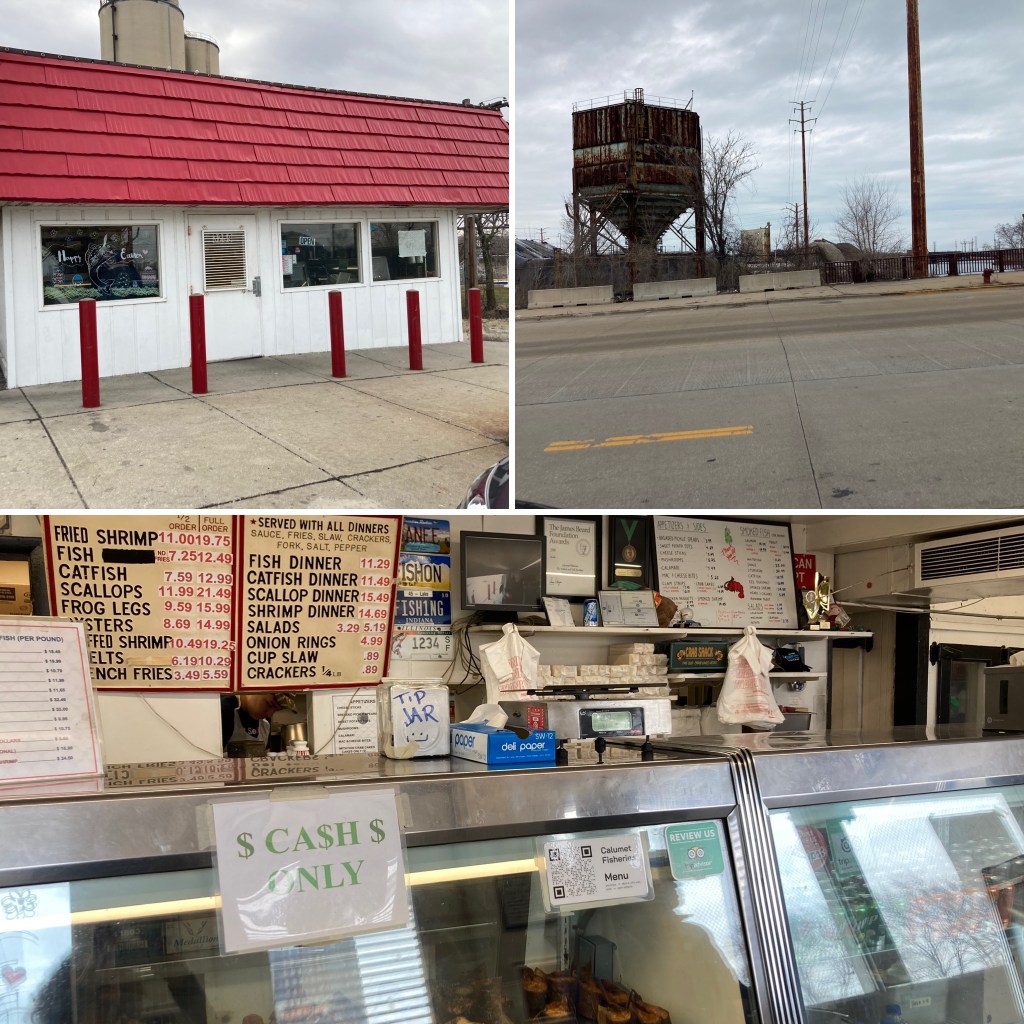
Early in our new life in Chicago, I decided not to write constantly about all our new finds here because 1)who has the time? 2) I wanted Chicago to feel more like home than a trip. But it’s time for the occasional exception, maybe because Calumet Fisheries is so far from our usual stomping ground here and it’s an interesting place.
As promised, it’s in a dreary looking industrial area of south Chicago AND it has delicious fresh fish and seafood, smoked and fried. There’s a reason it won a James Beard award for being one of those classic places to eat. It’s a humble little shack just past the underpass of I-94 and an unlovely bridge over a not-scenic stretch of the Calumet River. Across the street is what looks like a giant rusted funnel in a barren lot.
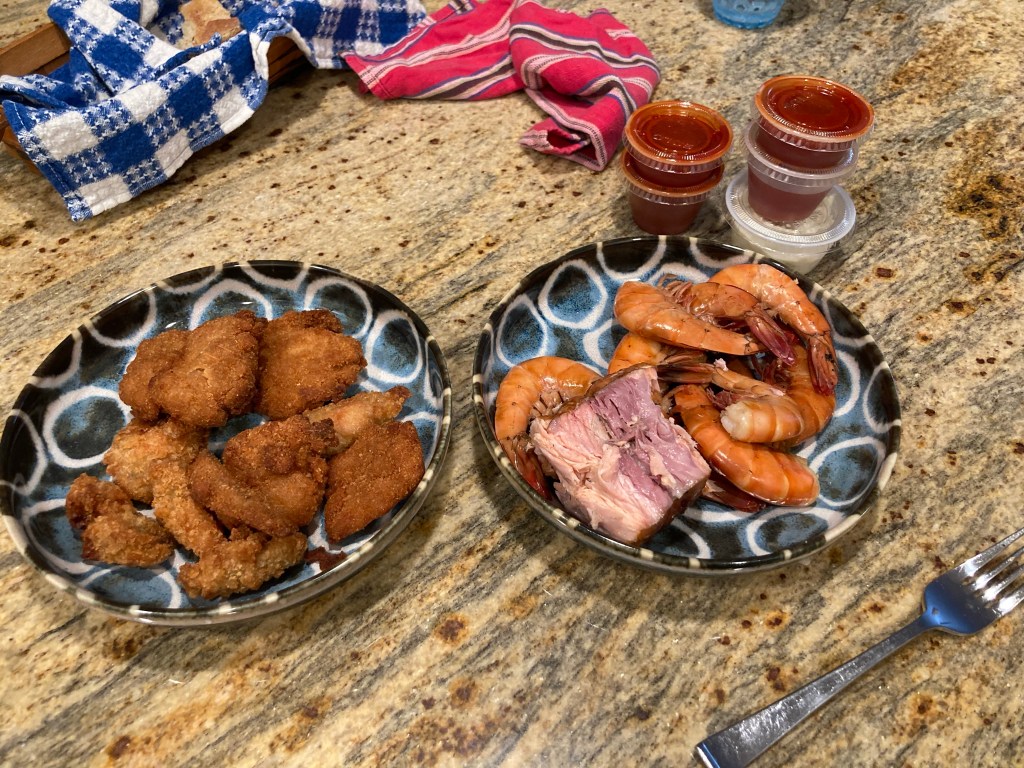
Midday on a Saturday there was a small group of customers inside. Cash only. A poster of the late great Anthony Bourdain, whose show on Chicago food got us here. The young guy behind the counter was patient and helpful, offering advice on what to try as first-timers. We got fried and smoked fare: just-fried oysters, catfish and smelt; a chunk of moist not-too-salty smoked salmon and smoked shrimp (a first for us). The forlorn picnic table outside might work in warmer weather but we opted to drive home 35 minutes before eating in earnest. We did sample a few still-hot oysters and smelt in the car. All delicious. We’ll be back!
It’s been just over a month since we moved from Des Moines to Chicago, although it seems longer, and we’ve had time to try just a fraction of the restaurants tempting us in our new neighborhood, Lincoln Park. Here’s my favorites to date:
Cedar Palace, on Armitage – offering the middle eastern food I couldn’t seem to find in Des Moines (although I did find it in Iowa City, thank you Oasis Cafe). Great hummus, falafel, shawarma, a middle eastern salad. Now all I need is take out hummus that is as good as Oasis’s. I’ve tried three duds from supermarkets here. (Kaufman’s deli in Skokie has good hummus, but not nearby…also excellent corned beef.)
Gemini – our neighborhood fancy pants place but no fancy attire required (just fancy prices and dishes). Great swordfish (my aunt’s find!), Caesar salad, ahi tuna tartare, flatbread.
All too well – strangely named but terrific sandwich shop on Armitage next door to Evette’s (and owned by the same folks) with excellent sandwiches. Evette’s offers an intriguing mashup of Mexican and Middle Eastern – pretty good too.
Green Tea – how we’ve missed Japanese food and here it is, right around the corner on Clark. We went for lunch and had a bento box special with chicken katsu, panko-dipped shrimp and maki and a cooked salmon and salmon skin (yum) rice bowl.
Chengdu Impressions – we’ve been here before. It’s a favorite of our kids’ who live in Chicago’s Edgewater neighborhood but we tried a new standout dish – braised pork belly with scallion pancake. To our surprise, the pancake didn’t arrive intact, as a wrapper for the pork. It came in crispy cooked slices added to the pork belly mixture. Yum.
Athenian on Webster, off of Halstead – This place is a throwback, open since 1972, cash only (they take gold coins!), no liquor license (but you can buy drinks next door.) The food and service aren’t that amazing BUT the chicken Kalamata is to die for, reminding us of the baked lemon chicken that was a specialty at Santorini, our favorite Greektown restaurant in Chicago which sadly closed.
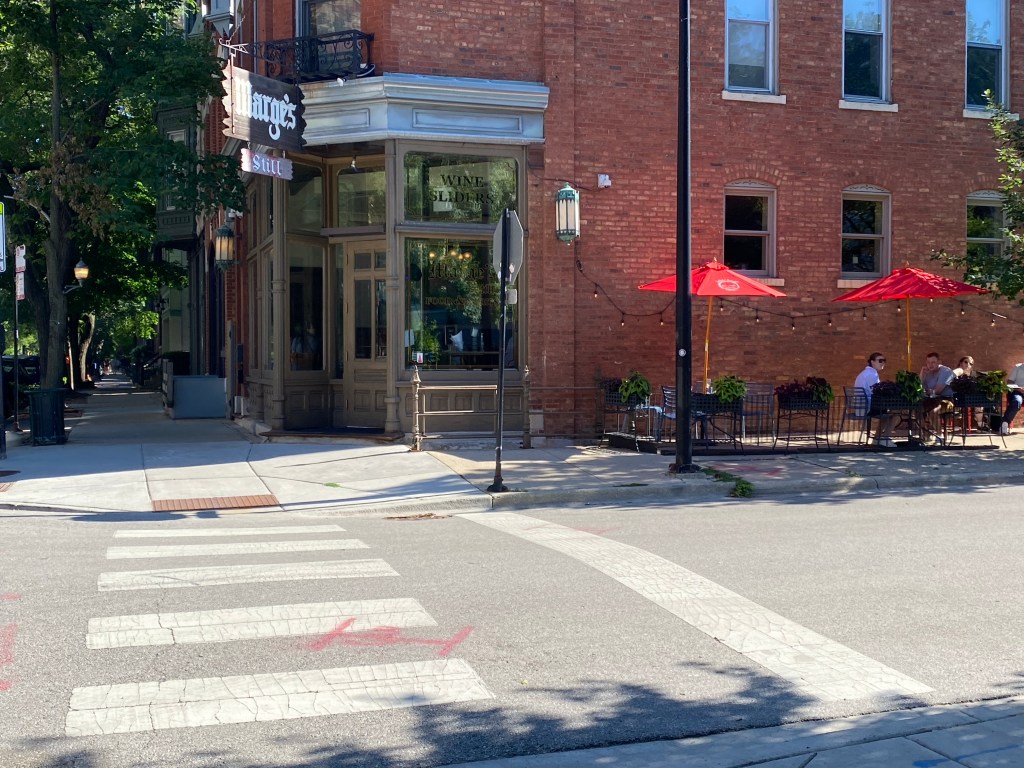
Marge’s Still on Sedgwick – atmospheric Old Town bar with good pub grub, (“hand held food”) including a big juicy cheeseburger and a grilled turkey burger with feta, tzatziki, red onions on pita. The music was way too loud for me but after one beer it didn’t bother me as much.
Andy’s Thai Kitchen on Diversey – An old haunt and still the only place I’ve ordered and loved “pork neck” as well as basil pork belly.
Dom’s Market – true confession: we haven’t eaten there yet but wandering around was enough to sell me on going there as soon as possible. A new one is opening up nearer to us on Wells soon!
Brown Bag – easy nothing-fancy fast foodish but healthyish seafood chain, good in a pinch.
In the not-so-good category: Blue Door Cafe on Halstead. Lovely decor with an open air southern veranda feel but mediocre food.
The first thing I saw when I entered Union Station around 12:30 pm on a Sunday was a bride, alone at the top of a white marble staircase, dressed in a sleeveless white dress, holding a bouquet and waiting expectantly. We exchanged smiles through our eyes since I was wearing a mask. This was not what I expected on the Wolverine Amtrak train from Chicago to Detroit (or in my case, Dearborn in suburban Detroit.) I’ve always wanted to ride this train. I love trains, so here I am. For five hours on a cold, grey, damp day with the occasional snow flake.
Very comfortable seats and all seats taken. My only complaint is very dirty window so it’s hard to see beyond it. Also makes a grey gloomy day even greyer and gloomier.
Indiana scene via Amtrak
Apparently for a fee, you can have your wedding photos taken in the grand lobby of Union station, which is what was happening when I arrived, and for a presumably higher fee, you can have your wedding there.
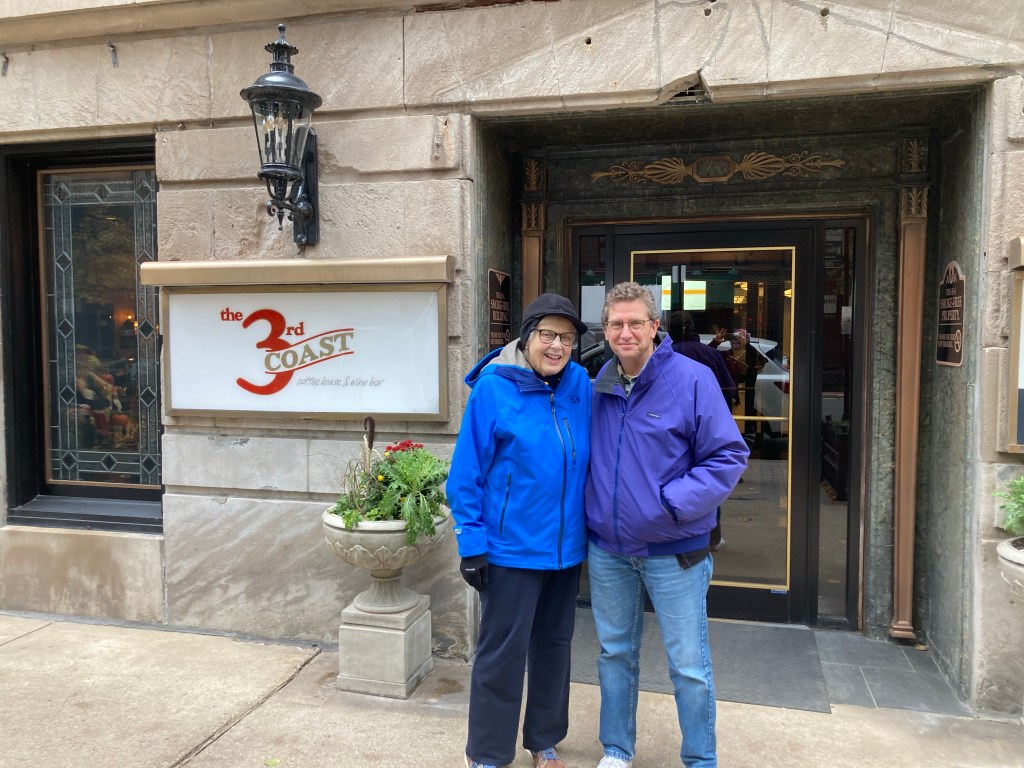
We didn’t do much of tourism note, beyond hang out with our grandsons and their parents. But we did have a good diner-type lunch/brunch (tuna melt, but, Greek omelette) at 3rd Coast, a somewhat hidden neighborhood hangout near my aunt’s on the Gold Coast that somehow I’ve never heard of in the 35 years or so that I have been visiting her.
We also had excellent takeout Szechwan Chinese food from ChengduImpression, in Lincoln park (I think) which made me think of a friend who grew up in that city and still lives there so I sent her greetings and a photo of the restaurant via WhatsApp, which she got a kick out of. And we picked up a sandwich (dolce di Parma) to go Andersonville at Pianto Pronto
Bit stunned to see the neighborhood we may move to in this article…but I did write atravel story about it in 2019 for the Minneapolis Star.
The 49 coolest neighbourhoods in the world We polled 27,000 city-dwellers and asked local experts to rank the greatest places for food, fun, culture and community
The city’s historic Swedish enclave (take note of the flag on the neighbourhood’s iconic water tower), Andersonville is now better known for its LGBTQ+ nightlife and the bars and restaurants that line the Clark Street corridor. Over the past year, the area has bounced back in a big way, welcoming new bars (Nobody’s Darling, the Bird Cage) and restaurants (Parson’s Chicken & Fish), while events like the Taste of Andersonville have done a top job of showcasing beloved local institutions. The district has always been a desirable place to live, but its proximity to beaches and coastal parks has only made it more appealing during the pandemic. Andersonville is also a community that’s looking forward, launching initiatives like Clark Street Composts – a pilot programme that could serve as a model for eco-friendly composting throughout Chicago.
The perfect day: Start off with coffee and pastries from Scandi-inspired bakery Lost Larson, before checking out the vintage knick-knacks at Woolly Mammoth or feminist literature at Women & Children First. Next, stroll along the picturesque Foster Beach, then snag a table at Hopleaf and enjoy mussels and Belgian beer. Round off your day with a drag show at the Bird Cage or a surreal performance of the Neo-Futurists’ Infinite Wrench.
Plan your trip: For Andersonville Midsommarfest, an annual street festival (June 10-12 2022) that serves as a celebration of the area’s Swedish heritage, local businesses and LGBTQ+ culture.









 TakeBetsywithyou