Tag Archives: Ninos hotel

Our best of Peru

Most amazing train ride: Front seat on the train to the Sacred Valley. (on the way home, there was a fashion show on the train…)

Most dazzling monastery: Santa Catalina, Arequipa limaarequipaconvent.jpg
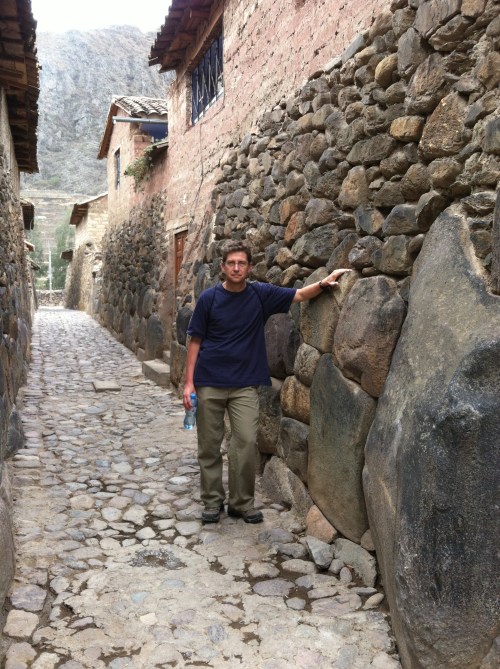
Best old world/Inca village with most intense cobble stoned lanes: Ollantaytambo 

limaollynatambowalk.jpg

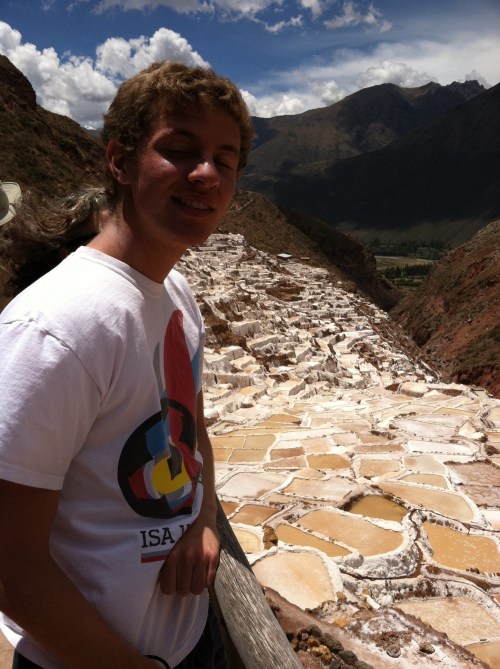
Most bizarre landscape: the salt pans of Salinas and terraced circles of Moray

limasaltflats.jpg

Best religious site with skulls and boxes of (human) bones: San Francisco Monasterio in Lima

Best church: That’s a tough one, in Cusco – the Cathedral and the Iglesia de Compania de Jesus and the church in San Blas. or the Iglesia de la Compagnia in Arequipa.

The Cathedral in Arequipa

limaarequipacathedral.jpg

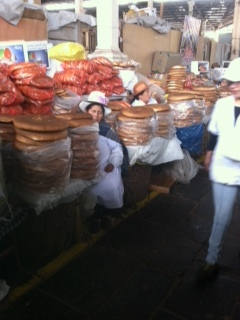
Best market: Also a hard call. Pisac, Arequipa (below) and Cusco are strong contenders

limaqrequipamarket.jpg

Best folk art: Artesanias Las Pallas in Lima’s Barranco neighborhood

Best contemporary crafts gallery: Dedalo in Lima’s Barranco neighborhood

Best quality Andean Textiles: Centro de Textiles Tradicionales del Cuzco, on Av. El Sol or Shop of the Weavers of the Southern Andes on Tullumayo in Cusco.

Best hidden museum: Museo de Arte Popular, Cusco

Most spectacular site/ruins: Machu Picchu, hands down

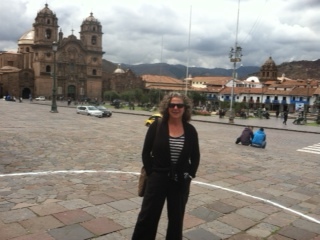
Grandest plaza: Toss up between Cusco and Arequipa

Best service at a hotel: Apu Lodge, Ollantaytambo 

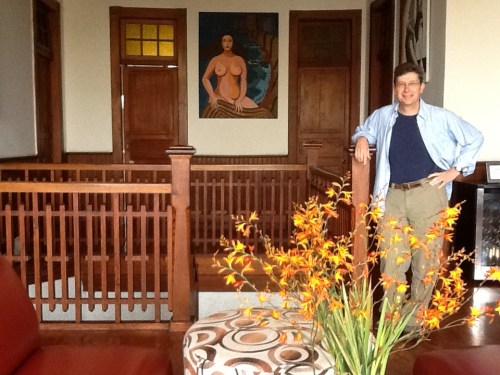
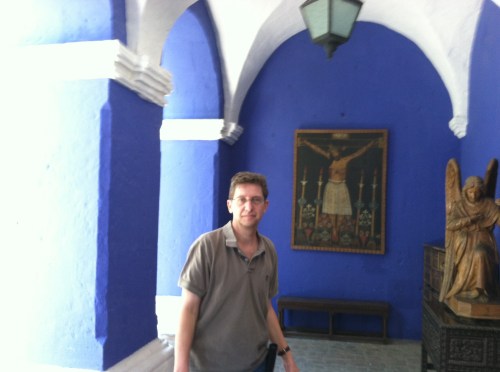
Best art at a hotel: Second Home Peru, in Lima (below)

limasecondhome2.jpg

limaSecondHome.jpg

Most ancient-feeling hotel: La Casa de Melgar, Arequipa

limaarequipahotel.jpg

Best hotel to bring earplugs: Ninos Hotel in Cusco, lovely courtyard but carries sound especially people wandering through at 5:30 a.m.

Best sight for sore eyes: Our son.
2 Comments

Filed under Peru

Cusco at last

Another day, another beautiful city in Peru, our last for this trip, alas. We are also staying at a lovely old hotel, the Ninos Hotel (the one on Meloc Street). It is run by a nonprofit that uses the proceeds to support needy children AND it turns out to also be very charming and affordable. Right now I am sitting Ina n adirondack style chair on the second floor terrace overlooking the hotel’s charming courtyard which has stone arches, wooden balconies, a gurgling fountain and lots of potted plants. This is an old colonial building which like several of the places we have stayed in Peru, offers little clue from the outside of the world within. From the street it is a stone building with a big green wood door with lots of ornamental brass thingamajigs. Our room is somewhat spartan but in a chic way, with well chosen tables, beds, light fixtures. Not bad for $50 a night.

Cusco reminds us a little of Arequipa because of the main square which is dominated by a cathedral and Jesuit church and rimmed by arcade-style buildings lining a lovely park. But the architecture is different. The cathedral and church are not the white Arequipa stone but a light brown stone. There are also lots of narrow lanes made of round cobblestones and big flat stone blocks leading up from the plaza into the pretty artsy neighborhood of San Blas, which is fun to explore, with lots of little shops selling baby alpaca sweaters, handmade jewelry, textiles from the amazon, handmade macramé and stone necklaces sold by Anglo kids who display their stuff on the sidewalk. The setting for Cusco is also very dramatic. It is set into a valley with mountains gently rising off in the distance on all sides. At times the city reminds me of Greece (especially the San Blas lanes) or of Spain (especially all the lovely plazas sprinkled around downtown) or of Florence (given all the art and artists around.)

The sights we have seen:
– The Jesuit church on the main plaza and the cathedral, both which have astonishingly ornate gold covered altars. The cathedral has famous “cusco school” paintings which are an interesting mix of European style art and Andean influences. This includes the famous Last Supper painting where Christ and friends are dining on, among other things, cuy (aka guinea pig).
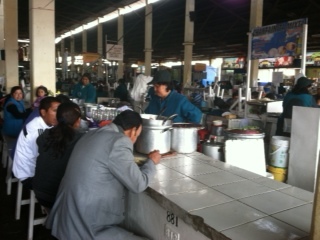
– the main market, Mercado San Pedro. I never tire of wandering around the markets in these towns (or just about any town) because you see how people live, what they buy, what they sell, what they eat (chicken soup served on big porcelain bowls was a popular item at lunch, with people sitting on benches in front of the stands where,the soup was prepared on the spot, holding the bowls and eating.)
– Qorikancha, another impressive Inca ruin that the Spanish build a colonial church and convent right on top of so it is an odd hybrid architecturally.
– a terrific textile museum/shop selling woven items from different villages. It also had a really interesting exhibit on how the weavers work, all by hand.
– the museum of popular art, a hidden gem, that displays the folk art of artists from about the 1930s onward, all kinds of tableaus of Christian scenes and everyday life scenes with figures made of clay or tin or silver or bronze. One Christ on the cross was made of cuy bones (aka guinea pig)’
More tomorrow on the food…

20121115-180424.jpg

20121115-180438.jpg

20121115-180451.jpg

20121115-180504.jpg

Leave a comment

Filed under Peru