
NOTE: publishing this late (somehow it wasn’t published earlier.)
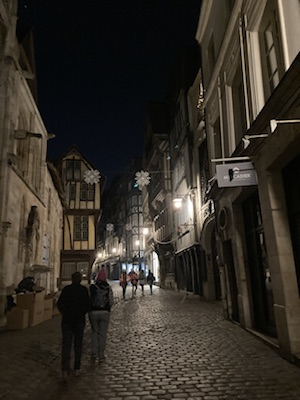
A day is about right to explore the ancient (sort of) seaside village of Honfleur. The sea is largely absent, as the coast has gotten farther away but there is a small contained harbor lined with tall narrow buildings, some half-timbered, or red brick and stone or clad in thin black slate tiles.
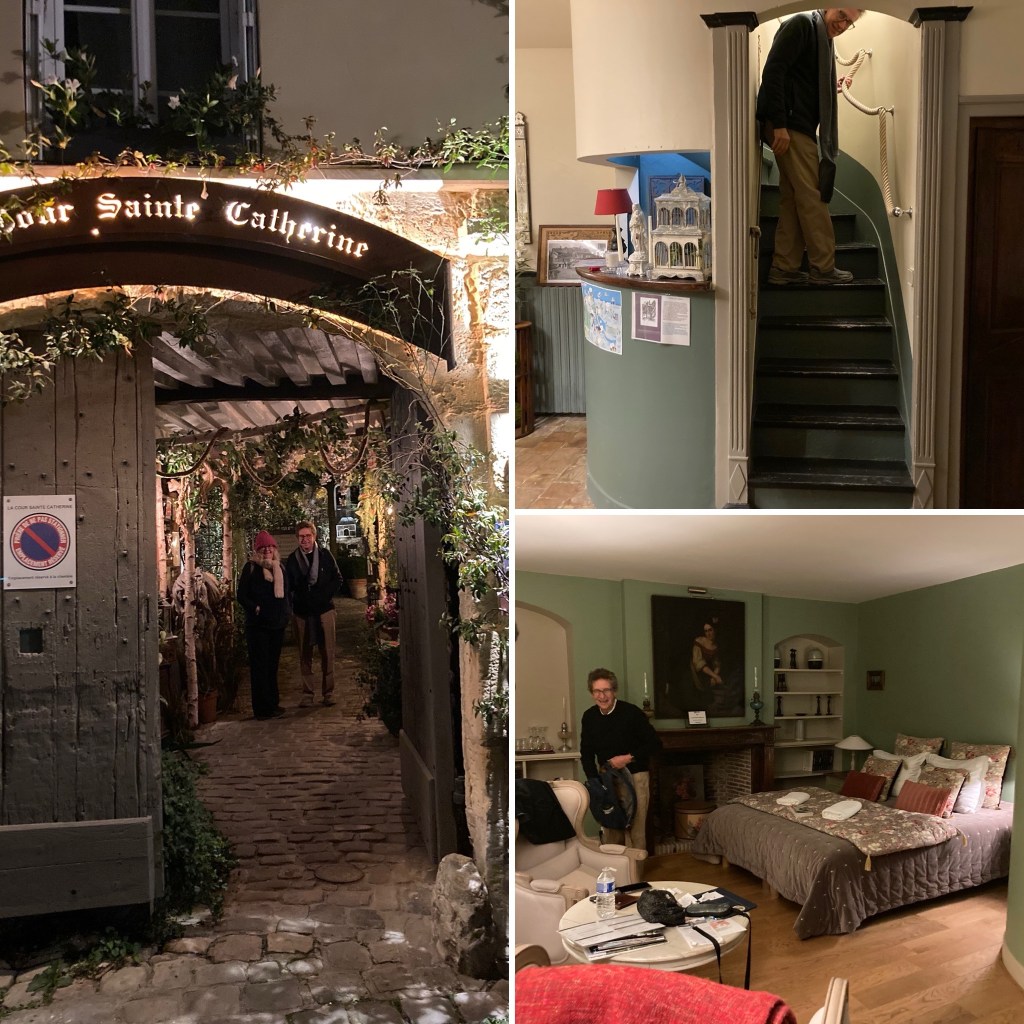
La Cour Saint Catherine, a small b&b on a narrow residential street, is as charming as promised with big wooden doors that open onto a Normand courtyard with a garden surrounded by a mishmash of timbered and brick buildings. To get to our room, we must climb a small narrow spiral staircase with a rope to hold onto. F& R are one flight above.

It reminds me of my friend’s staircase in her tower outside London (hi Marion!) but this is not a tower. Our room is not small and round or half-round. It’s huge, with a fireplace, large bed with many pillows, a sitting area, a day bed, old paintings, big windows. tres luxurious.
The breakfast also is very large, with cheese, charcuterie, fresh baked goods, plus the usual baguette and croissants. The town is charming and not over-touristed now, although I imagine it is in the summer.

We walked around the old harbor and along narrow winding street lined with shops, most not-great art but I found one woman selling delicate landscapes and bought one of the cliffs. I also found a good gallery near the tourist office by the harbor called Gallerie Chaye.
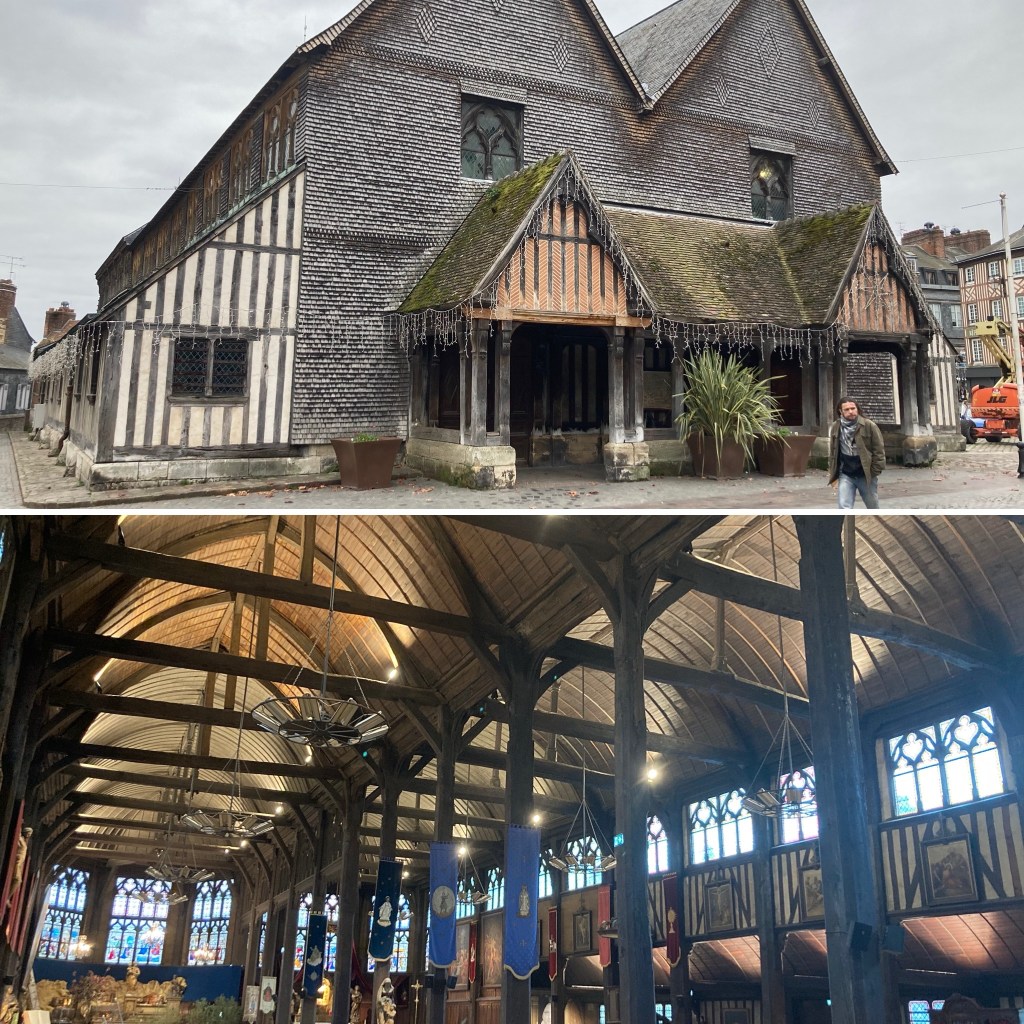
St.Catherine Church reminded us of a stave church in Scandinavia – with its dark wood-shingled exterior. It is an odd charming duck with two naves, each with a ceiling that looks like an upside down wooden boat. Fitting for a community of fisherman and sailors, and reportedly built by boat builders not architects. The first nave was built in 1497. When the congregation outgrew the church, it added a second nave.
We had a good fancy dinner at entre mere et terre but I was even more impressed by the better reviewed SaQuaNa. It’s a sophisticated Japanese-influenced French restaurant with a wonderful patisserie. The bouillabaisse was surprisingly light and full of complicated flavor, not heavy or too fishy, and a Japanese pancake with bacon and flakey onions was like a less eggy quiche. The lemon meringue pastry and chocolate torte were amazing.

After dinner we ended up at a nearby bar, Vintage, listening to a blues rock band playing American standards, while we drank kir Normand (with cider, yum) and other regional favorites- calvados (too strong even for the guys) and an aperil spritz with cider.

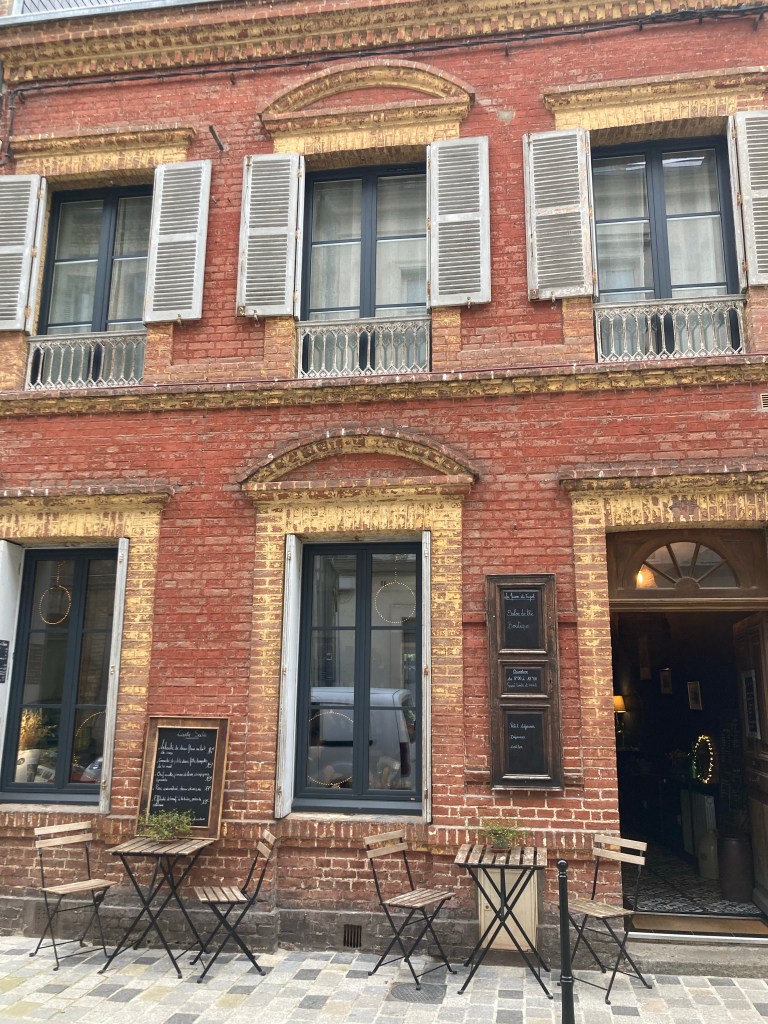
Mid-afternoon, we stumbled into a classy ladies-who-lunch salon de the, La Maison du Tripot, on a quiet street worlds away from the tourist places along the harbor and had excellent chaude chocolate and a slice of moist apple cake.

The Satie Museum was bizarre, as promised, an interactive ode to the famous composer Eric Satie, born in Honfleur. At one point, we sat on what looked (and felt) like a rugby ball and slowly peddled on a round track, prompting a marry go round contraption to come to life. As Francine noted, we didn’t really learn much about Satie except that he was a surreal guy. So this museum was fitting.




 TakeBetsywithyou