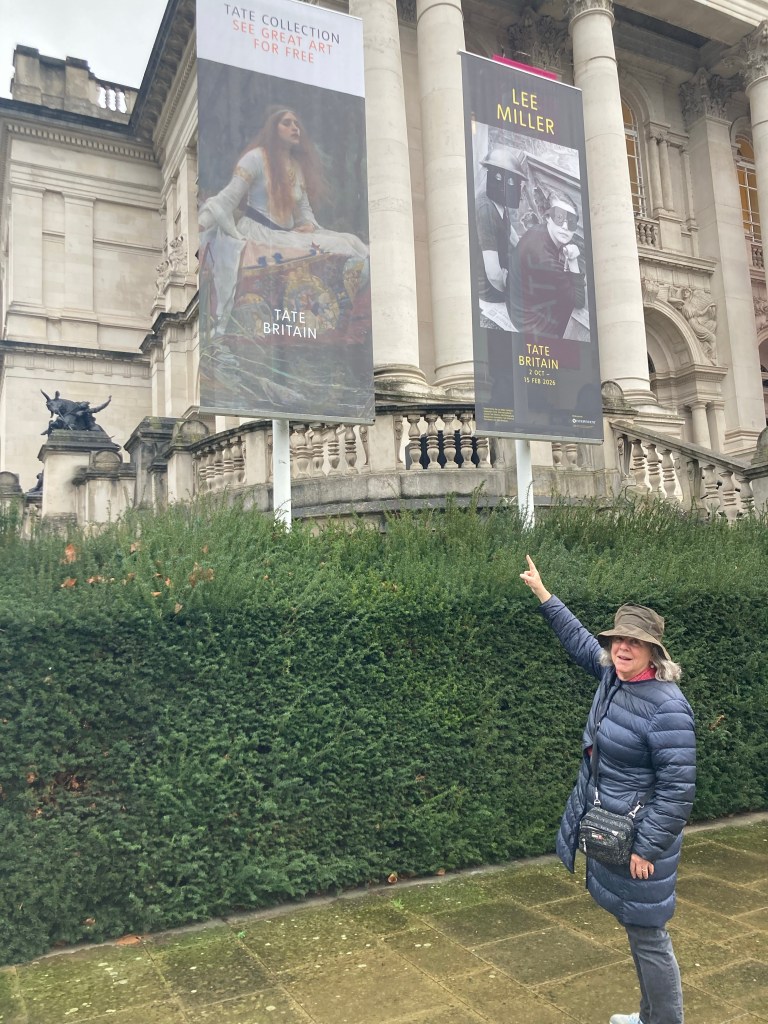
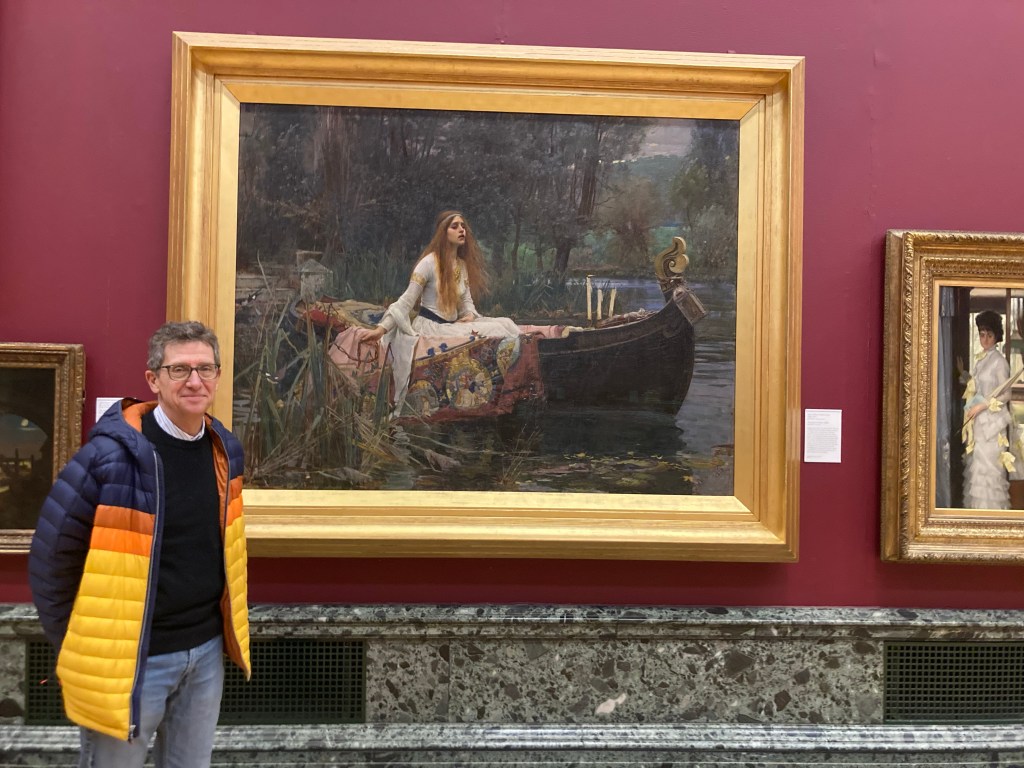
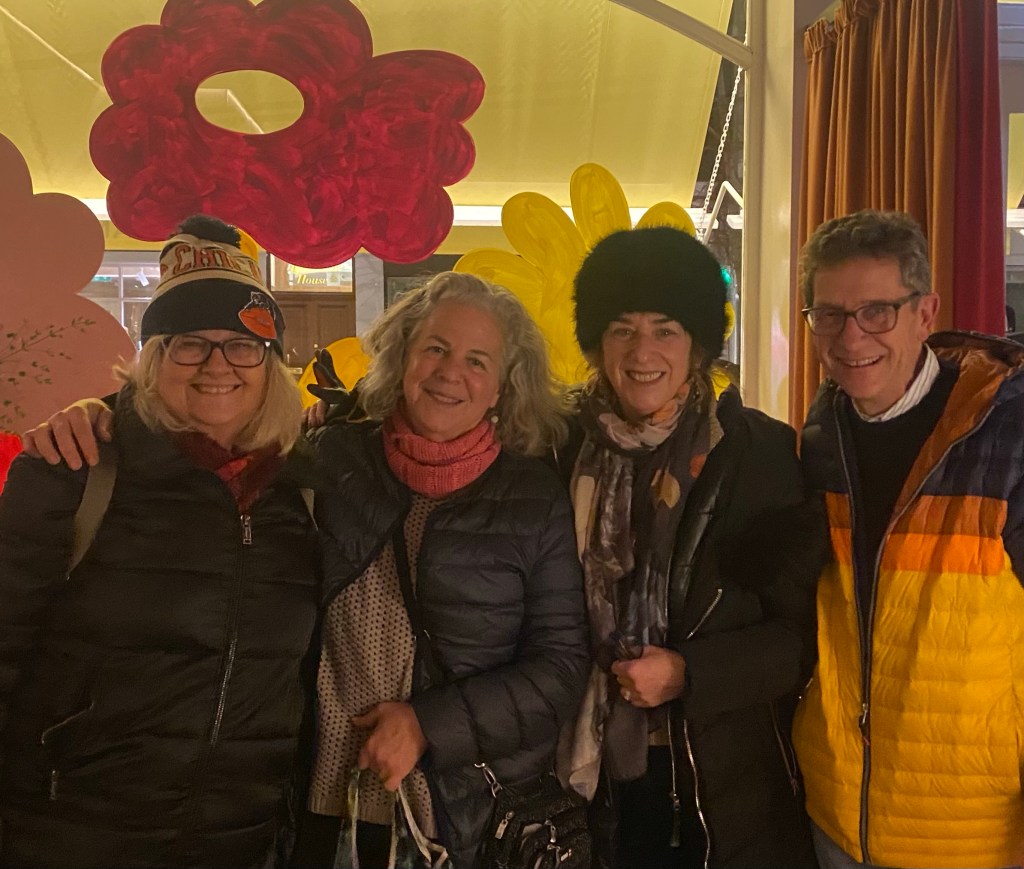
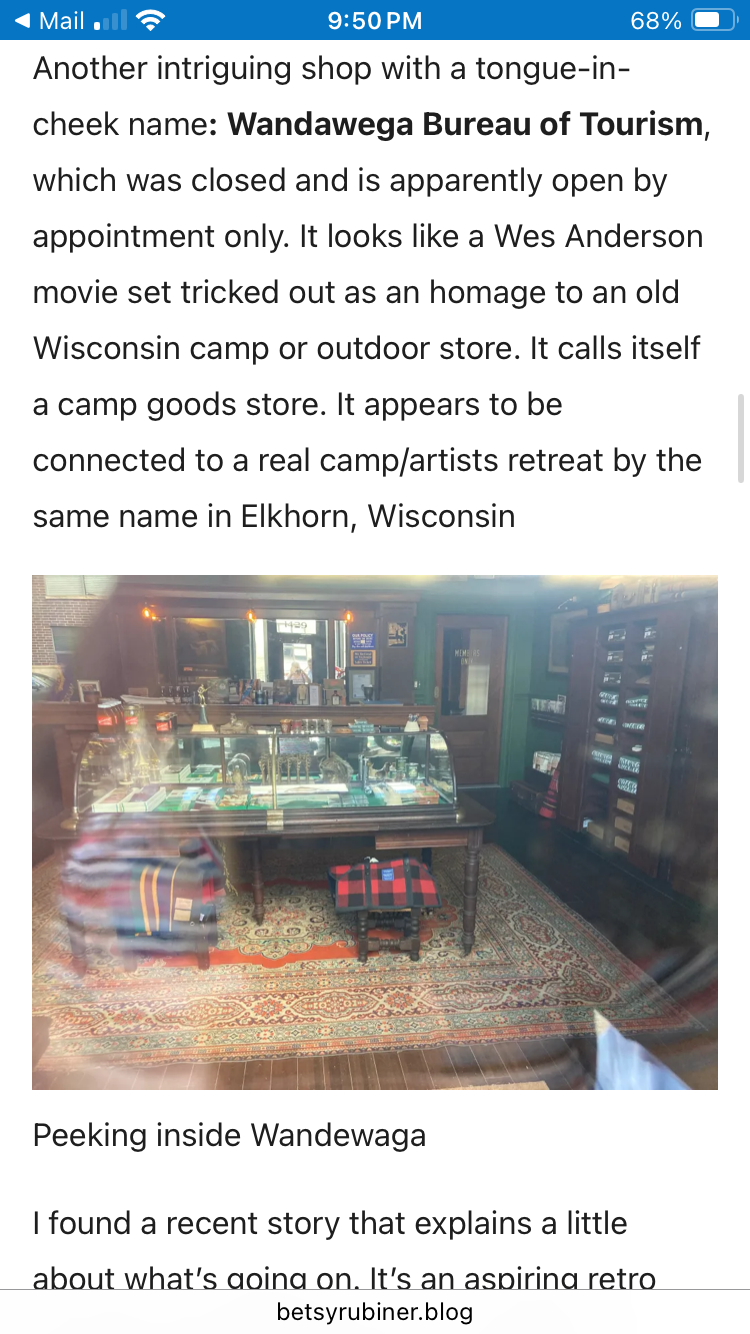
A fascinating exhibit of art and war photography by American Lee Miller lured us to Tate Britain, which I have visited less of late than its popular offspring, the Tate Modern. I forgot how Old England charming the original building and its collection are, not only the atmospheric Turner paintings but Pre-Raphaelite gems including John William Waterhouse’s 1888 painting, “The lady of shalott” my daughter’s favorite painting. (She inherited the poster from me, which I inherited from my mom.)
We saw it on her birthday! I was also dazzled John Everett Millais’s 1850s “Ophelia” (that emerald green!) and several huge John Singer Sargent portraits.
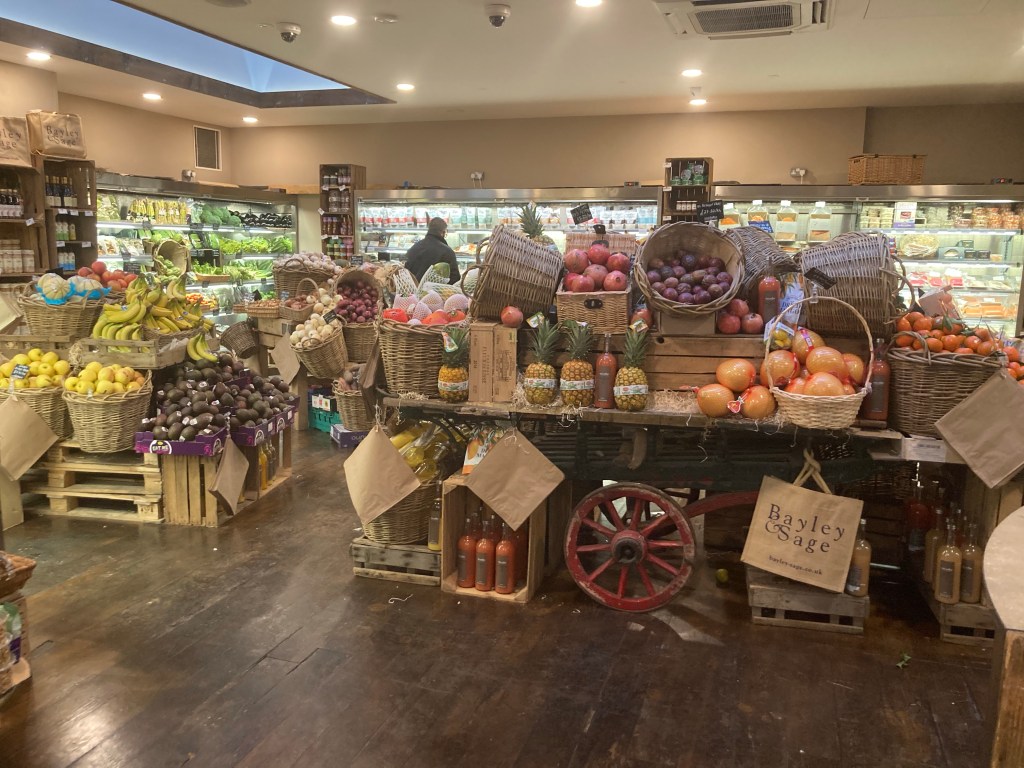
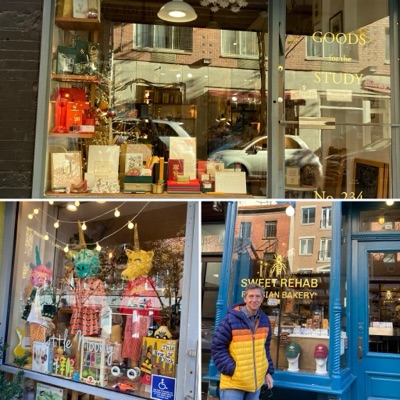
Marylebone fancy food (Bayley &Sage)
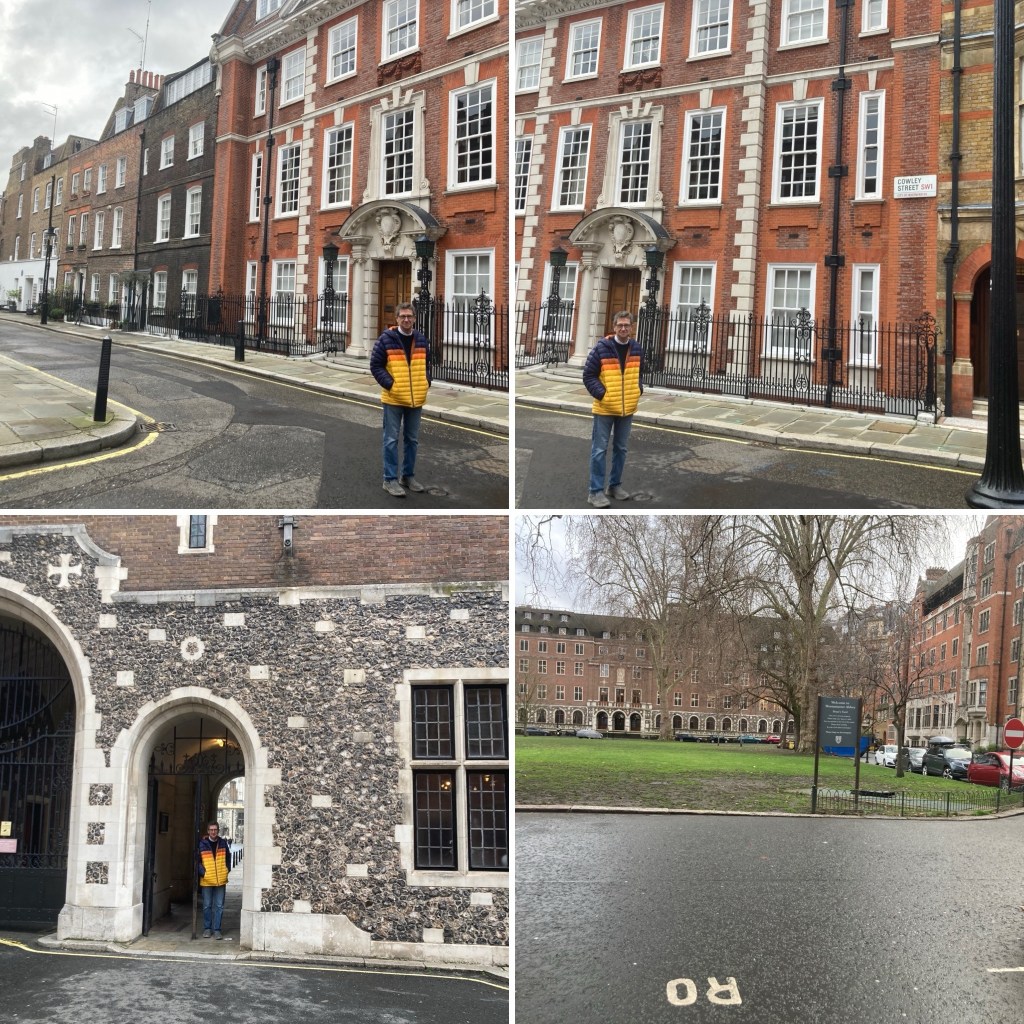
After a decent sandwich in the busy v &a cafe, we walked out into near sunshine, which was welcome after arriving in grey drizzle. We walked behind Millbank into beautiful old brick row houses with the occasional plaque of indicating the former home of someone famous (TE Lawrence, actor John Gielgud) to deans yard and Westminsterschool and then Westminster abbey and parliament where I was an intern 46 years ago.
Westminster hood
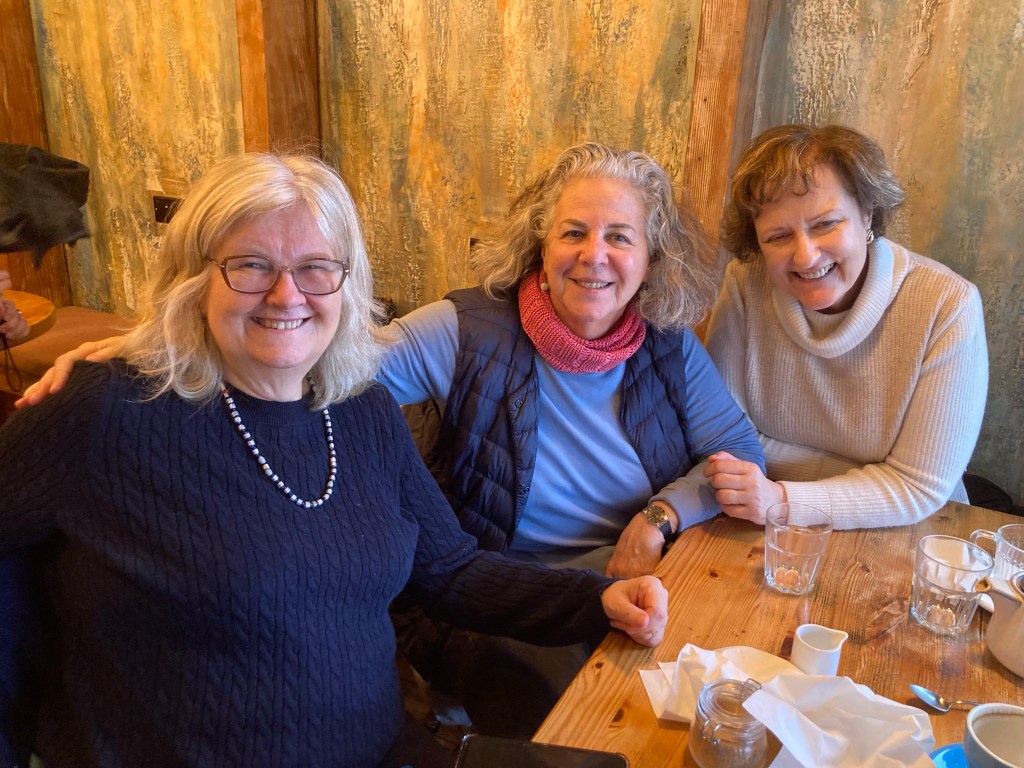
Dinner was at an Australian restaurant, Granger and Co. with two friends from our parliament days, my Londoner pal Francine and my college friend Patti, who is working in London. It was fun window shipping in Marylebone. Pro tip: visit the charity shops (Oxfam, cancer research) for some affordable finds. Otherwise the boutiques are ridiculously expensive. Also visit the charming Daunt bookshop.
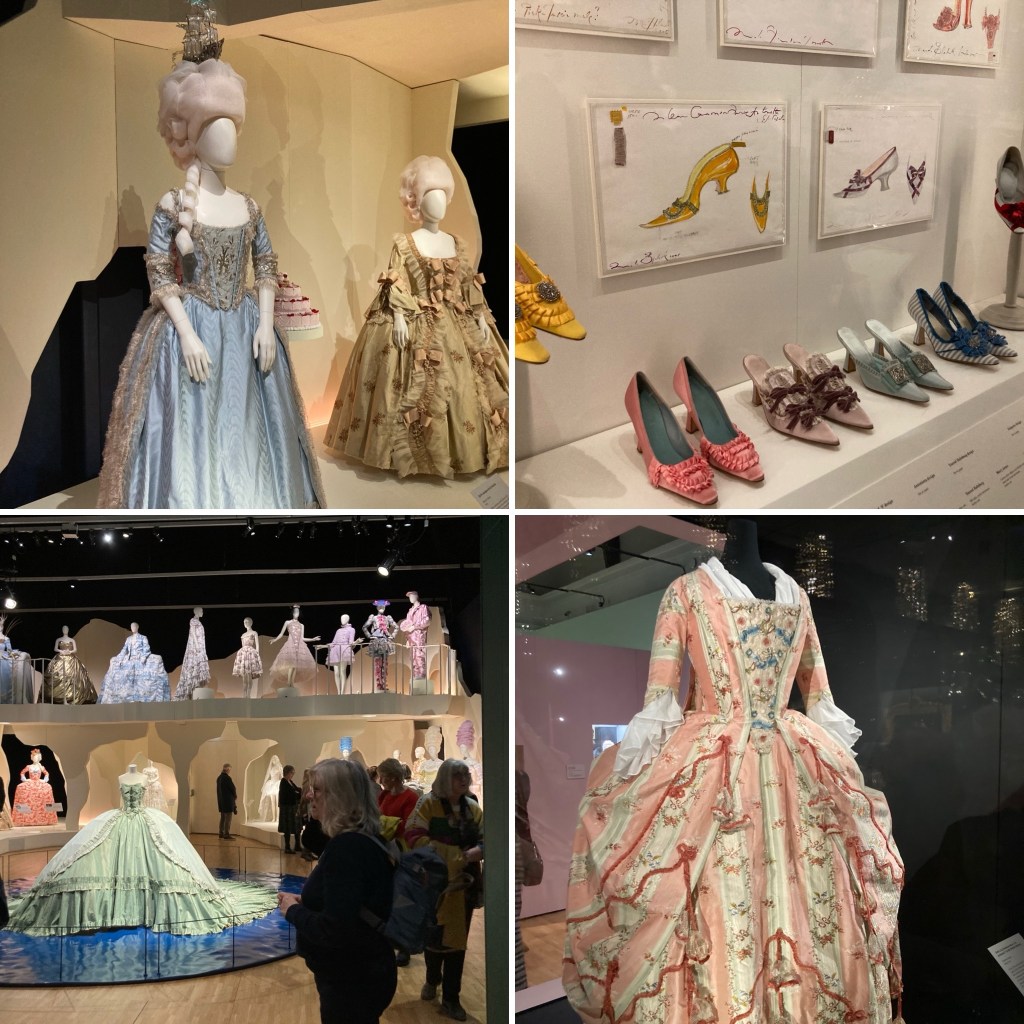
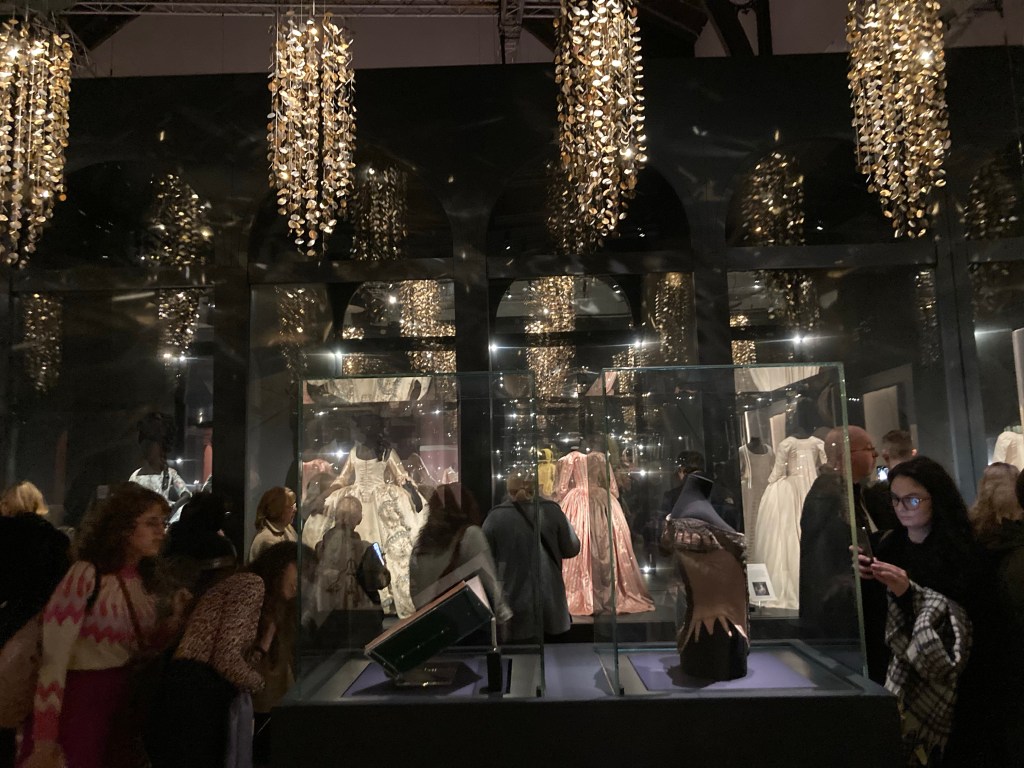
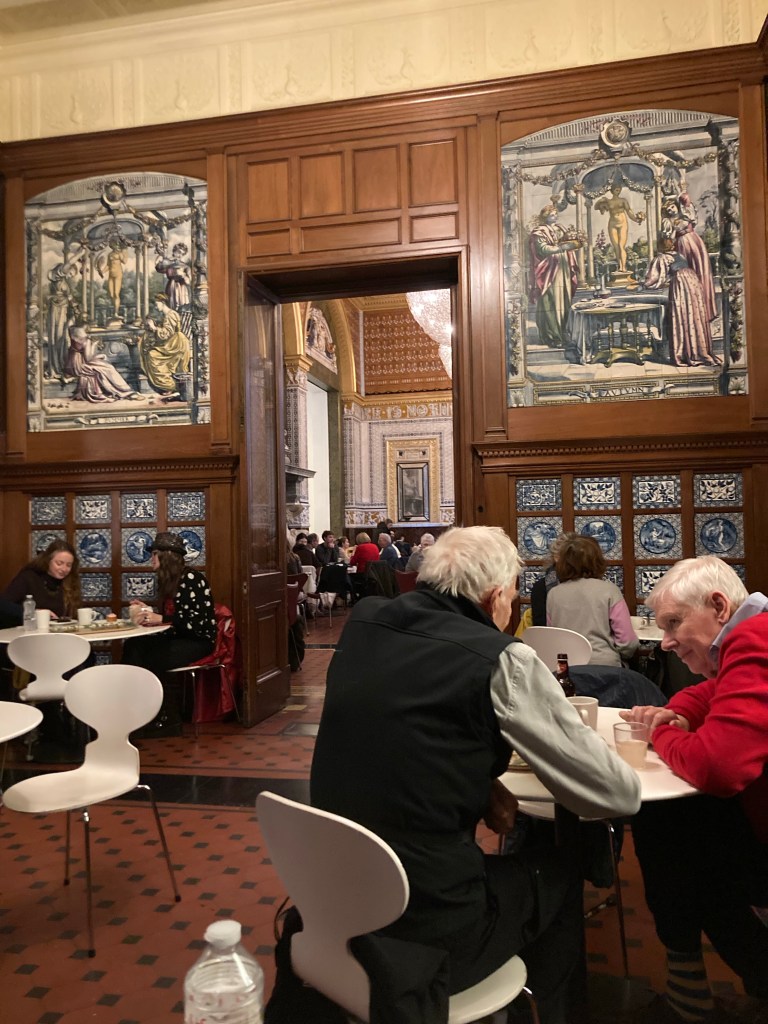
A dazzling exhibit on the couture and fashion influence of Marie Antoinette at the Victoria and Albert Museum turned out to be a perfect activity of a gloomy rainy day in London. We also enjoyed eating in one of the beautiful old tiled rooms of the cafeteria and cream tea in the members lounge with member Francine.
V&A
Breakfast with Una: pastries and egg concoction s was good at The little Hive, across from Mortlake station, a warm rustic place run by Albanians. we also had good pub grub nearby at the Hare and Hounds. And good jazz by a Francine friend at a pub in west Ealing, where I first lived in London as a student in 1980.
The weather is dark and rainy but at least not cold or torrential rain and there is occasional sun and bright green lawns and even some flowers so an improvement over frigid Chicago.
Note to self: Boston Manor tube was a much easier pickup than Hammersmith when arriving at Heathrow and pleasant cafe (#66) to wait
The latest issue: global entry gave Dirck a name that differs from his passport name so he cannot use it on this first attempt for a trip to Europe. grrrr. Homeland security put his middle initial instead of his full middle name on his global entry. His middle name is on his passport and his ticket. Everything needs to match, especially for international travel.
This is incredibly frustrating especially since it took months to given get an application interview after applying. We applied on the same day and mine took maybe a month.
Meanwhile, one perk of having global access/tsa preselect is gone. You no longer have to take your shoes off going thru regular check-in. And we’ve seen little difference in the time it takes me to go thru tsa or global entry vs. dirck going through regular.
Also, Dirck automatically received a global entry card, which turned out to be useless in this situation and not needed in general. And I never received a card, although I requested one several months ago after it didn’t automatically arrive.
So my advice based on our experience to date: skip the hassle and expense of global entry and maybe also tsa preselect.
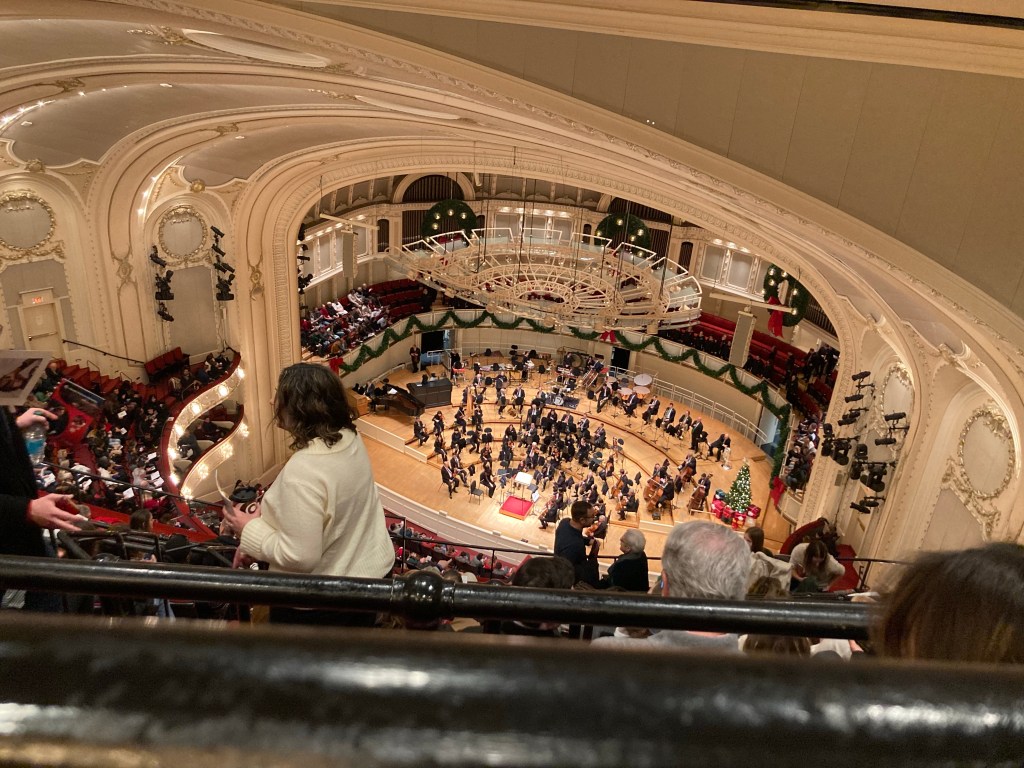
We got last minute seats to the Chicago Symphony Orchestra’s holiday concert which meant we were way up in the (top) sixth floor balcony, second to last row. I didn’t know symphony center went that high. Not ideal but we could at least see better from there than from the nosebleed seats at The Auditorium theatre, which is set back further from the stage so the members of The National (the band) were ant size (and the giant screen was mostly psychedelic art instead of the action on stage. Never again.)
Symphony Center
At least at symphony hall we could see all the musicians, including the tops of their heads. The seats were a little too shallow and upright and it was disconcerting to have a metal pipe railing in front of our seats, presumably to keep us from keeling over. Fortunately there were two upholstered chairs st the end of the aisle for disabled patrons. I sat in one which was much more comfortable. The music, plus the symphony choir and an appearance from Santa, was great.
Chicago has no shortage of charming and ornate old theaters including The Lyric, CIBC and the Chicago theater.
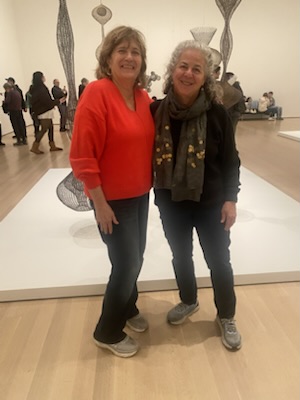
What a great NYC Day. We started at Grand Central Station to meet up with Myra for a post-Thanksgiving favorite: Myra Tuesday. It was raining so our usual wander around the city became a quick walk to MOMA where we lucked upon the excellent retrospective of Ruth Asawa, who used wire to make gorgeous hanging sculptures.
Ruth Asawa work
I loved her paintings and drawings too. We enjoyed a light lunch at MOMA’s terrace restaurant on the top floor – cubano, a fancy version of potato chips and onion dip, potato soup.
Dinner with Aunt Diane was delicious at Shukette, a middle eastern restaurant in Chelsea with a welcoming hipster vibe. Somehow Shukette managed to make hummus distinctive and delicious, it was creamier and lighter than I’m used to, with maybe extra tahini and oil? We chose Frena, a puffy Moroccan bread with garlic and oregano, that was chewy and full of flavor. Another standout: the lamb kebab, served perfectly pink.
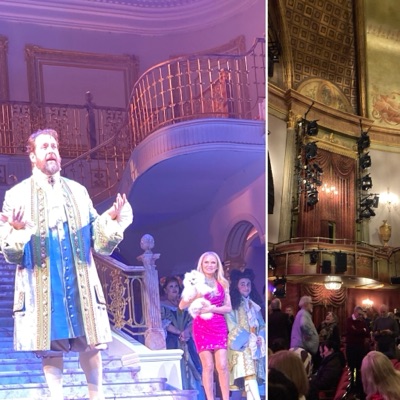
The queen of Versailles was fun, if not the catchiest musical I’ve seen or heard. Great performances especially by Kristin Chenowith, seen up close and personal from fourth row seats in the pretty old St. JamesTheater. Always exciting to walk on Broadway at night, even with all the garish flashing billboards.
On to Marie’s Crisis Cafe in the Village, a tiny basement gay bar where people crowd around a piano player to belt out show tunes until 4 a.m. We left a little after midnight. So. Much. Fun! If only I knew Rent a little better.
On our last day, we wandered around the village, Nolita (mulberry street) and Chinatown on a sunny Wednesday, stopping for dim sum at the atmospheric Nom Wah Tea Parlor. (Reminder to self: cash only)
Amazingly enough, there was no line and no customers at the Sixt car rental office on a residential side street near LaGuardia Airport on Thanksgiving Day. We sailed right in and right out. In minutes we were driving a very large GMC Acadia SUV. Not the compact car we reserved (or paid for) but very comfortable and clean.
This Sixt experience was a marked improvement over recent rentals with Budget during Thanksgiving, when we had to deal with painfully long lines and rigamarole. This is the second time in recent months that we have had an excellent experience with Sixt (the earlier time was October in Bari, Italy) so we will definitely be return customers if the price allows! Apparently sixt is a German company founded in 1912 and made a deal in 2020 with Lyft so people can use the Lyft app to rent a Sixt car.
I’m not the only happy camper.
SIXT Named Best Rental Car Company in USA Today Awards
Trying out my Illinois lingo: word has it anywhere in the state south of I-80 is “downstate” although some northern Illinois places are deemed downstate by some.
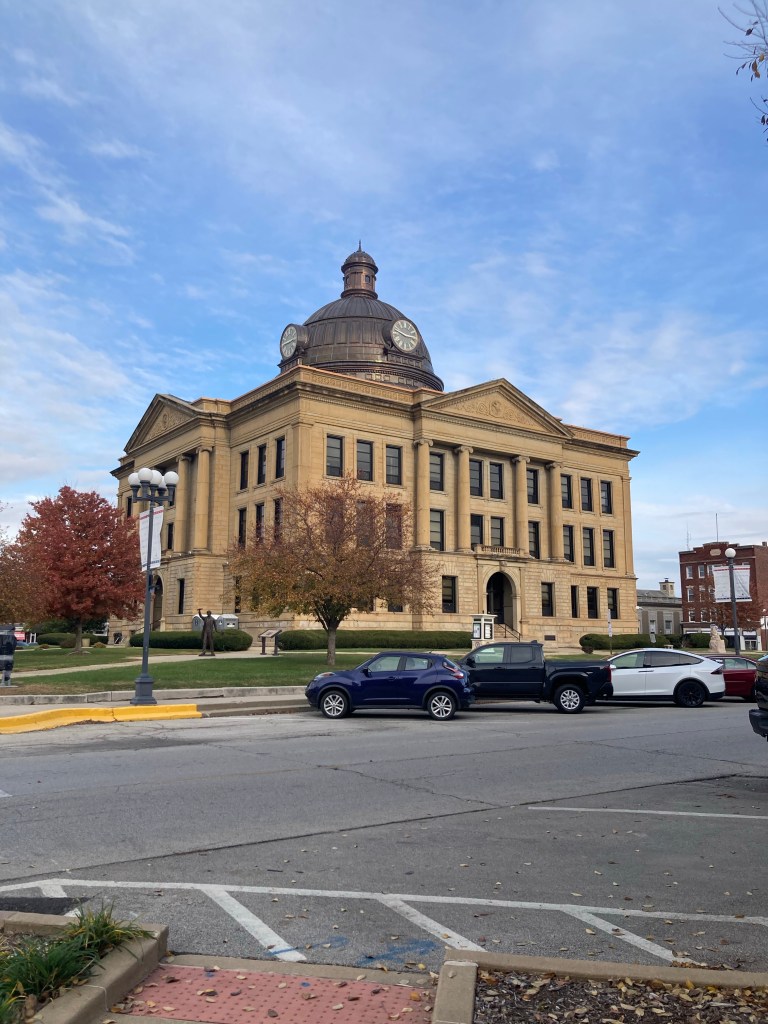
Lincoln is definitely downstate, almost 3 hours south of Chicago. We were there for a sad occasion- a memorial service- but it turned out to be an interesting place, with a grand stone and domed courthouse and fairly alive town square that reminded me of some of Iowa’s more economically healthy county seats, like Winterset.
Prairie Threads and nextdoor Airbnb
Around the square are some pretty restored 19th century buildings and interesting shops including Prairie Threads, a great menswear store in a beautifully restored building with a painted stamped tin ceiling and a long wooden bar with stained glass. Its sister store is the nearby The Bee boutique. Spirited Republic is a lively brewpub with exposed brick walls. There’s a coffee house and a tea house (goofy name: Sir Renna Tea.) I made one small purchase (30 percent off retirement sale!) at Mary Todd’s Hallmark Shop, presumably named after Abe Lincoln’s wife. Turns out the courthouse was built in 1905, replacing the 1858 one that Abe worked in as a lawyer.
Lincoln is reportedly the only city named after Abraham Lincoln before he was president. (Take that Lincoln, Nebraska!) It’s also on the old Route 66. Take it away AI:
Named before presidency: Lincoln was named for Abraham Lincoln in 1853, before he became president. He was present for the christening, which involved cutting a watermelon and using its juice to christen the town.
Legal career: Lincoln practiced law in the area from 1847 to 1859, and the Postville Courthouse, where he tried cases, is now a state historic site.
Route 66: The city’s location on U.S. Route 66 made it a notable stop for travelers.
Written onboard: This isn’t exactly a “fast train” – it’s making several stops between Bari (in Puglia) and Rome but it’s 4.5 hours, faster than other trains we spotted that took 6 or 7 hours. And the price is right — 16 euro (about $20). The train left about 10 minutes late. It’s a good thing we booked ahead. The seats are comfortable but train is full and there’s not a ton of leg room. I am trying to avoid footsie with the long legged young man across the table from us, who occasionally nuzzles his female companion.
Matera cathedral
There is supposed to be Wi-Fi but it’s spotty. Initially the train was moving in the direction of our seats, north along the Adriatic coast but after a few stops we’ve now moving backwards, northwest through mountains.
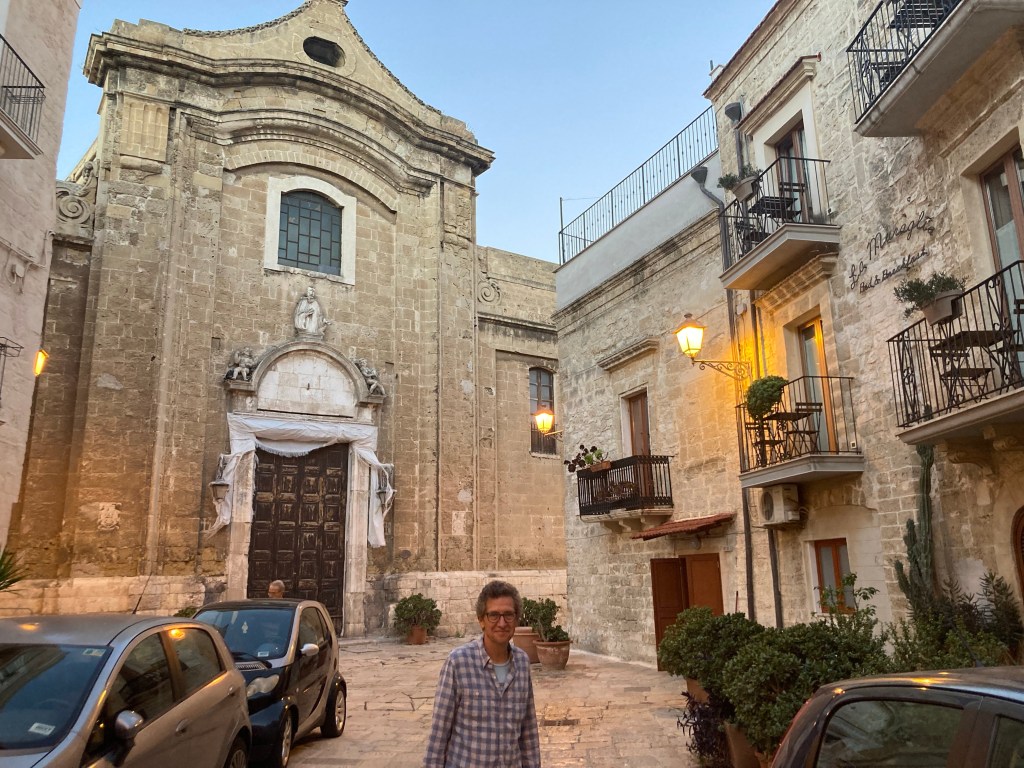
Bari vecchio (old town)
I am glad we finally made it to Puglia. Matera was the highlight, which is technically in Basilicata, not Puglia. It’s unlike any place I’ve ever been and, better yet, we felt like we got to know people there (our guides, Airbnb host) who offered insights about life there. Our little trulli house worked well. It was interesting to be the only tourists in a little Puglian backwater. We didn’t see the Adriatic coastal resort towns like Polignano properly or get north to the gargano pennusula or south to Otranto or other Salento region spots in Italy’s heel. Next trip.
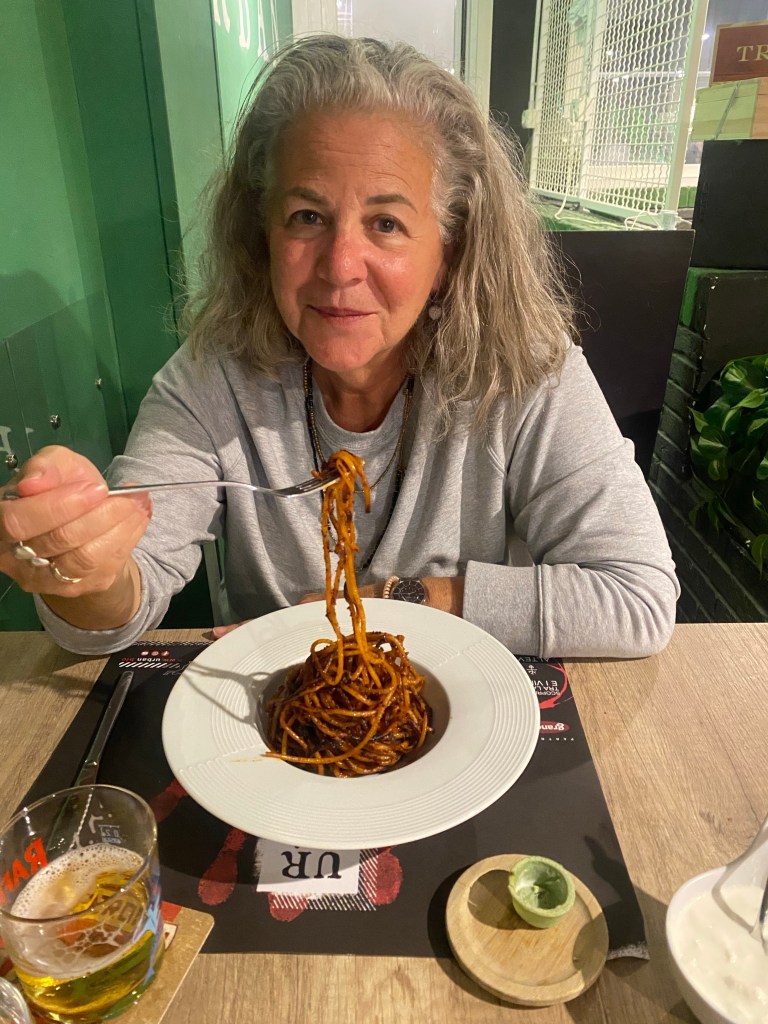
Assassin pasta in Bari
Next trip, we also will have an international drivers license, the lack of which almost messed up our trip because our original rental car agency wouldn’t give us the car we’d reserved. Puglia is hard to explore without a car, especially val d’itrea’s pretty backroads (where our trulli was located). Train service is limited. Fortunately we found another rental agency nearby that would rent us a car. We also got an international license online but word has it a physical copy, beyond a digital copy, is required. Apparently the license rules changed recently because we have never had this issue. (And the car rental company did not properly warn us.) We rented in France last year and in Italy two years ago with US licenses and passports.
Trulli and me
This was the first trip that I used my new global entry and it did little good. I know this because dirck has yet to receive even an interview for his global entry (while mine took only a few weeks). So I used TSA preselect to depart and global entry to return. In both cases, Dirck was only a few minutes later using regular check-in, which also no longer requires that shoes be removed. So I see little benefit to global entry so far. Maybe during busier holiday travel when lines are longer it will pay off.
One of our guides in Matera, Silvio, offers his services and rental property to others. Below is contact info:
Least but not last: in case you or your friends are coming here in Basilicata and you want to explore not only Matera but also the surrounding areas of the Basilicata Region, please contact me because I have a Penthouse in Bernalda (between Matera and Metaponto Beach for 6 people: https://www.guidearoundmatera.it/index.php/en/b-b-2)
Silvio SCOCUZZA Professional Tour Guide Italian, English & German for Basilicata & Puglia Technical Director of Travel Agency – Travel Advisor Tel. +39 3924725785 – PIVA/VAT 01281750776
“You’ve been here before,” the woman behind the desk at our favorite eccentric and economical Rome hotel in Trastevere — casa di Santa Francesca Romana said as we checked in. Yes, we have. This is our third stay here. Even the Wi-Fi remembered me. It’s a very Catholic place, a former convent still owned by the Vatican, we think. We have a surprisingly nice room, larger than I remember in the past. We couldn’t get in during our early days in Rome this trip but glad to be back.
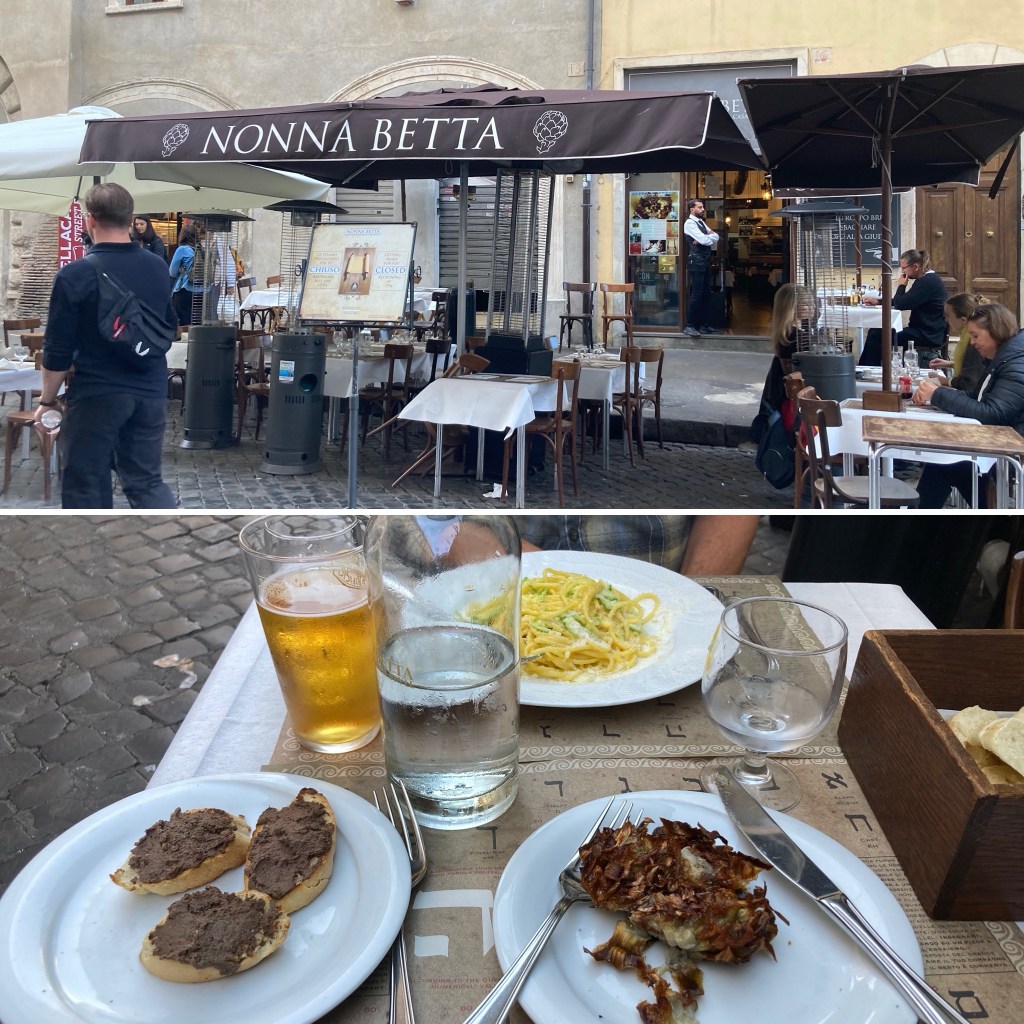
The weather continues to be gorgeous- sunny, low 70s, so we did what we like to do most in Rome: walk, eat, windowshop. First stop the nearby former Jewish ghetto where we had excellent food at Nonna Bette, a kosher restaurant – fantastic grilled artichoke (carcofi), chopped liver/crostini, carbonara with zucchini, ricotta cheesecake. Then on to windowshop in center storico on a few streets (via del Pelegríno and di Monserrato) dottedwithinteresting boutiques, design shops, cafes and bakeries.
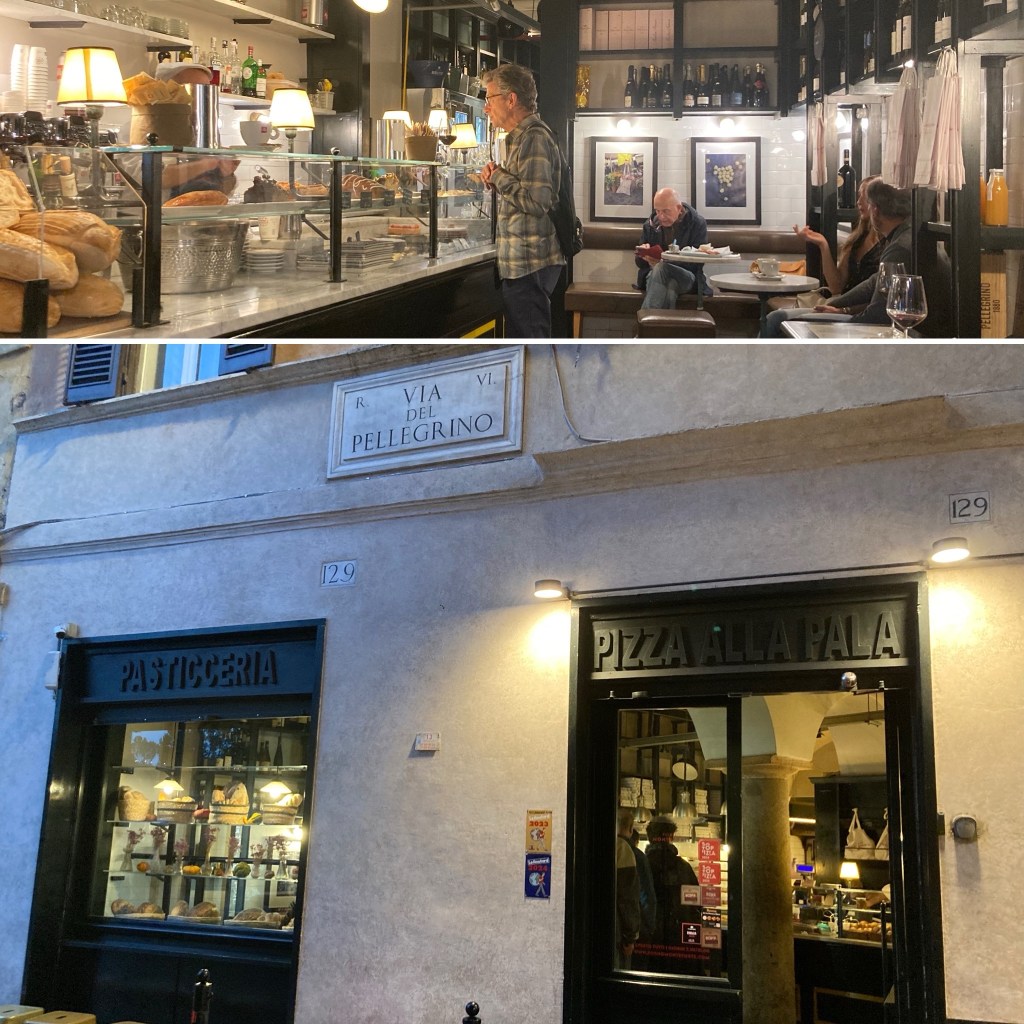
Monteforte pane e vino
We chanced upon the atmospheric monteforte pane e vino (via del Pellegrino, 129) which has amazing looking bread, pizza and pastries but we stuck to wine and cappuccino.
Very thin crust pizza
Tonight was thin crust hipster pizza at L’elementare in Trastevere. My favorite was the deep fried clump of lasagna. The place was packed, mostly with Italians! We wandered over to the Tiber river and found a large group dancing on the Sisto bridge as a busker played YMCA! Love this city.
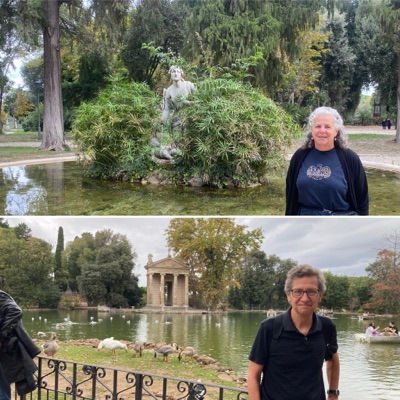
Resuming post on day 2: The rain finally came, the first significant rain of our 16 days here and even then, not heavy rain, and it didn’t come until 3 pm which gave us time to wander around the elegant Borghese Gardens and then down the Spanish steps (which neither of us had visited since we were students) and then down via Margutta which has some art galleries (none very good), outdoor gallery stalls and design shops.
Spanish steps
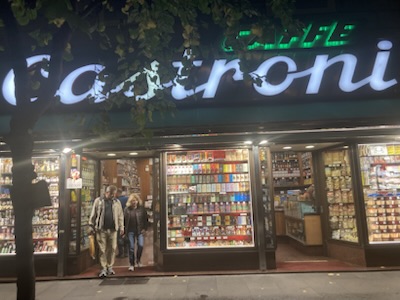
We stopped for an overpriced orange juice and espresso at a cafe overlooking the piazza de populi, which offered a welcome rest and good people watching. Then we meandered back to our hotel (about a half hour walk…we taxied to the gardens), stopping at a well-populated osteria on a small street (l’osteria di memmo Santori on via Dei Soldati,) for one last plate of pasta. We ended up briefly visiting a holocaust museum (free, but we made a donation) in the old Jewish ghetto which had wrenching stories from Italian concentration camp survivors. Dinner tonight was at garbarini, a deli by day that becomes a dinner spot by night, located in the Upscale Prati neighborhood. Fun to be the only non-Italians there.we found a huge speciality food store, Castroni, next door. Goodbye Rome. We’ll be back.